
Gripen vs. Flanker: Five Fronts Where Sweden’s Light ‘Su-27 Killer’ Could Face Russia’s Elite Heavyweight Fighters
Military Watch Magazine Editorial Staff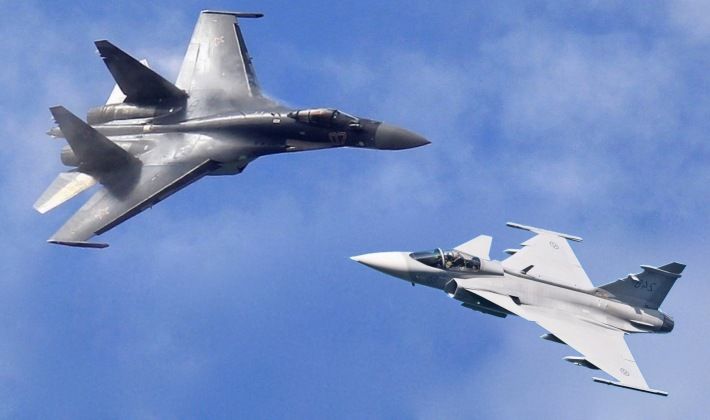
Su-35 Heavyweight and Gripen Lightweight Fighters
A number of statements by the leadership of the Swedish Air Force, most notably those made in early 2019, claimed that the country’s new ‘4+ generation’ Gripen E fighter jets were capable of tackling the elite Su-27 Flanker air superiority fighters of the Russian Air Force and their newer advanced derivatives the Su-30 and Su-35 in air to air combat. The European fighters were reportedly designed precisely for this role, despite having a fraction of the Flankers’ engine power and being less than half as heavy. The Flanker has formed the bulk of the Russian fighter fleet since the 1990s with over 600 of the jets currently in service configured for air to air combat. The Gripen and Flanker are at opposite ends of the spectrum of military aircraft, with the Su-27 originally designed as a very high end air superiority fighter to combat the U.S. Air Force’s F-15 Eagles - with the enhanced Su-35 variant designed to go head to head with the more advanced F-22 Raptors.
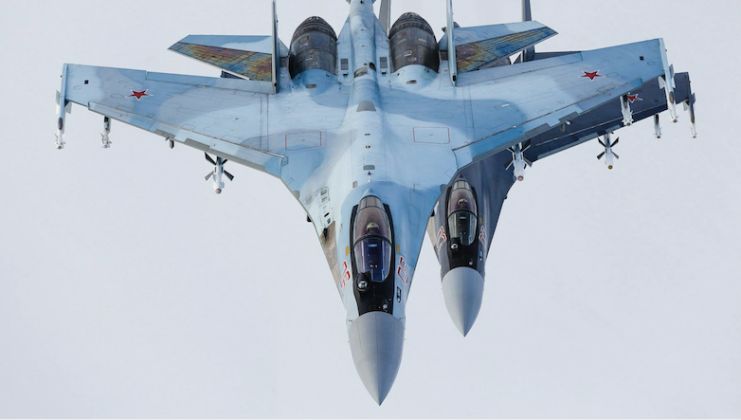
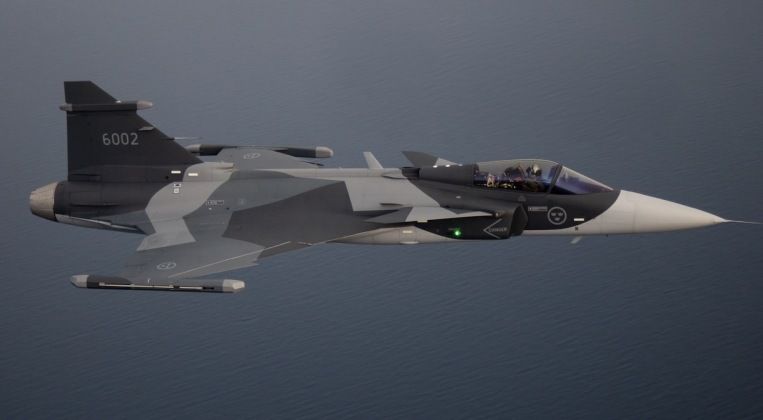
Sweden’s Air Force by contrast lacks any heavy or medium fighters, and even its lightweight jets are well below average in weight with significantly weaker engines and smaller airframes than other lightweight designs such as the American F-16 or Chinese J-10. The Gripen prioritises a low operational cost and low maintenance requirements, but its endurance, the size of its radar, its weapons carriage and its flight performance all leave much to be desired compared to most light or medium weight jets - let alone elite heavyweight fighters such as the Su-27 and Su-35. The Gripen E represents a more capable variant of the original design incorporating a number of next generation technologies, although its ability to contend with other Western lightweight jets has been put to serious question in the past with America’s F-16 retaining a number of considerable advantages over its European counterpart.
While a more modern Gripen variant such as the Gripen C or E would have an advantage over one of the older flankers, such as the Su-27SK platform from the 1980s particularly at long ranges due to a technological gap of 25-40 years favouring the Swedish jet, for aircraft produced with a gap of 10-15 years or less between them favouring the Gripen the Flanker will have an overwhelming advantage across the spectrum in its capabilities. Unlike other modern European fighter designs, the Gripen has been relatively successful on export markets and is prized for its very low maintenance needs and operational costs by a number of third world air forces, compensating for its relatively high acquisition cost with a low operational cost. With Sweden developing the Gripen largely with conflict with Russia in mind, a look at five leading theatres in which the Gripen and Flanker are deployed to potentially oppose one another gives some indication as to were a potential clash could occur.
Eastern Europe - Sweden, Hungary and the Czech Republic vs. Russia
The largest numbers of Gripen fighters are currently deployed to Eastern Europe, with the Swedish Air Force alone fielding six squadrons of Gripen C jets with an average of 16 fighters each. Hungary and the Czech Republic each field one squadron with 14 and 16 fighters respectively. Sweden is set to replace several units with the Gripen E in the coming years, which has an Italian-supplied AESA radar, a larger American F414 engine and superior avionics and electronic warfare systems. These aircraft are expected to face a sizeable Russian Flanker fleet, both in Kalningrad where elite Su-27SM3 fighters are reportedly deployed and from the Russian mainland from where several hundred of the new Su-35 and Su-30SM fighters can launch strikes across much of Europe. The induction of new Flanker derivatives in Russia has shifted the balance of power further against the Gripen, with Russia planning additional upgrades including a new AESA radar and hypersonic air to air missiles for the Su-35 and AL-41 engines and Irbis-E radars for the Su-30SM - the latter under the Su-30SMD program. One notable strength of the Gripen in Eastern Europe is its ability to operate from makeshift runways including short roads, as Russian cruise and ballistic missiles including hypersonic platforms have otherwise placed airbases across these territories under threat which could cripple the ability of heavier fighters to operate at all.
Thailand and Vietnam
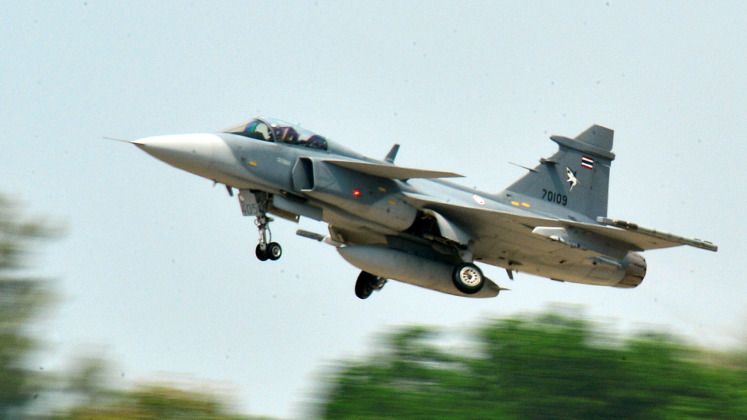
Thailand and Vietnam have seen relations improve considerably since the late 1980s, although the two were major adversaries historically with Thailand contributing considerable forces to the U.S.-led war effort against its northern neighbour and subsequently supporting neighbouring Cambodia against a Vietnamese invasion. Although Thailand has the more capable F-16 in service, the Gripen C fighter was acquired more recently and is expected to remain in service for longer as the airframe continues to be upgraded. While the Gripen C remains an advantage over Vietnam’s Soviet-era Su-27SK fighters at range, due to the Su-27’s much older radar and less capable air to air missiles, the newer Vietnamese Su-30MK2 jets which date back to the late 1990s can comfortably outperform the Gripen at all ranges. Vietnam is reportedly considering upgrading the Su-27 with a more capable sensor suite and newer R-77 missiles under a life extension program, which would make it considerably more capable at longer ranges, in order to counter the ongoing buildup of the Chinese air superiority fleet.
Angola and South Africa
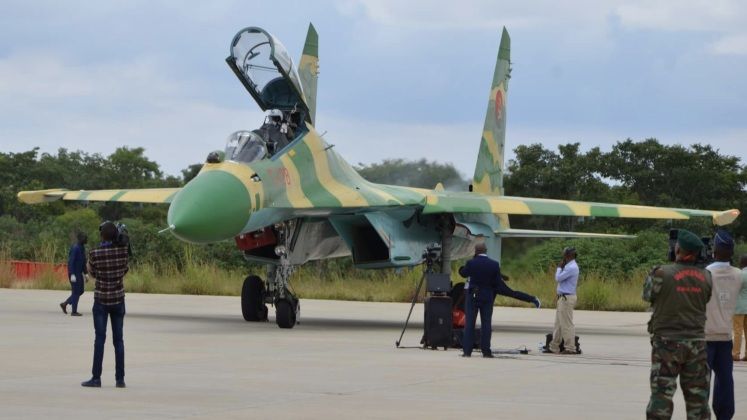
Although relations between Angola and South Africa have improved considerably since the coming to power of the African National Congress, both countries previously considered the other to be their leading adversary with an air campaign waged in the 1980s seeing both deploy multiple fighter units and take significant losses. The two are the most capable air forces in the region by a considerable margin, with the Angolan Air Force considered the third most capable on the African continent. Angola deploys 12 Su-30 fighters which have recently been upgraded in Belarus to a ‘4+ generation’ standard, alongside approximately half a dozen Su-27 heavyweight air superiority fighters, which between them form the bulk of its fleet alongside MiG-21, MiG-23 and Su-22 units which have all been extensively modernised.
The Gripen is South Africa’s only fighter, with 26 Gripen C jets in service which were acquired to replace the ageing Mirage F1. The Angolan Air Force is not only larger, but also deploys more capable aircraft with the new Su-30 jets in particular retaining the title of the most capable fighter in Southern Africa by a considerable margin as the region's only heavyweight and the only ‘4+ generation’ platform. South Africa, for its part, is reportedly considering shifting to rely on Russian fighter aircraft amid fast improving defence ties with Moscow - with next generation MiG-35 and Su-57 jets considered leading contenders to eventually replace the Gripen.
Brazil and Venezuela
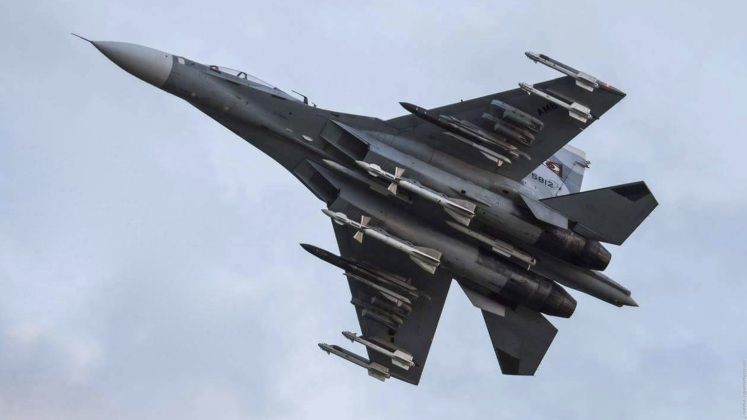
Brazilian-Venezuelan relations have deteriorated considerably following the toppling of the former’s Dilma Rousseff administration in 2016, with Brazil’s subsequent strongly U.S.-aligned military government threatening military action against Caracas. Brazil’s Air Force currently has a negligible aerial warfare capability, with a fleet of obsolete third generation F-5E jets which not only lack modern active radar guided missiles like their Taiwanese and Singaporean counterparts have, but lack even semi-active radar guided medium range missiles making them totally impotent in ranged engagements. Venezuela deploys a small unit of F-16A Fighting Falcons, which also lack a beyond visual ranged capability, and a unit of 23 Su-30MK2 heavyweight jets with modern R-77 and R-27ER long range missiles providing a tremendous advantage over Brazil’s fleet.
The balance of power in the air could well change as Brazil acquires the Gripen E fighter from Sweden - the only export client for the ‘4+ generation’ Gripen variant. While the Su-30MK2 is an older Su-30 variant dating back to the 1990s, the Gripen E is state of the art and, though still disadvantages at short ranges, will be able to outperform the Su-30 at range. The smaller size of the Gripen’s radar is compensated for by its greater sophistication, and the fighter will be compatible with Meteor air to air missiles which have a formidable estimated range of 150-250km. Given the ongoing economic crisis in Venezuela, it remains uncertain whether it will be able to respond with a major acquisition of its own - with the country previously showing an interest in the Su-35 fighter which the Gripen E purchase of its neighbour could lead it to go ahead with. Venezuela could also seek to upgrade its Su-30 to the Su-30SM2 standard to bridge the technological gap, although it remains uncertain whether Venezuela will be willing or able to make such an investment at present.
China and the Philippines
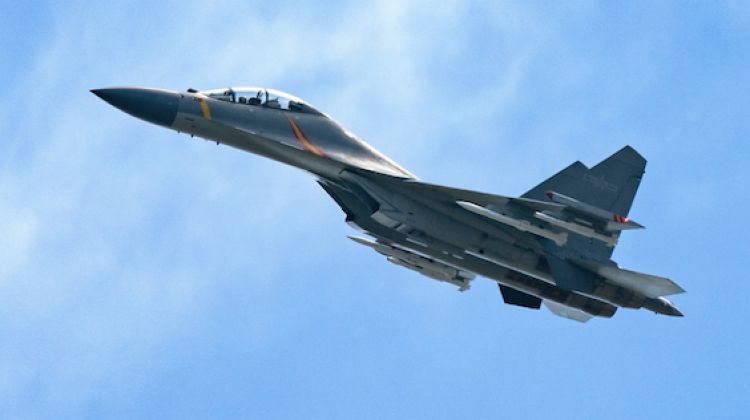
Although relations between Beijing and Manilla have improved considerably since the Rodrigo Duterte administration came to power in 2016, the two have an ongoing territorial dispute in the South China Sea which could lead to worsening relations in future. Strongly pro-Western elements in the former U.S. colony in Southeast Asia have continued to push for closer defence ties with the Western Bloc to confront China, and these elements may well gain more power in the country in future. While the Philippines has been offered a range of new weapons systems from Russia, including Improve Kilo Class submarines, it has come under considerable Western pressure to look to U.S. and European arms for its modernisation efforts. Although Russia’s Su-34 strike fighter in particular has been highlighted in the past as an ideal fighter for the Philippines, the country is more likely to acquire either the Gripen or the F-16 for political reasons, and the Air Force appears to be inclined towards the former. The Gripen C remains outmatched by a considerable margin by new Chinese Flanker jets such as the Su-35, J-16 and J-11BG, the latter two which are equipped with AESA radars and AESA radar guided PL-15 long range missiles. The Gripen C lacks the situational awareness, range or engagement range needed to provide a viable defence for the Philippines’ vast territory, and its very modest anti-shipping capabilities make it a questionable choice for the archipelago nation.
