
Can Sweden’s Lightweight Gripen E Really Tackle Russia’s Su-27, Su-30 and Su-35 Flankers
Military Watch Magazine Editorial Staff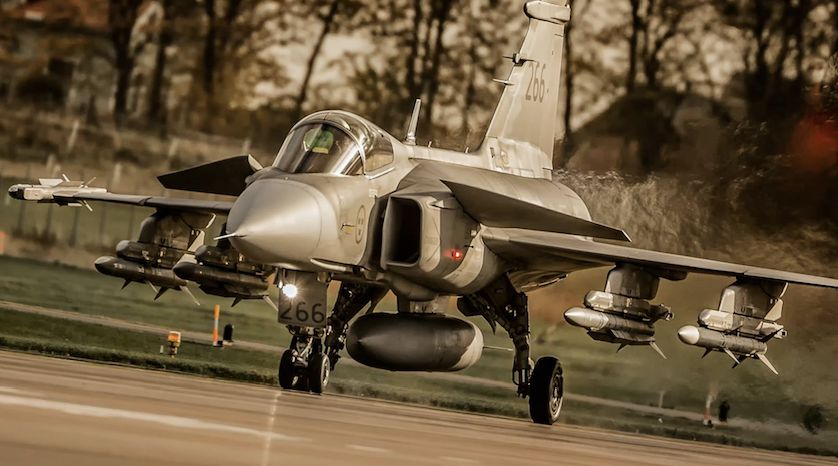
Swedish Air Force Gripen Light Fighter
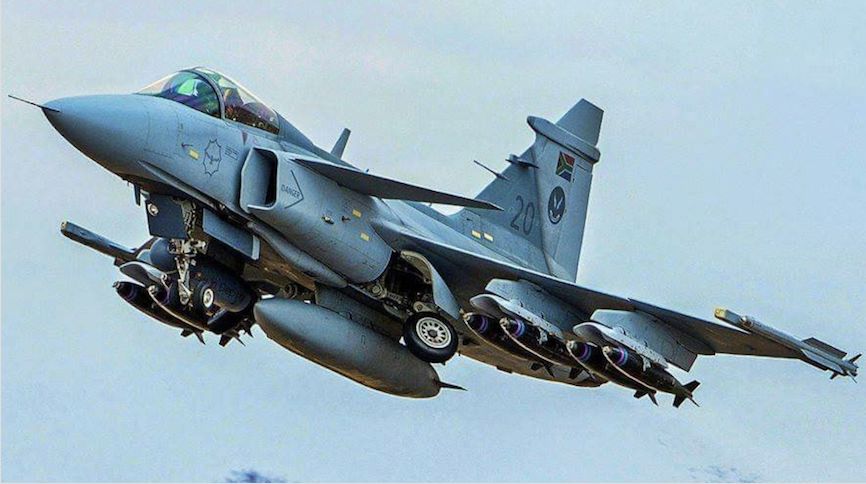
Recent statements by the leadership of the Swedish Air Force have claimed that the country’s new ‘4+ generation’ Gripen E fighter jets are highly capable of tackling the elite Su-27 Flanker air superiority fighters of the Russian Air Force and their more advanced derivatives, the Su-30 and Su-35. The European fighters were reportedly designed precisely for this role, and were the ideal platforms for engaging the Flankers. The Flanker has formed the mainstay of Russian aerial warfare capabilities since the 1990s with over 600 of the fighters currently in service. The Russian platform was designed as a high end air superiority fighter to combat the U.S. Air Force’s F-15 Eagles - with the enhanced Su-35 variant designed to go head to head with the more advanced F-22 Raptors. Sweden’s Air Force by contrast lacks any air superiroty fighters whatsoever, and relies on a single light, unspecialised and single engine multirole fighter class, the Gripen, to wage war in the air. The Gripen can be considered an analogue to the American F-16 Fighting Falcon, with the design prioritising a low cost but lacking the long range, speed, altitude and payload or the high end sensors of more costly air superiority aircraft such as the F-15 and Su-30. The Gripen E represents a more capable variant of the original design incorporating a number of next generation technologies - making it a lighter analogue to the American F-16V. The ability of the Gripen to contend with its American equivalent has been put to serious question in the past, with the F-16 retaining a number of considerable advantages over its European counterpart.
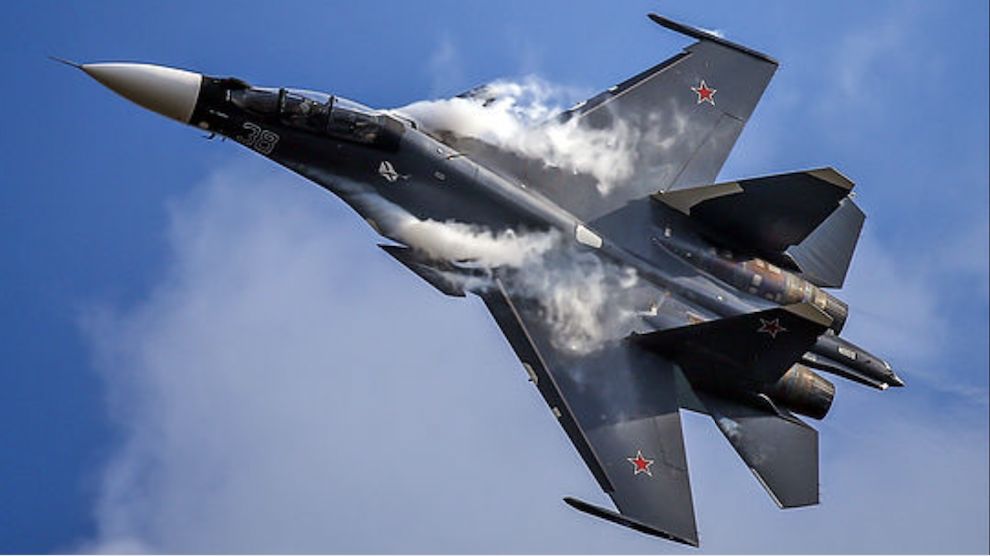
Light multirole fighters have historically fared poorly against their specialised air superiority oriented counterparts, as demonstrated in the Gulf War and Ethiopian-Eritrean War where the F-15 and Su-27 were able to dominate the skies and score multiple kills for no losses against lighter platforms. While the Iranian operated F-14 air superiority fighters did suffer some losses against lighter Iraqi jets such as the Mirage F1 - they downed an average of 53.3 enemy aircraft for every one shot down during the Iran-Iraq War. Sweden’s claim therefore that its Gripen, which has less than half the thrust or weight of the Flanker and is considerably slower and lower flying, will be able to defeat the elite Russian fighters, is cause for serious question based on historical precedents set by fighters of their classes. Russia's Flanker fleet for its part has been comprehensively modernised to field next generation capabilities, with older Su-27 airframes being upgraded to the Su-27SM2 standard and fielding a number of '4+ generation' systems developed for the Su-35 including a state of the art avionics, updated engines and an Irbis-E radar. This means that the Gripens will not enjoy a considerable technological advantage which could otherwise help to offset the disadvantages a light fighter would face against a high end air superiority platform.
Chief of the Swedish Air Force Major Geheral Mats Helgesson stated regarding the capabilities of the indigenous light fighter: “Gripen, especially the E-model, is designed to kill Sukhois. There we have a black belt.” While Sweden’s research and development budget for modern combat aircraft remains low, and the specifications of the Gripen are far from impressive, a number of features of the Gripen E could potentially make it a greater challenge for the Su-27 than other light fighters such as the F-16 or MiG-29. To offset the costs of developing a modern high performance engine, Sweden’s Gripen uses an American General Electric F404. The Gripen E uses the more powerful General Electric F414 - far more capable than anything the European state could hope to develop indigenously though still less powerful than a single of the Su-27’s twin Saturn AL-31 turbofans or the F-16’s F110. The Gripen also relies heavily on externally manufactured munitions - namely the American AIM-120C which retains a 105km range and has roughly analogous capabilities to the Russian R-77. The fighter’s Raven ES-05 AESA radar is manufactured by the Italian company Leonardo - again offsetting the costs of researching and developing such systems domestically for small scale production.
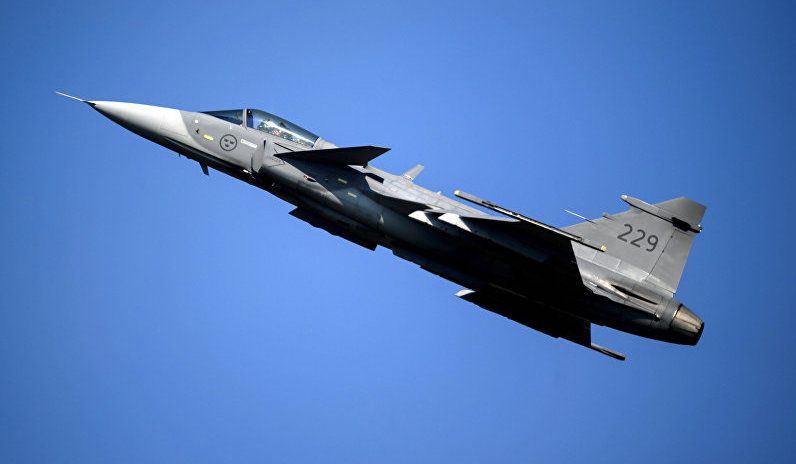
The Gripen E has a number of strengths relative the Russian Flanker which it may well be able to leverage to its advantage. New variants of the fighter are set to be equipped with the European Meteor air to air missiles, and possibly the American AIM-120D, which are considerably more capable than the R-77 and even the longer ranged R-27ER deployed by Russian Flankers. The Russian K-77, while deploying analogous capabilities to the latest Western munitions, is set to be reserved for the country’s Su-57 and MIG-35 next generation combat jets, and is unlikely to see service on the Flankers in the near future. The R-37M meanwhile, though retaining a longer range than the Meteor at over 400km and a considerably faster hypersonic speed of Mach 6, is reserved for the Su-35 alone among the Flanker models meaning the Su-30 and Su-27 will have no analogous extreme range engagement capability. The manoeuvrability of the Meteor in particular could make it a challenge for the Flankers to evade even at long ranges. The Gripen E also relies heavily on advanced electronic warfare systems and an advanced radar signature reducing AESA radar to improve its survivability against Russian beyond visual range attacks - though Russia’s latest Flanker variants also have highly capable electronic warfare systems which have when previously deployed in the Syrian theatre rendered them undetectable to even the U.S. Air Force’s advanced fifth generation fighters - the sensors of which are far more capable than those of the Swedish jet. With both sides strongly emphasising radar jamming and electronic warfare to improve survivability, it is likely that the aircraft will struggle to target one another at long ranges. This will, however, work in the Russian Air Force’s favour - with the Flankers particularly renowned and currently unrivalled in their visual range combat capabilities which combined with a considerable altitude advantage would leave the Gripen at a significant disadvantage. Considering this and the Gripen E’s considerable cost - more than that of any of Russia’s Flanker variants or even the American F-35A despite its light weight and lack of either a high end air superiority airframe or stealth capabilities - the Swedish Air Force’s reliance on the Gripen E may well work against it.
