
Brazil Receives First Gripen E Lightweight Fighter: Implications for the Balance of Power in South America
Military Watch Magazine Editorial Staff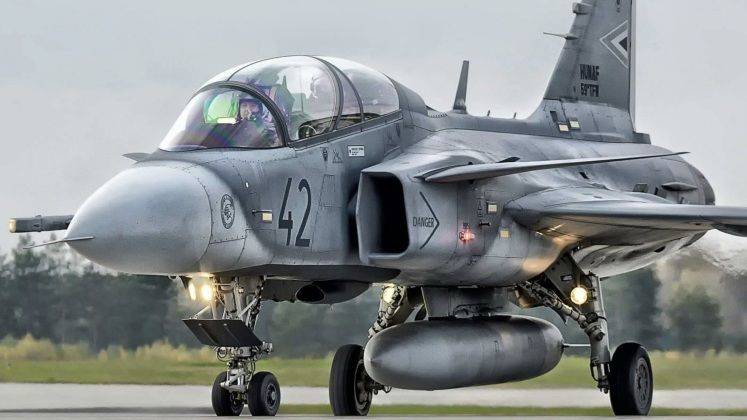
Gripen Lightweight Fighter
The first Gripen E lightweight fighter jet has arrived in Brazil, after the South American state placed an order for 36 of the jets in 2014. Brazil has so far been the only export client for the new variant of the venerable Swedish aircraft, with the Gripen E’s cost making it the most expensive lightweight fighter in the world to manufacture despite a relatively modest flight performance. The aircraft nevertheless boasts considerable improvements over the original Gripen A and Gripen C models, most notably including integration of the F414 engine to replace the F404 on the original aircraft. The F414 was designed to power the F-18E Super Hornet of the U.S. Navy, where its predecessor had powered the standard Cold War era F-18 Hornet, with the new engine boasting a higher thrust/weight ratio and considerably more power. Other enhancements include integration of new cockpit displays and electronic warfare systems, an AESA radar and Meteor long range air to air missiles. It remains uncertain, however, whether Brazil will seek to purchase the Meteor, as the Brazilian Air Force has previously shown no interest in equipping its fighters with standoff range anti aircraft munitions.
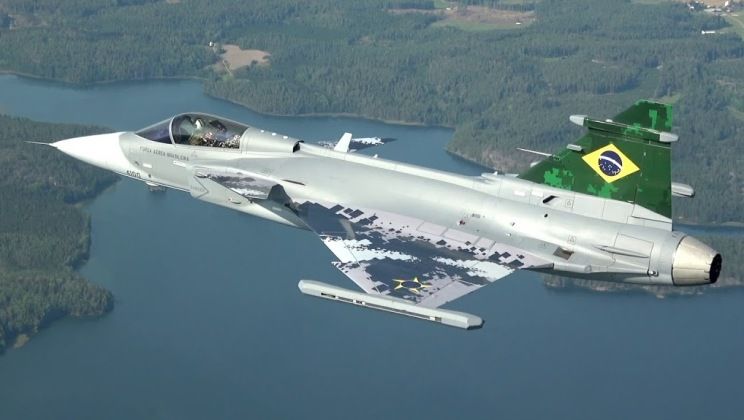
A statement by Swedish aircraft manufacturer SAAB regarding the Gripen delivery elaborated as follows: “It will be used for the verification of Brazilian specific functionality, such as communication system and weapon integration… the aircraft will also be used as a common test asset for the whole Gripen E/F test programme. Activities in Brazil will include testing of flight control system, environmental control system as well as tests in the aircraft in tropical climate conditions… In addition to the testing that is common for the Gripen E programme, unique features of the Brazilian aircraft, such as weapons integration as well as the Link BR2 communication system – which provides encrypted data and voice communication between the aircraft – will be tested in Brazil.” A further batch of 36 Gripen E jets is expected to be ordered after the initial delivery its complete, providing sufficient numbers not only to fully replace the ageing F-5E fighters currently in service, but also to expand the Brazilian fleet by several aircraft. The first Gripen fighter is set to enter service with Brazilian Air Force in 2021.
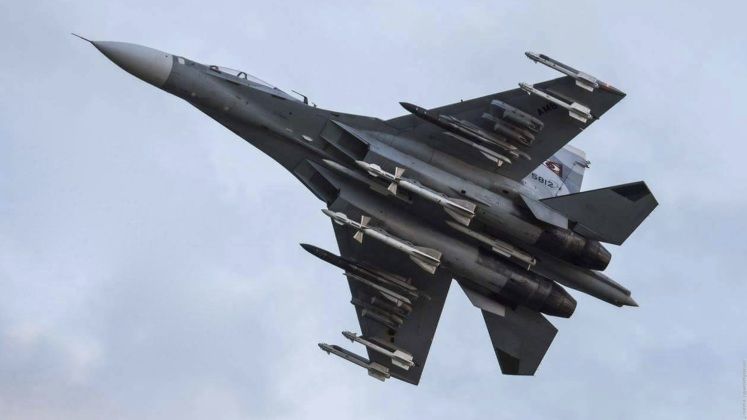
The somewhat controversial choice of the Gripen E reflects Brazil’s longstanding strong preference for aircraft with low operational costs and low maintenance requirements, with the country currently operating the third generation F-5E. Although the F-5 was already considered out of date when ordered, it was prized for having a much lower operational cost than any other Western fighter. The Gripen will place the Brazilian Air Force in a much stronger position in the face of growing tensions with neighbouring Venezuela, with the country otherwise having been overwhelming outmatched by the Venezuelan Air Force due to its lack of any standoff air to air or surface to air missiles whatsoever. Alongside a single unit of F-16 fighters, which are themselves far superior to anything currently in Brazilian service, the Venezuelan Air Force also deploys 23 Su-30MK2 heavyweight ‘4+ generation’ combat jets and the S-300VM long range surface to air missile system. Although it is an older Su-30 variant dating back to the late 1990s, the Su-30MK2 was previously considered the most capable fighter in the Americas outside the United States by a considerable margin. The introduction of the Gripen is likely to give Brazil some important advantages particularly if the jets are equipped with Meteor missiles.
