
Footage Confirms Iranian Air Defences Shoot Down Hostile F-16
Military Watch Magazine Editorial Staff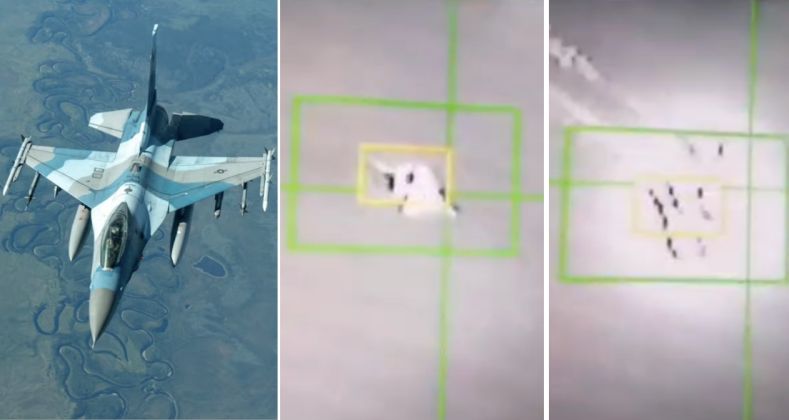
F-16 and Shootdown Over Iran
Footage has confirmed the successful shootdown of an F-16 fighter aircraft by Iranian air defences near Qeshm Island on April 2, as the Iranian Armed Forces have continued to rely heavily on infrared guided short and medium range surface-to-air missile systems to engage hostile aircraft. The United States Air Force and the Israeli Air Force both rely on the F-16 as their primary workhorses for air offensives, leaving considerable uncertainty regarding which country’s fighter may have been destroyed. The U.S. Air Force operates significantly more capable and advanced variants of the fighter that have been brought up to the modern F-16V ‘4+ generation’ standard, with Israeli F-16s lacking comparably advanced avionics or radars. While other U.S. and Israeli strategic partners such as Jordan, Bahrain and the United Arab Emirates operate F-16s, they have employed them primarily for air defence duties to support the broader U.S.-led campaign, and are not known to have launched offensive operations near Iranian territory.
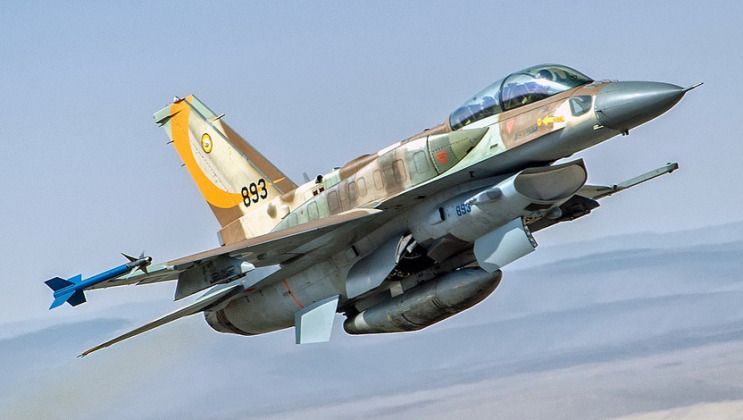
The rapid depletion of U.S. and Israeli beyond visual range missile arsenals has reportedly increasingly forced the services of both countries to operate closer to or within Iranian territory to use lower cost and more abundant gravity bombs. This poses significantly greater risks, however, particularly for fighters that lack advanced stealth capabilities such as the F-16. Israeli F-16s in particular use obsolete mechanically scanned array radars that are not only vulnerable to jamming, but also emit large signatures allowing them to be detected and located. The F-16 shootdown on April 2 reportedly resulted in the pilot ejecting over Iranian territory, with their fate remaining unknown.
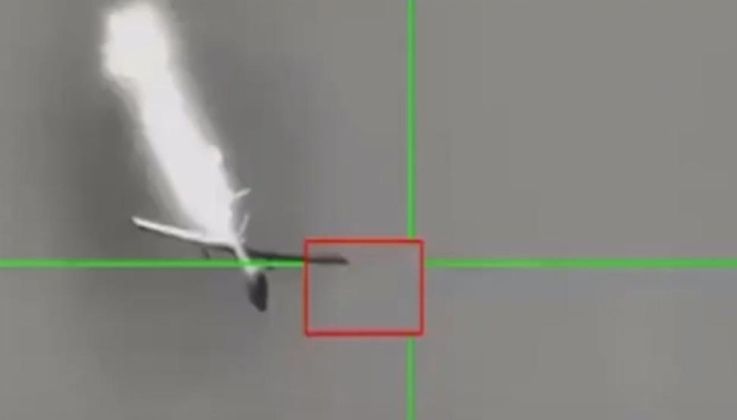
In the final week of March the U.S. Armed Forces and the Israeli Air Force were reported to have significantly reduced deep penetration strikes over Iranian territory following the confirmed successful surface-to-air attack on an F-35 fifth generation fighter on March 19. The attack damaged the F-35 sufficiently to cause shrapnel wounds to the pilot, as was later confirmed by the U.S. Air Force. U.S. and Israeli losses to Iranian air defences have reportedly also included multiple F-16, F-15 and F-18 fighters, as well as large numbers of unmanned aircraft including at least 17 MQ-9 Reaper drones. According to a “highly-placed intelligence source” in Iran, these losses “have led to a significant reduction in military operations by American and Israeli fighter jets in the central regions of the country.” "After striking the F-35, the pace of military operations has decreased, although aircraft and drones are still being used for reconnaissance purposes," the source added.
