
U.S. F-35 Stealth Fighter Pilot Suffered Shrapnel Wounds After Hit By Iranian Air Defences
Military Watch Magazine Editorial Staff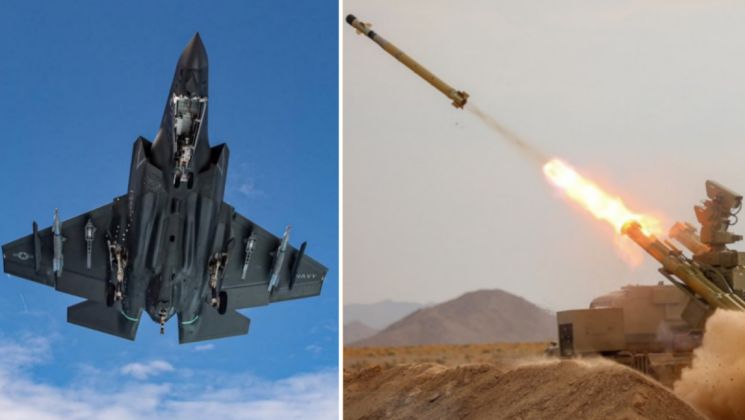
F-35 and Iranian IR-Guided Surface-to-Air Missile Launch
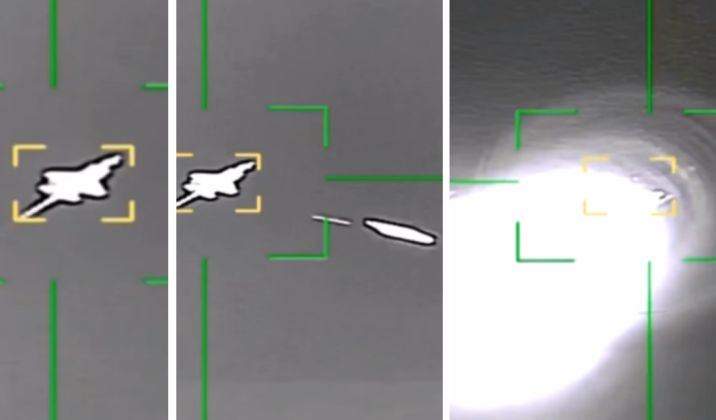
A U.S. Air Force F-35A pilot whose fighter was hit by local air defences on March 19 has been confirmed to have suffered shrapnel wounds, according to the service’s official publication Air & Space Forces Magazine. “Though U.S. Central Command has not provided details, the aircraft was most likely damaged by a surface-to-air missile rather than by small-arms fire or another projectile, given the altitude at which the F-35 typically flies,” the magazine noted, which closely corroborated with footage released by Iranian sources showing a missile hitting the aircraft. The Iranian Islamic Revolutionary Guard Corps, which was responsible for the operation, claimed that it “severely damaged” the F-35 in its strike, with the U.S. Armed Forces having provided no confirmation on the state of the aircraft.
Iranian air defences have had continued successes against U.S. aircraft, and have shot down over a dozen MQ-9 Reaper drones and multiple Israeli unmanned aircraft. The extent of successes against manned aircraft remains disputed, with Iranian sources publishing footage of multiple shootdowns of U.S. and Israeli F-15 and F-16 fourth generation fighters. The U.S. and Israel have refrained from launching large scale deep penetration operations into Iranian airspace using manned aircraft, with only the F-35 and the B-2 bomber appearing to have been used for such operations due to their advanced stealth capabilities. Delays developing the F-35’s critical Block 4 software means it cannot carry air-to-ground missiles, and thus needs to fly near Iranian targets to be able to strike them.
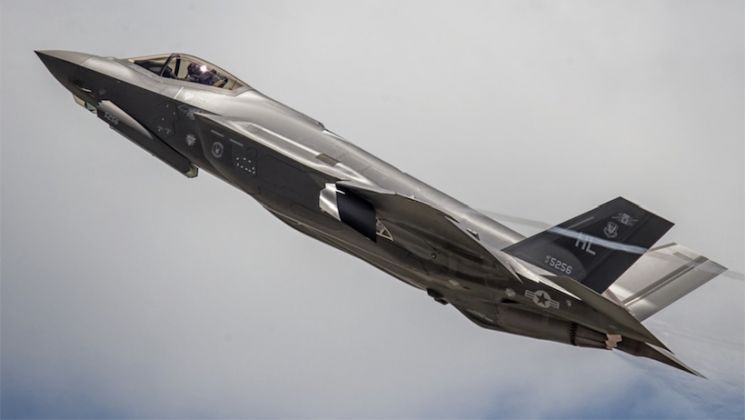
Alongside losses over Iran, the U.S. has lost multiple aircraft over Iraq, including a KC-135 tanker which crashed on March 12, which local paramilitary groups claimed to have shot down, and three F-15E fighters which crashed near the Iraqi-Kuwaiti border on March 2, which Iraqi paramilitary groups are also claimed responsibility for. The U.S. Army has responded by deploying AH-64 Apache attack helicopters against these Iranian-aligned militias. The loss of an F-35 is a particularly high profile incident, with the assault on Iran launched on February 28 marking the first war effort in which the aircraft has seen high intensity combat. The aircraft was developed under by far the largest and most costly weapons program in world history, and is on production on a larger scale than all other NATO-compatible fighter types in the world combined, meaning its effectiveness has very significant implications for the U.S. and its strategic partners’ capabilities.
