
Report of Kuwaiti Fighters Shooting Down U.S. F-15s Raises Serious Questions Regarding Air Campaign Against Iran
Military Watch Magazine Editorial Staff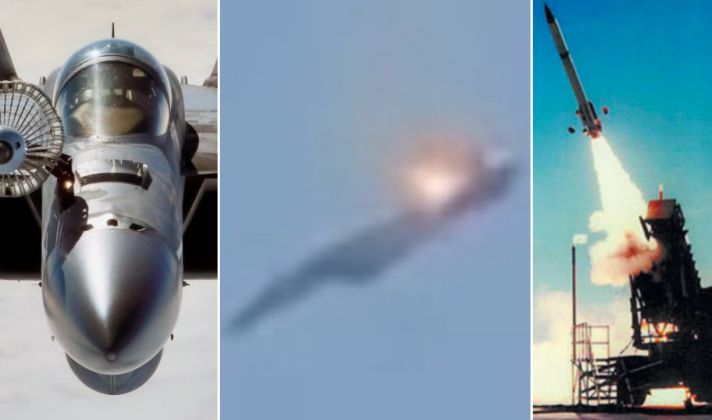
F-18, F-15E Crashing Over Kuwait, and Patriot Missile Launch
Sources cited by the Wall Street Journal have reported that a Kuwaiti Air Force F-18C fighter shot down three U.S. Air Force F-15E Strike Eagle fighters over the country’s territory on March 2, amid ongoing air operations by both countries against Iran. This follows prior unconfirmed reports that a Kuwaiti MIM-104 Patriot long range air defence system had been responsible for the shootdowns, after which growing questions were raised by analysts regarding the likelihood of the claimed friendly fire incident. F-15s broadcast an identification friend or foe (IFF) signature that Patriot batteries can detect when the proper encryption key is shared with allies, while Kuwaiti Patriot batteries and F-18 fighters support Link 16 data link integration with U.S. data which would further reduce the possibility of friendly fire, raising questions regarding how three separate friendly fire incidents could have occurred.
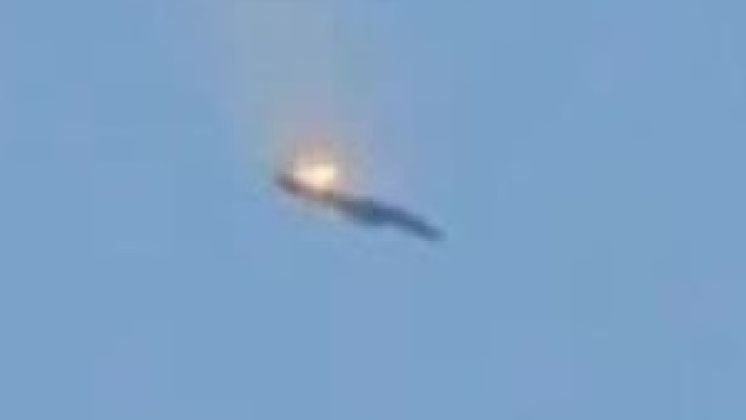
After a single friendly fire incident, joint emergency command orders would usually to be shared with Kuwait, meaning for three F-15s to be shot down in one night, F-15s either would need to have been operating without broadcasting IFF, or without IFF encryption keys or ID data having been shared with Kuwait. Any of these possibilities would have been highly unlikely during a high intensity air operation. Moreover, three shootdowns would require that Link 16 was not shared, or Link 16 broadcast capabilities were destroyed, that Air Tasking Orders were not shared, that emergency alerts were not shared after the first shootdown, and that there was no AWACS data sharing or no higher level C2 node integration.
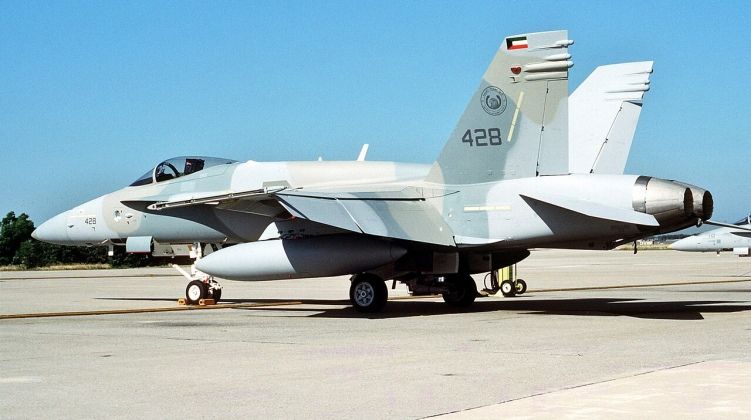
Analysts have widely concluded that the shootdown of three F-15s over Kuwait was the result of one of three possibilities. Either the U.S. made an operational decision to ignore our standard practices and not share data, placing U.S. forces at serious risk, which would be highly unlikely, or that Iranian attacks were far more successful than U.S. sources had indicated, and had damaged critical identification and communications infrastructure. A third possibility was that the aircraft were not shot down by friendly fire, and instead by either paramilitary groups in Iraq, or long range air defence systems in Iran, both of which can fire on targets in Kuwaiti airspace.
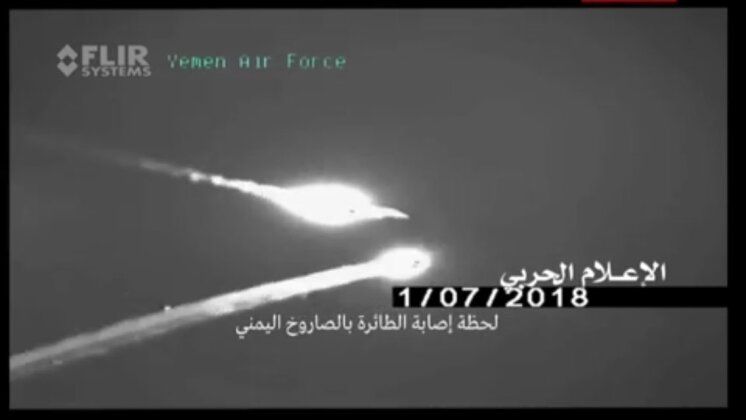
Iraqi paramilitary groups have claimed responsibly for the shootdowns, with Iranian-armed groups having demonstrated significant successes against U.S. aircraft in the past using various infrared guided missile types, including shooting down Royal Saudi Air Force F-15s over Yemen. With the F-15 shootdown having only been reported after civilians filmed the aircraft crashing, questions have been raised regarding whether significant further shootdowns have occurred and simply not been reported. Analysts have also widely observed that the U.S. Armed Forces have a long history of not reporting, or otherwise misattributing, losses of their aircraft during operations to protect the reputations of the forces and the defence sector.
