
F-15E Shot Down: Footage Shows Longest Range U.S. Fighter Falling in Flames Over Kuwait
Military Watch Magazine Editorial Staff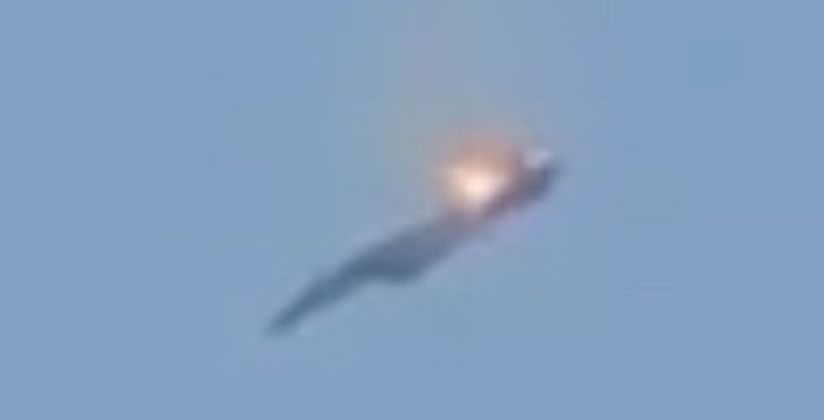
F-15 Falling in Flames Over Kuwait
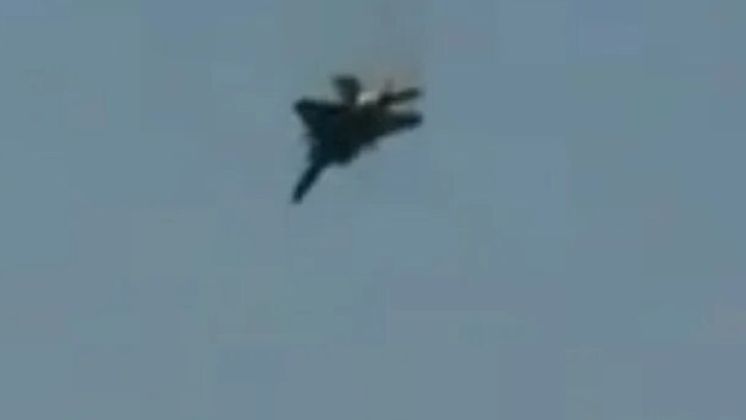
Following multiple unconfirmed repots of shootdowns of U.S. Air Force and Navy fighter aircraft since attacks on Iran were initiated on February 28, footage released on March 2 has shown an F-15E Strike Eagle falling in flames in an uncontrolled spiral over Kuwaiti skies. Although the F-15 is also operated by Israel, Saudi Arabia, and Qatar, which are all participating in the war effort, the U.S. Air Force is the only service known to fly the aircraft over Kuwait. The Kuwaiti Defence Ministry subsequently confirmed that several U.S. military aircraft have crashed, and that search-and-rescue operations had been launched in each instance and all crew have been safely recovered. The F-15 is by far the longest ranged and heaviest fighter type in the Western world, and is relied on particularly heavily for operations against more capable adversaries.
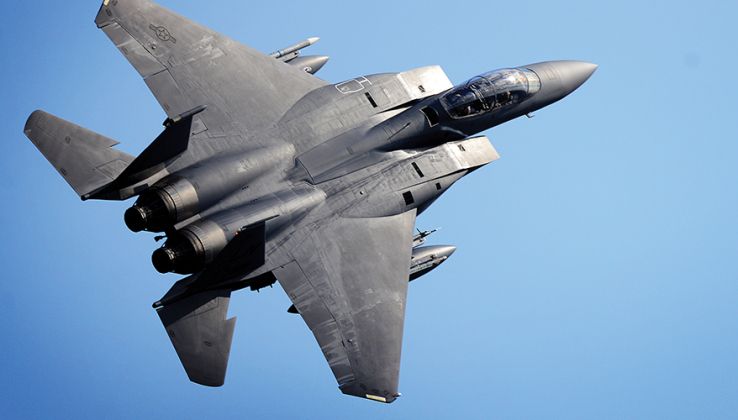
The U.S. Air Force in January redeployed a large number of F-15E Strike Eagle fighters supported by KC-135 aerial refuelling tankers from RAF Lakenheath in the United Kingdom, where they are permanently forward deployed under the 48th Fighter Wing, to Muwaffaq Salti Air Base in Jordan, which emerged as the U.S. Armed Forces’ most prominent forward operating location as they prepared for a planned assault against Iran. The F-15’s long range, high weapons carrying capacity, and much larger radar than other Western fighter types makes it optimal for multiple kinds of missions, including serving as a launch platform for beyond visual range missile strikes, and providing an air defence capability against Iranian drone units. Reflecting the importance of the fighters, Muwaffaq Salti Air Base was heavily fortified, and is one of just eight in the world to host a high value THAAD anti-ballistic missile system, which was revealed to have been deployed there in early February.
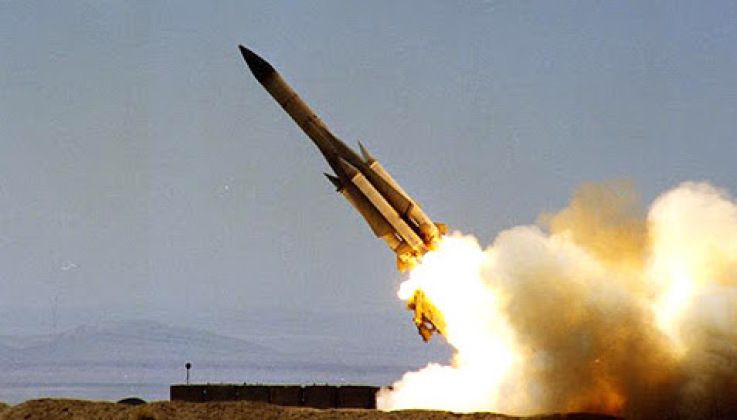
The shootdown of at least one F-15 may have been achieved by ground-based air defence systems, possibly deployed in Iraq, which is situated between Iran and Kuwait, either by Iraqi paramilitary groups or by Iranian forces operating in the country. Iranian-backed paramiltiary group have seriously threatened more advanced U.S. fighter aircraft in the past, most notably the Ansuruallah Coalition in Yemen which achieved near misses against F-35s and F-16s in prior clashes, and shot down multiple MQ-9 Reaper drones and possibly F-18E/F fighters. Other possibilities include the use of unmanned aircraft to strike the F-15s in the air, or possibly, albeit less likely, shootdowns by Iran’s fighter aircraft. Iran is not known to field modern fighter types, but was reported by local sources to have received new MiG-29 fighters from Russia in late 2025, possibly with modern radars and missiles.
Kuwaiti Defence Ministry reports of multiple U.S. fighters crashing indicate that the shootdown may have been the result of a well planned air ambush. F-15E fighters have taken losses in the past, with two having been shot down by Iraqi air defences on January 17 and 19, 1991, during the Gulf War. The fighters have been prioritised for funding for modernisation, with modern ‘4+ generation’ avionics, including the AN/APG-82(V)1 active electronically scanned array radar, having been integrated. The demonstrated ability of Iranian or allied forces to shoot down some of the U.S. Air Force’s most high value fighters, and to bombard key military bases, is expected to add unprecedented levels of complexity to the ongoing U.S.-led war effort.
