
Iran Used New Majid Heat-Seeking Missile System to Take Out U.S. F-35
Military Watch Magazine Editorial Staff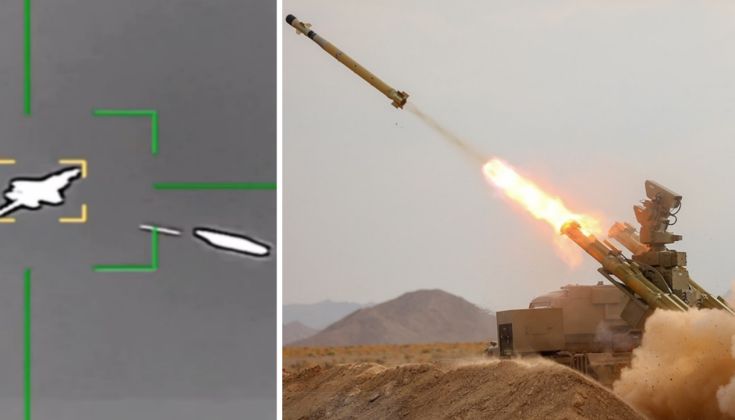
Majid Air Defence System Launch and U.S. F-35 Moments Before Impact
Following confirmation that the Iranian Islamic Revolutionary Guard Corps conducted a successful strike against a U.S. Armed Forces F-35 fifth generation fighter flying over central Iran, multiple sources have reported that the Majid short-range air defence system, also known as the AD-08, was responsible. The shootdown has significant implications for the immediate air campaign, and will potentially reduce U.S. and Israeli efforts to use stealth aircraft to launch penetration strikes deep inside Iran. Beyond the current conflict, the size of the F-35 program as by far the world’s largest fighter program outside China makes the first ever successful surface-to-air strike against one of the aircraft highly significant, potentially resulting in revisions to planning for operating them across multiple theatres. This may affect the more than 20 services across the world which have ordered F-35s.
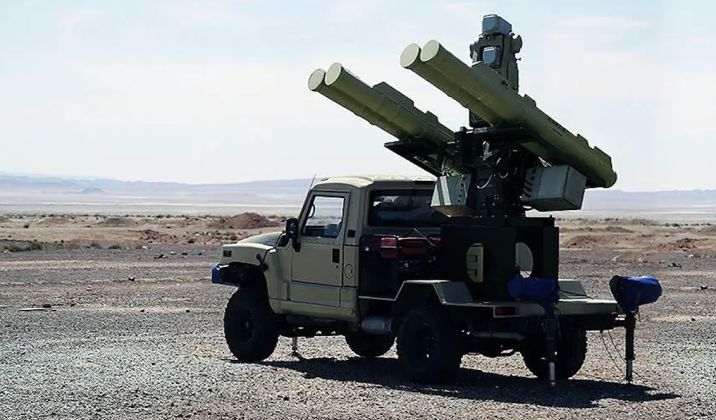
Produced by the Iranian Armed Forces Logistics Department's Defence Industry Organization, the Majid made its debut at a military parade on April 18, 2021. The short range system was designed for point defence rather than area defence, and is limited to a 700 kilometre engagement range and 6 kilometre altitude. Although its use of infrared rather than radar guidance limits its range, it also allows the Majid to operate without a radar signature, which considerably increases its survivability. The F-35’s radar cross section reductions are considerably greater than those to its heat signature, which has led infrared guided systems to be identified from the program’s early stages as a potential vulnerability.
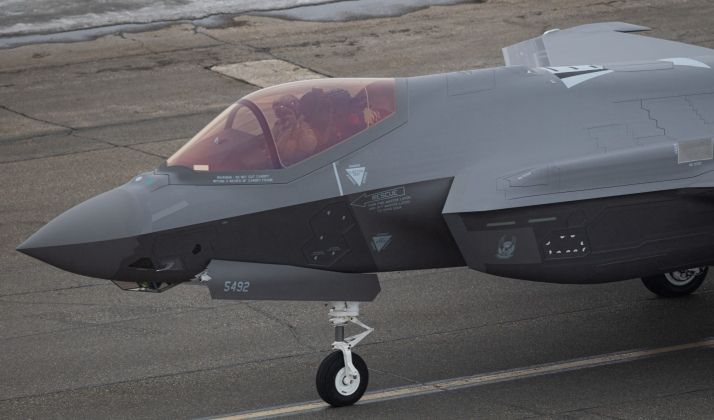
A further benefit of using infrared guidance is that systems like the Majid do not trigger targets’ radar warning receivers, while their electronic jamming will have little effect. Iranian footage of the strike indicates that only a single missile was launched against the F-35, possibly due to shortages, or because the launcher’s remaining missiles had already been fired against other targets. Iranian infrared-guided air defence systems have been responsible for destroying multiple U.S. and Israeli high value unmanned aircraft, most notably MQ-9 and Heron drones. While the F-35 was designed specifically to meet the requirements of launching penetration strikes into well defended hostile airspace, the two countries’ fourth generation fighters which lack similarly advanced avionics or stealth capabilities have not been deployed for similarly high risk operations.
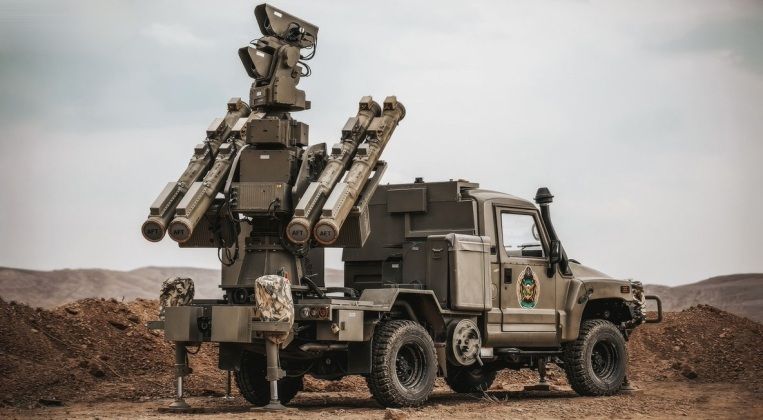
Iran is reported to have made considerable investments in modernising its short range air defence capabilities, with leaked Russian government documents in late February having indicated that the Iranian Defence Ministry had singed an arms deal valued at $580 million to procure 500 9K333 Verba man-portable short range surface-to-air missile launchers and 2,500 associated 9M336 missiles. The Verba is widely considered the world’s most capable man-portable air defence system, and is the only known man-portable system with a three-spectral seeker, giving it a qualitative edge against modern countermeasures. These include ultraviolet, near-infrared and mid-infrared seekers. Deliveries were expected to make Iran’s airspace among the most challenging to penetrate at lower altitudes.
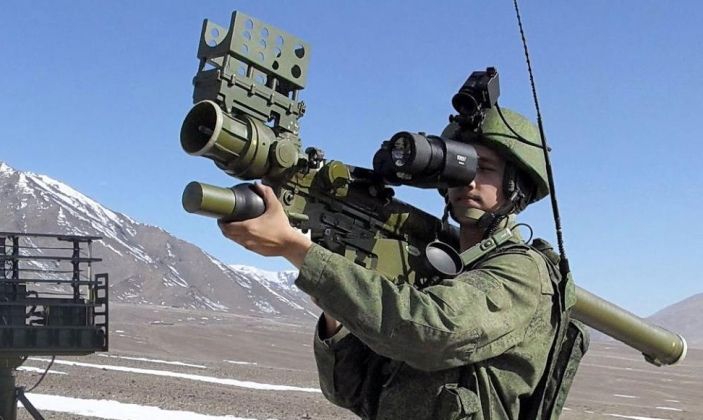
The Verba system was designed to have a high capability to discriminate targets from background heat sources, flares, and Directional Infrared Counter Measures (DIRCM). The possibility of the systems being delivered by Russia should hostilities continue remains significant, with requirements for training times being relatively low. The demonstrated ability of infrared-guided systems to threaten the F-35 may increase Iranian interest in accelerating deliveries. A major shortcoming of the F-35 remains that delays to the completion of Block 4 software upgrades has left them unable to launch air-to-surface missiles, which requires them to fly close to their targets to engage them, leaving them more vulnerable to strikes by short range air defence systems like the Majid and Verba.
