
Republic of China Air Force Deploys New F-16V Fighters with Sniper Pods to Monitor PLA J-16s in Live Fire Exercises
Military Watch Magazine Editorial Staff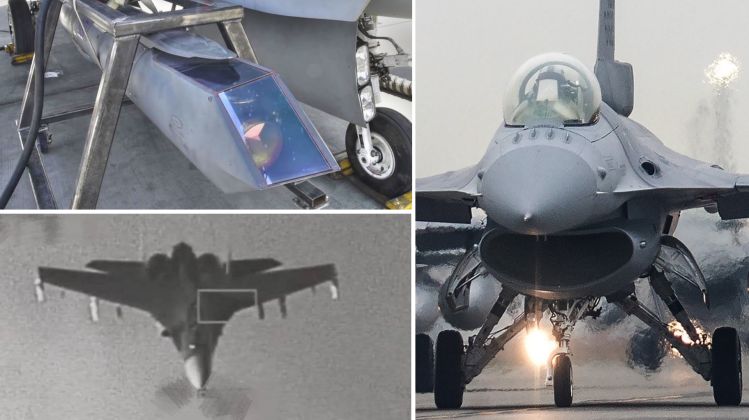
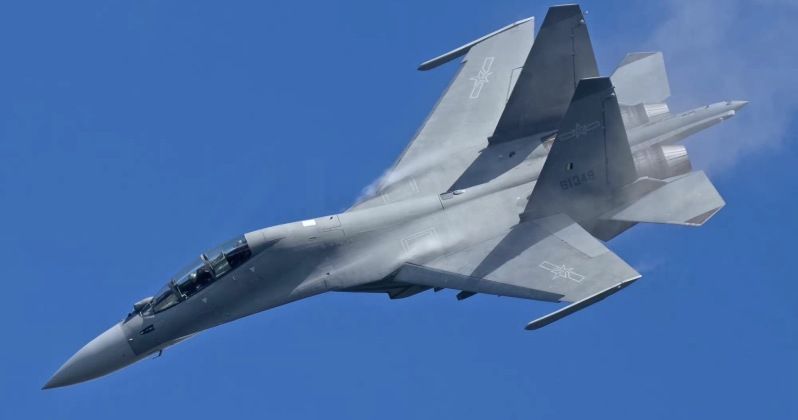
Sniper Pod, J-16 Fighter and Republic of China Air Force F-16V
The Republic of China Air Force has deployed F-16V fighter aircraft for aerial reconnaissance operations, in response to the Chinese People’s Liberation Army’s (PLA) launch of Justice Mission 2025 large-scale joint military drills around Taiwan Island. The two rival Chinese forces serve opposing governments based in Taipei and Beijing respectively, which both claim to be the sole legitimate governments of China and remain in a state of cold civil war. The Republic of China Ministry of National Defense revealed in a briefing at 4:45 p.m. local time that images from the F-16s’ reconnaissance had been released to demonstrate real-time intelligence, surveillance, and reconnaissance activities against mainland Chinese forces. The briefing specifically highlighted the activities of Republic of China Air Force F-16V fighters in monitoring PLA Air Force J-16 fighters using onboard targeting and reconnaissance systems.
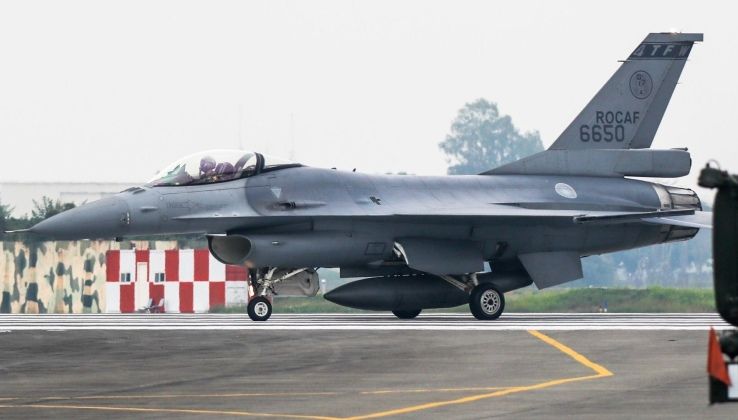
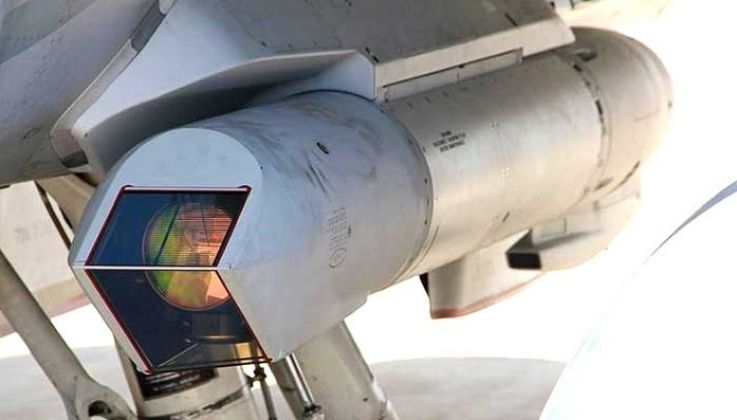
The Republic of China Ministry of National Defense observed on December 30 that the F-16V fighters involved in tracking PLA aircraft were equipped with the AN/AAQ-33 Sniper Advanced Targeting Pod, known colloquially as the Sniper Pod, which allows for long-range air-to-air reconnaissance and precision tracking without triggering an adversary aircraft’s radar warning receiver. It specified that the pod’s air-to-air surveillance range can reach up to 187 kilometres, enabling continuous monitoring of PLA air operations over considerable distances, including over mainland airspace, as the width of the Taiwan Strait itself is only 130 kilometres at its narrowest. The Armed Forces previously demonstrated this reconnaissance capability during the Joint Sword-2024A exercises. In addition to PLA Air Force fighter operations, a KJ-500 airborne early warning and control aircraft was also reported to have been monitored using the Sniper Pod.
The capabilities F-16V and F-16 Block 70 fighters fall far far short of those of the F-35 fifth generation fighters which the Republic of China Air Force had initially sought to procure, with the government in Taipei’s lack of international recognition and status close to that of a non-state actor making deliveries of higher end equipment particularly controversial. The risks of technologies from equipment delivered to the Republic of China Armed Forces being compromised to the Chinese mainland has been a further factor limiting the sophistication of U.S. defence exports. Compared to the J-16, the F-16s are considered to be overwhelmingly outmatched, with the mainland fighter carrying a radar which is comparably advanced but close to four times as large and several times more powerful, while its flight performance and armaments remain considerably more modern. The mainland’s fielding of J-20 and J-35 fifth generation fighters, which in many respects outperform the F-35, and its expected fielding of the world’s first sixth generation fighters in the early 2030s, have further ensured that the F-16 fleet remains overwhelmingly outmatched.
