
Europe’s Top Fighter Has Lagged Far Behind For Decades: Rafale Marks 40 Years in the Air
Military Watch Magazine Editorial Staff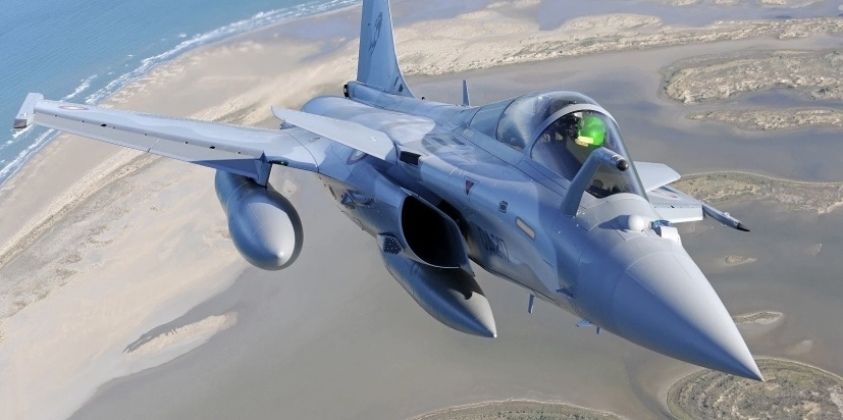
Rafale Fighter
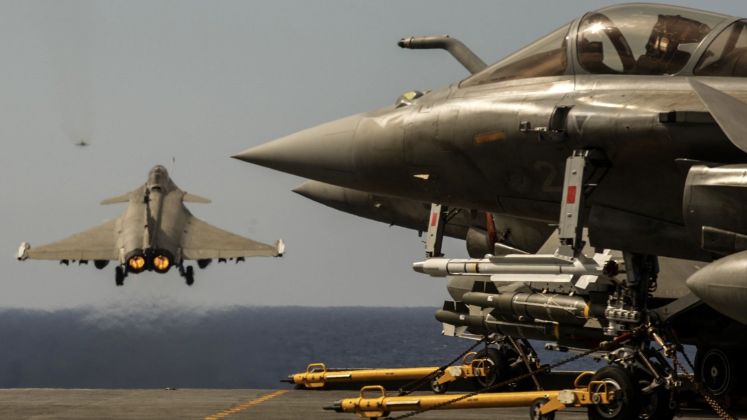
The French Rafale fighter program on July 4, 2026, marked 40 years since the first flight of its first technology demonstrator in 1986, with the program having since evolved into by far the most successful in Europe in the post-Vietnam War era. The French Air Force began defining requirements for the fighter in 1983, just three years before its first flight, although major development delays meant that it would be 18 years before the aircraft could be belatedly brought into service in 2001. After production was temporarily suspended due to budget constraints in 1996, the Rafale became operational in the French Navy in May 2001, before belatedly achieving early operational capability milestones with the service in 2004. The fighter would only begin to enter wider service with the Air Force in 2006, 20 years after its first flight.
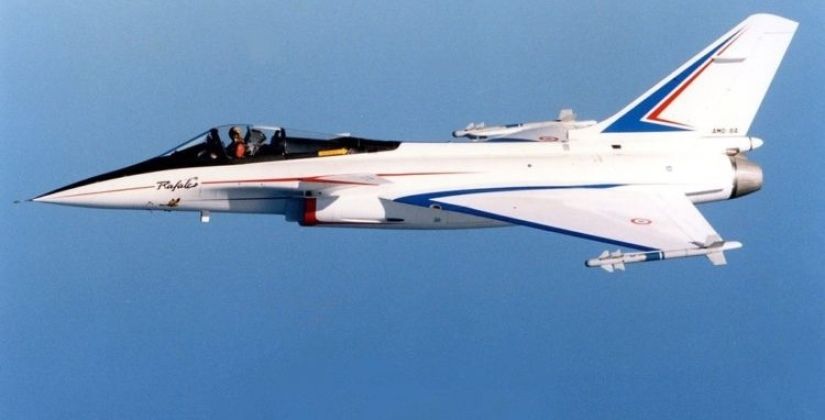
The Rafale program was from its outset very far from cutting edge, and by the time it first flew both the United States and the Soviet Union had already moved decisively into the fifth generation of air combat technology development, leaving the French aircraft’s design baseline far behind. An inability to compete on a peer level with the world’s two leading innovators in defence aerospace left French and other European programs reacting to technological trends, rather than defining them. While this was also an issue faced by Chinese programs at the time, China would prove far more successful over the following decades in bridging technological gaps to rapidly move into and subsequently beyond the fifth generation of fighter aviation.
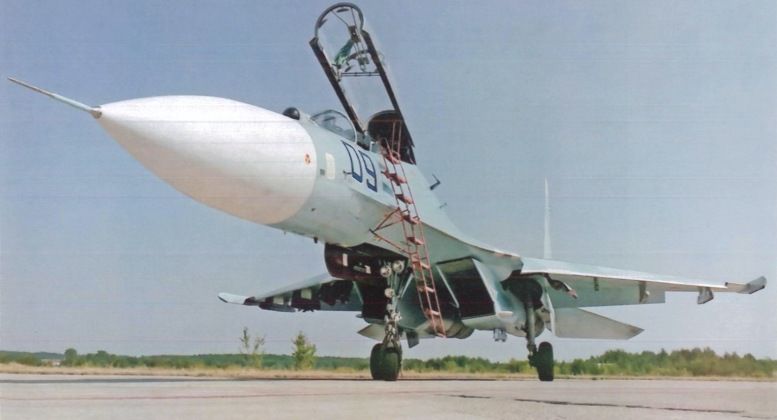
By the mid-1980s when the Rafale was beginning flight testing the United States and Soviet Union had already fielded mature fourth generation fighters and interceptors, with the U.S. F-15 and Soviet MiG-31 and Su-27 all having far greater combat potentials than the Rafale would. Advantages included superiority in most aspects of their flight performances, far longer ranges, and the integration of considerably more powerful sensors, as well as far greater growth potential than the lightweight French aircraft. In the United States, development work was well underway to prepare for the first flights advanced fifth generation technology demonstrators, the and YF-22 and YF-23, which focused on stealth shaping, sensor fusion, and supercruise, with Soviet design bureaus working on the MiG 1.42 and other programs that were to integrate similarly advanced technologies.
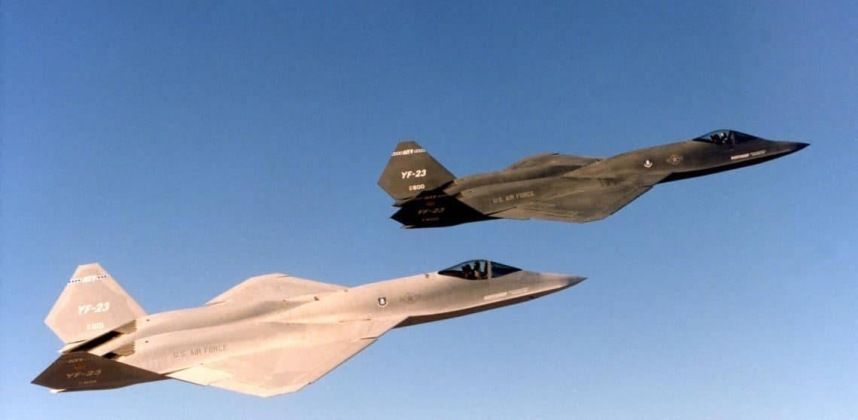
While being a full generation ahead of the Rafale technologically, the YF-22 and YF-23 first flew just four years later, while the MiG 1.42 was scheduled to make its first flight two-to-three years after them, although the Soviet Union’s disintegration ended the program and set Russian fighter development back by decades. While the U.S. would integrate modern active electronically scanned array radars onto its F-15 fighters from 2000, followed by Japan in 2002, the Rafale would remain years behind doing so only in 2013, ensuring that top performing American fighters not only integrated much larger radars, but also radars that were far more advanced. While the U.S. F-22 fifth generation fighter program faced considerable delays due to post-Cold War budget cuts and industrial decline, the aircraft was brought into service in the U.S. Air Force in 2005, shortly before the fourth generation Rafale joined the French Air Force in 2006.
The Rafale’s capabilities have fallen increasingly behind the cutting edge during its time in service, with the introduction into service of the F-35 in 2015 and the J-20 in 2017 having brought fifth generation fighters to a much higher new capability level. Incremental modernisation of both fighter types has left the Rafale increasingly far behind, while the introduction of advanced Chinese and U.S. ‘4+ generation’ fighters such as the F-15EX, J-16 and J-15T have provided far superior capabilities to those of the Rafale within its own generation. The introduction into service of the Chinese J-20A, and the projected introduction of the F-35 Block 4 in the early 2030s, will further widen the discrepancy in performance, with the Rafale’s modernisation potential remaining far more limited. Russia, meanwhile, which has lagged far behind the U.S. and China in fighter development due to post-Soviet decline, has significantly enhanced its Su-57 fifth generation fighter, which while less sophisticated than the J-20 or F-35, still has far higher combat or modernisation potentials than any European fighter type.
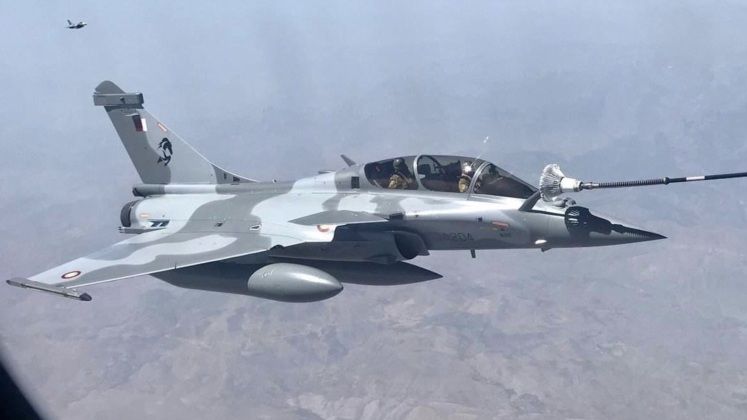
The Rafale itself has seen its export prospects seriously constrained by its inability to compete on the same level with advanced fifth generation fighters, with the aircraft losing every tender in which it has competed against the F-35. The French fighter program has as a result relied heavily on both domestic orders and on sales to countries which for political reasons cannot consider the F-35, such as Indonesia, Qatar and Egypt. The French fighter saw its first high intensity combat test in May 2025, during which between one and four of the aircraft flown by the Indian Air Force were neutralised during engagements with Pakistan Air Force’s Chinese-supplied J-10C ‘4+ generation’ fighters, which are among China’s lower end fighters in production today. This was far from isolated, with J-10C fighters similarly winning overwhelmingly against the Rafale’s pan-European rival the Eurofighter during simulated combat exercises in Qatar.
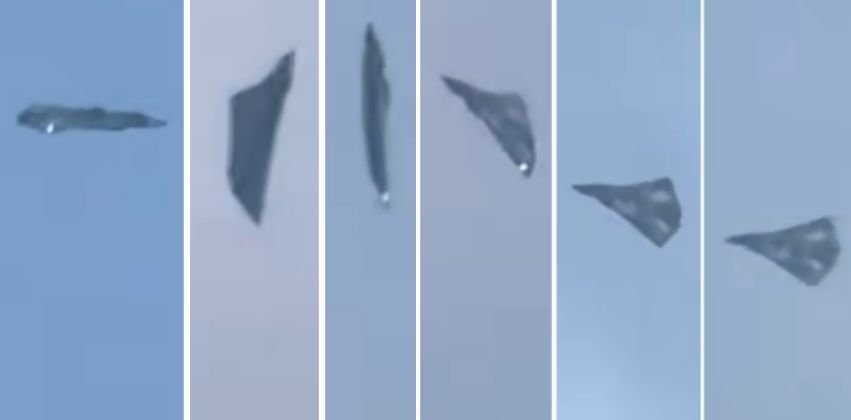
The Rafale’s capabilities are projected to increasingly fall behind the cutting edge, with China scheduled to bring sixth generation fighters into service in the early 2030s, close to a decade before the United States, while no third countries are expected to produce similarly capable fighters until the late 2040s at the earliest. The French Armed Forces will continue to rely on the Rafale as their primary fighter until at least the late 2030s, and likely significantly longer, with European fighter programs considered unlikely to produce a fighter on par with the F-35 Block 4 or J-20A for the foreseeable future, let alone a sixth generation fighter. Where other European states have responded to their inability to compete at a cutting edge level in fighter aviation by procuring F-35 fighters from the United States, France’s commitment to protecting local industry will leave its fleet increasingly obsolete, with the country potentially being the last nuclear weapons state to rely exclusively on fourth generation fighters. The Rafale program was from its conception far behind the cutting edge, with its international standing having diminished significantly over the past four decades as air power has evolved far beyond the trends of the fourth generation era.
