
Chinese State Sources Confirm J-10C Fighters’ Overwhelming 9-0 Victories Against Eurofighters
Military Watch Magazine Editorial Staff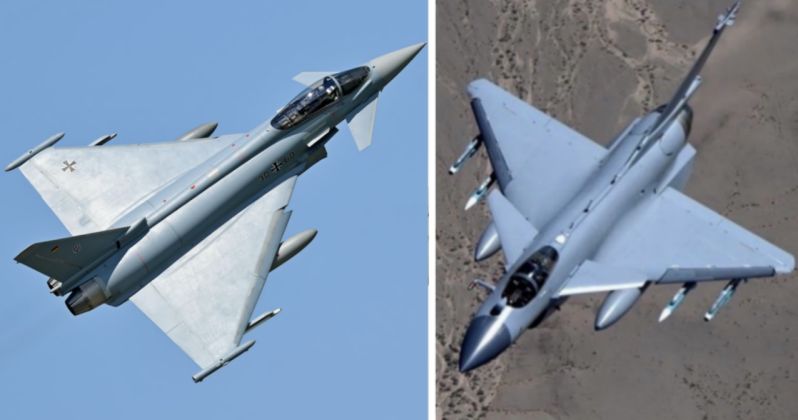
Eurofighter (left) and J-10C Fighter
Chinese state broadcaster CCTV has confirmed longstanding reports that J-10C fighters operated by the Pakistan Air Force won overwhelming victories in simulated air-to-air engagements against Qatar Emiri Air Force Eurofighter combat jets. Although Chinese media did not report on the specific exercises in which this occurred, Pakistani media outlets have widely reported the exercises in question were the Zilzal-II. These joint air exercises in Qatar in January 2024 saw the J-10Cs achieving a 9-0 score during engagements. These successes were achieved just a year before the J-10C saw its first high intensity combat test to achieve outstanding results against the Indian Air Force in May 2025, shooting down between one and four Rafale fighters according to prevailing reports. The Rafale and Eurofighter are closely related fighter types with highly comparable capabilities, which is in large part a result of their common origin in the European Fighter Aircraft program.
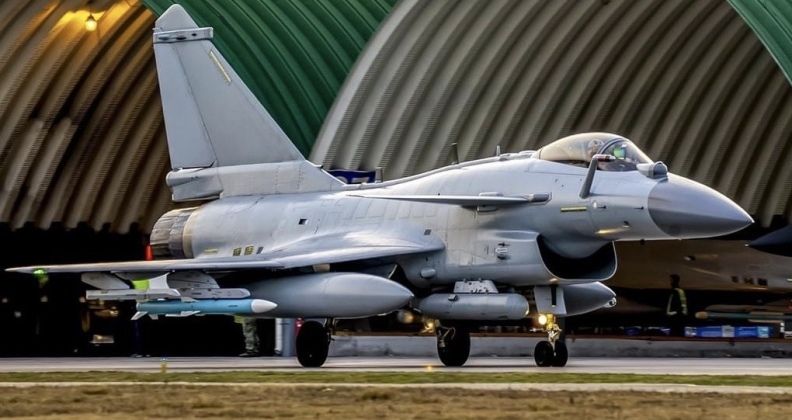
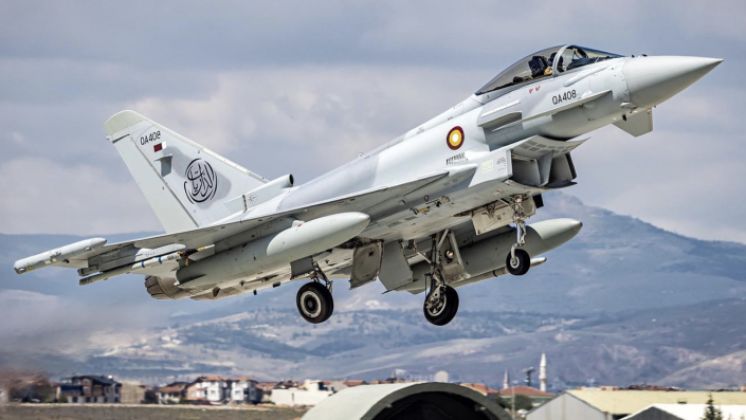
While Eurofighters built up to the late 2010s have long been criticised as obsolete, Qatar operates some of the world’s few Tranche 3A or Tranche 4 variants, which are significantly more advanced than those fielded by the European partner states that developed the aircraft, and integrate the new Captor-E active electronically scanned array radar. While overwhelming victories for the J-10C would be expected at beyond visual ranges should the Eurofighters have used the older Captor mechanically scanned array radar, the extent to which the new radar could help remedy the European aircraft’s long reported weakness in the air-to-air domain remained uncertain. While simulated air-to-air engagements can be influenced by multiple factors, such as training levels and the support aircraft that are deployed, the J-10C’s achieving of overwhelming successes against the Eurofighter closely aligns with prevailing trends, including the vast discrepancy in the capabilities of the Chinese and European fighter aviation industries and broader technological bases.
China’s unveiling of two new sixth generation fighter types in December 2024 at flight prototype stages has provided one of multiple indicators that the its combat aviation industry is leading the world in development, with the Chinese PLA Air Force expected to field such fighters close to a decade before services in any other country. While the United States is expected to operationalise a comparably advanced fighter under the F-47 program, and possibly under the U.S. Navy’s F/A-XX program, European states are not expected to operationalise a fighter type with comparable capabilities at least until the 2050s or beyond. Indeed, while the U.S. first flew a fifth generation fighter prototype in 1990, and China did so in 2011, European states have yet to bring a post-fourth generation fighter type into flight testing. The vast and growing technological gap that disadvantages European fighters is expected to continue to produce results like the J-10C’s victories over the Eurofighter in Qatar.
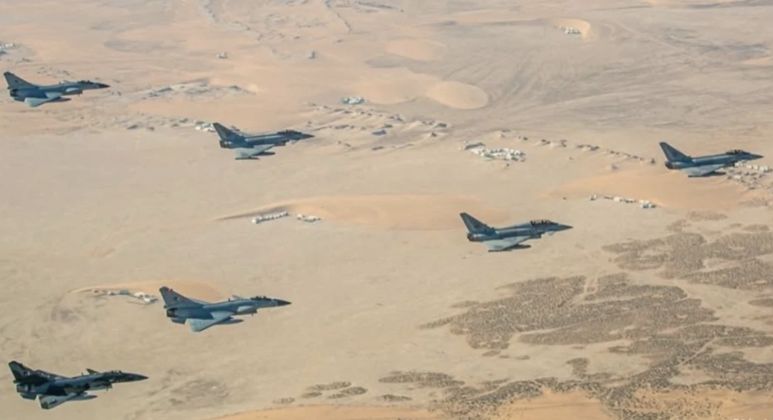
Hopes for the Eurofighter serving as a pan-European combat jet have in recent years been dashed by the aircraft’s losing of every tender in which it has competed against the U.S. F-35. Despite considerable pressure from local industry the United Kingdom, one of the fighter’s two primary developers, had permanently shelved plans to purchase more Eurofighters, and will continue to withdraw them from service ahead of schedule while ordering F-35As. Germany has similarly sharply reversed its prior opposition to F-35 procurements as it became increasingly clear that prioritising protecting local industry would seriously constrain combat capabilities due to the Eurofgihter’s serious limitations. In 2025 it was confirmed that the Qatar Emiri Air Force was seeking to retire its 24 Eurofighters from service, just three years after they began deliveries to the country in 2022.
