
China’s Most Advanced Fighters Delivered to Four High Priority Frontline Air Brigades: J-20A Provides Major Performance Boost
Military Watch Magazine Editorial Staff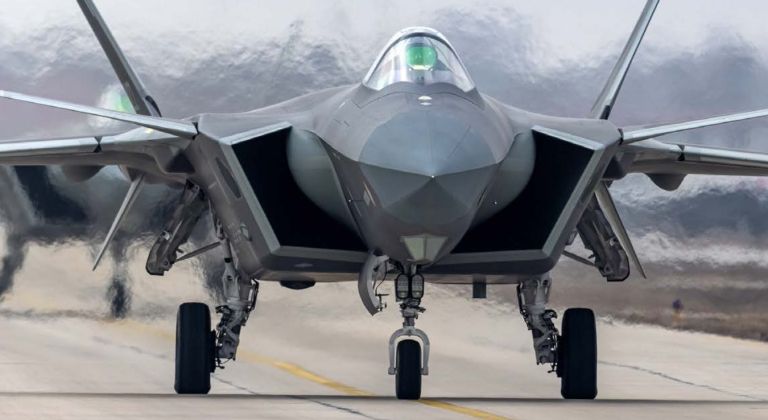
1st Aviation Brigade Baseline J-20 Fighters
Footage released on July 3 has confirmed the delivery of J-20A fifth generation air superiority fighters to a fourth air brigade in the Chinese People’s Liberation Army Air Force, namely the 1st Air Brigade at Anshan under the Northern Theatre Command. The 1st Air Brigade was notably also the fourth unit to receive baseline J-20 fighters, which were first delivered in January 2021, while also being the first frontline unit to receive J-20s powered by indigenous WS-10C engines. All known J-20A deliveries to frontline units have been to units which already operated the baseline variant, with all four brigades having converted to the new significantly enhanced variant while the older fighters are re-assigned to lower priority brigades and locations.
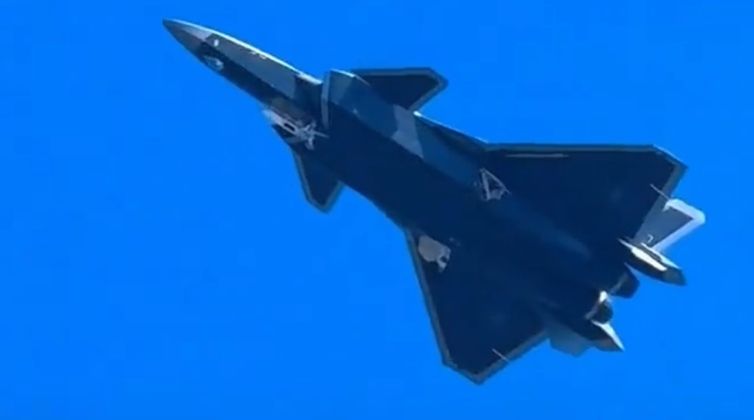
The J-20A incorporates a wide rage of aerodynamic, propulsion, avionics, and internal architecture improvements, with the most visible change being its redesigned upper fuselage immediately behind the cockpit. The fighter has a raised dorsal spine and a smoother transition between the canopy and fuselage, which reduces transonic and supersonic drag, smooths airflow over the upper fuselage, and creates additional internal volume for additional avionics, cooling equipment, wiring, or fuel. Unconfirmed reports indicate that the aircraft has significantly greater electrical power generation and cooling capacities, as well as far greater computing power, than the original variant in order to allow for a greater modernisation potential. This is expected to allow the fighters to gradually be brought up to a ‘5+ generation’ standard with the integration of sixth generation subsystems.
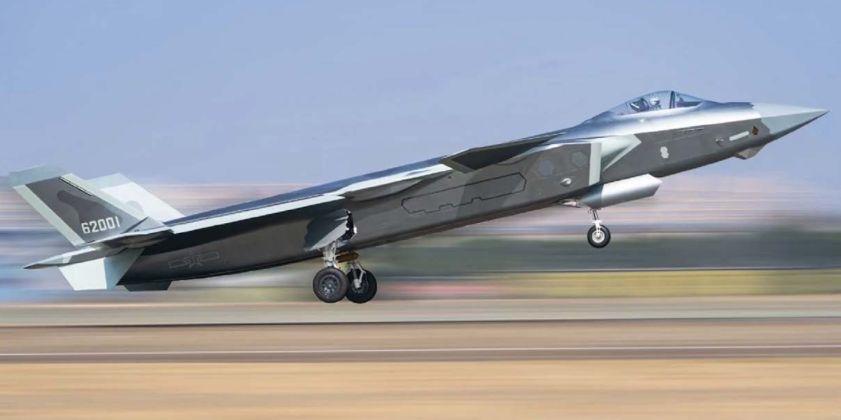
Preceding the 1st Air Brigade, it was confirmed that the 5th Air Brigade based southeast of the city of Guilin in Guangxi Province, the 9th Air Brigade based at Wuhu Air Base less than 300km from Shanghai, and the 41st Air Brigade at Wuyishan Air Base near the Taiwan Strait. The 9th Air Brigade had become the third to integrate the baseline J-20 in January 2019, after which the 5th Air Brigade became the fifth unit to receive J-20s in June 2021. The 41st Air Brigade first began receiving J-20 stealth fighters during 2023, making it the eleventh unit confirmed to have received the fighters. The brigades are all considered elite units at high priority locations, which has been reflected in their prioritisation to receive both the baseline J-20 and now the enhanced J-20A variant. The extent of the conversion training required for pilots and maintenance crews to transition from the baseline variant to the J-20A remains unknown, although the transition from maintaining the older WS-10C to the new WS-15 engine is expected to be the most significant change.
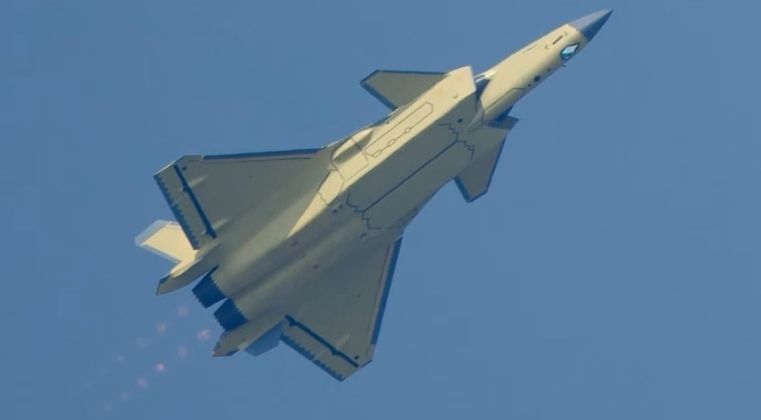
In 2026 it was confirmed that production of J-20A fighters had transitioned from the WS-10C to the indigenous WS-15 engine, which is now the standard engine for serial-production J-20 fighters and is expected to eventually be used to retrofit J-20As from the initial two regiments. The WS-15 is a fully clean sheet new engine design, rather than an enhanced derivative of a pre-existing design, which makes its service entry a major landmark for the Chinese combat aviation industry. To place this in perspective, the last U.S. clean sheet fighter engine to enter service, the F119, was first flight tested in 1990 and began integration onto serial production fighters almost 30 years ago in 1997. As one of the most sophisticated fighter engines in production anywhere in the world, the WS-15 has a reported weight to thrust to weight ratio rivalled only by the F135 powering the F-35 fifth generation fighter among known fighter engine types. The engine provides greater power for onboard avionics, a far greater range, and major improvements to all significant aspects of flight performance, while also reducing maintenance needs.
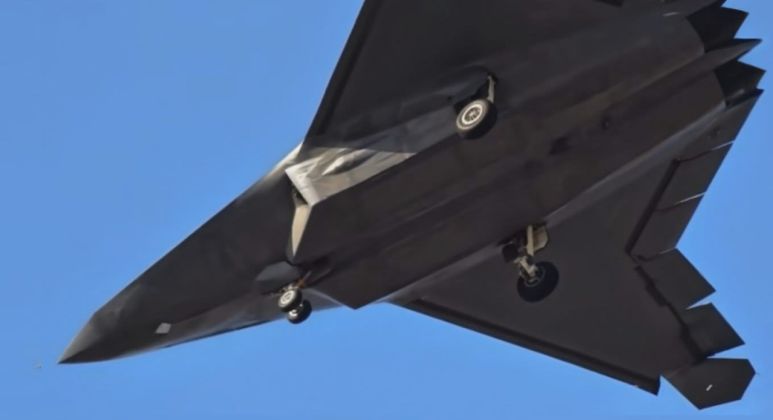
The future of the J-20 program remains highly uncertain, and while it is considered a leading contender for the title of the world’s most capable fighter type today, it is set to be surpassed in its capabilities by two sixth generation air superiority fighter types that are scheduled to enter service in the early 2030s. One of these, informally termed the ‘J-50’ by netizens, appears to have highly similar dimensions to the J-20 but a much more sophisticated design, and is speculated to also use WS-15 engines. Should this fighter have similar sustainment costs and maintenance needs to the J-20, it is highly possible that it will replace it in production, and that J-20 production will thus end in the early or mid 2030s. A report published by the British Royal United Services Institute (RUSI) in January estimated that the Chinese People’s Liberation Army Air Force will field approximately 1,000 J-20 fighters by 2030, with over 500 estimated to currently be in service, with meaning the aircraft is currently being procured at a far larger rate by the Air Force than any other service in the world is procuring any other fighter type.
