
Could F-16 Production Reach Over 5000 Fighters? Lockheed Martin Optimistic Despite Flagging Demand
Military Watch Magazine Editorial Staff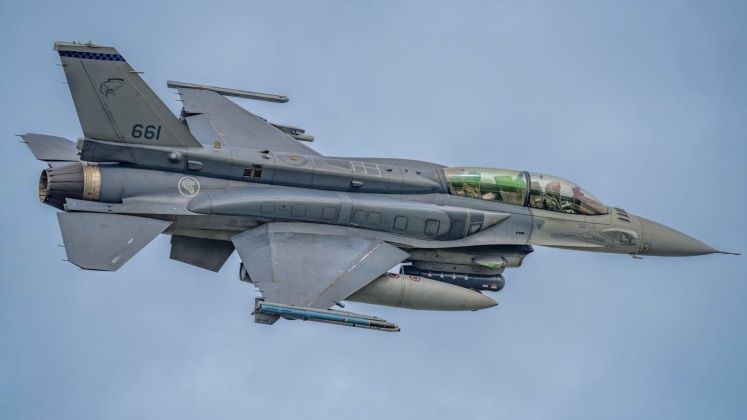
F-16 Single Engine Lightweight Fighter
The F-16 Fighting Falcon is one of the oldest fighter designs still in production anywhere in the world today, with the aircraft first joining the U.S. Air Force over 40 years ago in 1978 after being designed as a lighter and cheaper counterpart to the elite F-15 Eagle jet. The F-16 was the most widely produced fighter of the fourth generation, due largely to the cutting short of large scale production of its Soviet rival the MiG-29 due to the state’s collapse in 1991. The aircraft began production in 1973 and saw over 4,600 airframes leave production lines by the end of 2020. Despite its age, the latest variant of the F-16, the F-16V, has been extremely costly, with their price notably higher than and widely compared to that of Russian Su-35 heavyweight jets imported by China due to Taiwan being F-16V's leading client. Despite the Su-35 being a much heavier and more modern ‘4++ generation design,’ with almost three times the engine power of the F-16V, the light American jet notably costs approximately 50% more per unit. This high cost has a number of causes, including the integration of modern avionics, electronic warfare systems, sensors and armaments decades ahead of the original 1970s F-16 in sophistication, as well as questions regarding the efficiency of production.
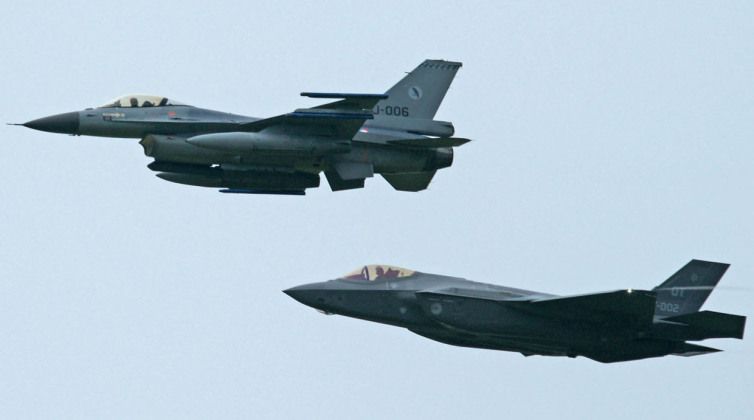
The F-16V, the only variant of the Fighting Falcon currently in production, has seen only limited foreign interest with Bahrain and Slovakia purchasing 16 and 14 respectively. The only major sale was to Taiwan, which ordered 66 jest under a contract valued at over $8 billion in 2019. While the F-16V is effectively obsolete compared to modern Chinese fighters deployed across the Taiwan Strait, it was chosen due to the U.S. decision to deny Taiwan access to its fifth generation successor the F-35. The U.S. has relied heavily on diplomatic pressure targeting countries such as Bulgaria to purchase new fighters, although prospects for major further sales remain slim given the age and expense of the design and the existence of much more cost effective competitors - the F-35 being one of the foremost among them.
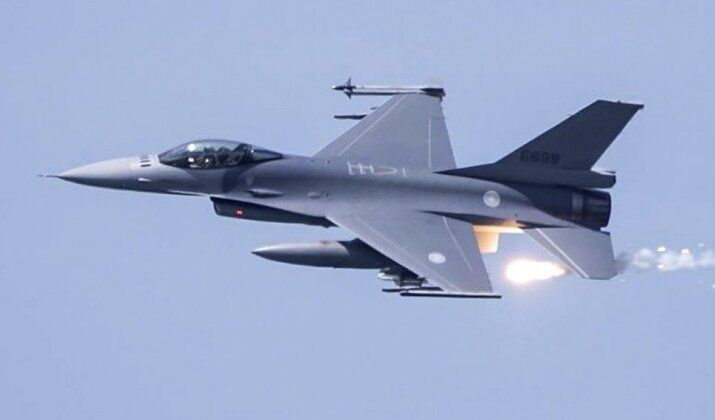
In September 2020 the Executive Vice President of Aeronautics at the F-16’s producer Lockheed Martin, Michele A. Evans, expressed hopes that the fighter program would pass the mark of 5000 fighters produced - meaning over 350 more would need to be sold. She highlighted that the F-16V could be marketed on the basis that it would potentially allow clients to purchase F-35s in future - much as was done with Taiwan which would have preferred to move straight to the F-35 if permitted to do so. The U.S. Air Force is not expected to place any further orders, as it already fields a very large number of the jets which are being upgraded to the F-16V standard and is increasingly transitioning towards the F-35A. With the aircraft increasingly being referred to as obsolete by officials countries such as Singapore and even the U.S. itself, prospects for sales to first world clients beyond Taiwan remain slim.
At a time when the U.S. Air Force is flying its Fighting Falcons unmanned and shooting them down as disposable targets, the prospect of paying tens of millions of dollars for a design which has seen few changes to its airframe, with the same old F110 engine and high radar cross section, is far from attractive for potential operators. It is notable that other fourth generation designs still in production today from the Cold War period, such as the MiG-29 or the Su-27 with the latter today being produced as the enhanced Su-35 derivative, have seen instalment of new more powerful and longer lasting engines and often reductions to their radar cross sections. The F-16 has seen no such improvements which seriously limits its performance despite upgrades to its avionics under the F-16V design.
