
America is Shooting Down its Own F-16s: How Obsolete Falcons Are Converted For Target Practice
Military Watch Magazine Editorial Staff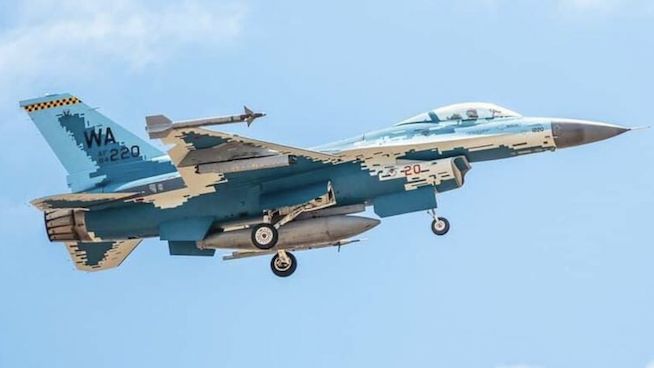
F-16 Fighting Falcon
The U.S. Air Force has converted a portion of the F-16 fleet into the QF-16 target drone, with the fourth generation lightweight fighters increasingly being phased out of a frontline combat role as they are replaced by more modern F-35A. While the F-16 is still in production, and is being marketed to export clients as the F-16V with improved avionics and sensors integrated onto the older airframe, the design is increasingly considered obsolete by the U.S. and other high end air forces such as Singapore. The fighter's slightly heavier medium weight analogue developed for the U.S. Navy, the F-18 Hornet, saw its final year of service in the U.S. Navy in 2019. The F-16 entered service over four. decades ago in 1978, and its viability in highly contested environments is very limited today - although its is still prized for its low operational costs and maintenance requirements which make it valuable against ‘soft’ targets such as islamist insurgents in the Middle East and Central Asia. Further conversions of F-16 fighters to the QF-16 are planned as the aircraft continues to be phased out of service.
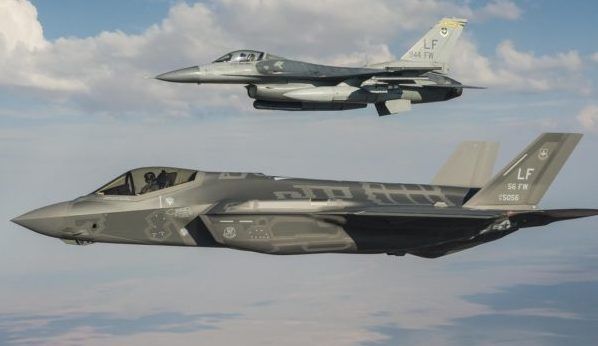
The QF-16 program is a sign of the F-16’s age, and marks the beginning of the end for the venerable fighter much as the QF-4 program marked the end of the F-4 Phantom’s more than four decades in service. The QF-4 program similarly saw the Vietnam War era jets developed into target drones to test anti aircraft weaponry. The QF-16 is expected to provide a more realistic challenge than the QF-4 for anti aircraft weapons, with the newer fighter boasting a far superior flight performance comparable to those of modern fighters fielded by potential adversaries. The. fact that the drones carry little fuel and no weaponry make them more manoeuvrable than a combat configured Falcon, and could allow them to simulate more manoeuvrable aircraft such as the Russian Su-30SM or Chinese J-10B. The F-16's more modern computer systems are easier to modify than those of the Phantom, which has made it easier to modify into a drone. Conversion involves a gutting of the cockpit and re-tooling to integrate telemetry and control modules needed to fly the fighters remotely. Over 4,500 F-16s have been produced since the mid 1970s, making it the most widely produced fourth generation fighter in the world. This title was partly achieved as a result of the drastic scaling down of production of the Fighting Falcon’s Soviet rival, the MiG-29 Fulcrum, following the state’s collapse in 1991, which left the F-16 as the only fighter in the world being produced on such a large scale.
