
U.S. Begins Construction of New Arleigh Burke Flight III Destroyer as the Ageing Design Nears the End of Production
Military Watch Magazine Editorial Staff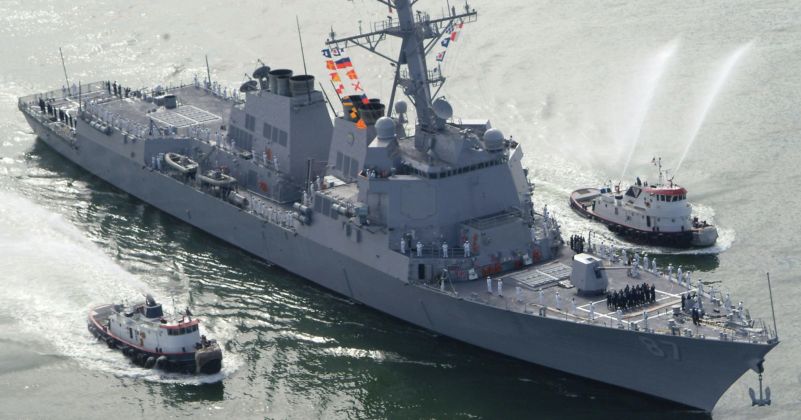
Arleigh Burke Class Destroyer
Huntington Ingalls Industries has officially begun the fabrication of the thirteen Flight III Arleigh Burke class destroyer, the future USS John F. Lehman, which is a heavily enhanced variant of a late Cold War era design that currently comprises almost the entire U.S. Navy ocean-going surface combat fleet. The Flight III is the latest and most capable evolution of the Arleigh Burke class design, and incorporates substantial improvements in air and missile defence while retaining the proven hull and propulsion system of earlier ships. At the heart of these enhancements is the integration of the new AN/SPY-6(V)1 Air and Missile Defense Radar, which is paired with the Aegis Baseline 10 combat management system. Together, these systems provide significantly improved detection, tracking, and engagement capabilities against modern threats including ballistic missiles, cruise missiles, advanced aircraft, and increasingly complex aerial attacks.
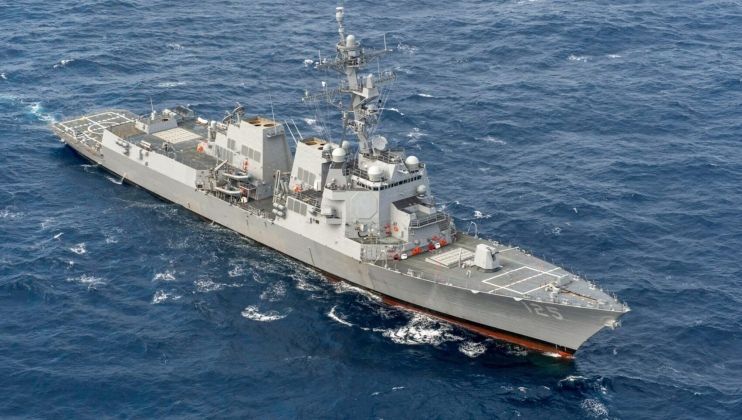
The U.S. Navy brought its first Flight III Arleigh Burke class destroyer, the USS Jack H. Lucas, into service in December 2025, with the vessel having since been designated as the initial operational test and evaluation campaign ship for the Flight III class. Elaborating on the capabilities o the new radar system, and in particular its greater degree of automation, Chief Sonar Technician Nicholas Cederblom observed at the time: “It’s like going from a flip phone to an iPhone… It does the calling, it does the texting, but it does so much more. And moving from that system into the advanced capabilities build, what we have right now, definitely is a lot more. No one else has done this.” “USS Jack H. Lucas looks like every other destroyer… We have the same weapon systems outside, but it’s the internal component, and it’s the people itself that make it different. We are training the next generation to go forward with our new SPY-6, with our Baseline 10, with our engineering plants having to supply everybody on board the ship to get where we need to go,” he added.
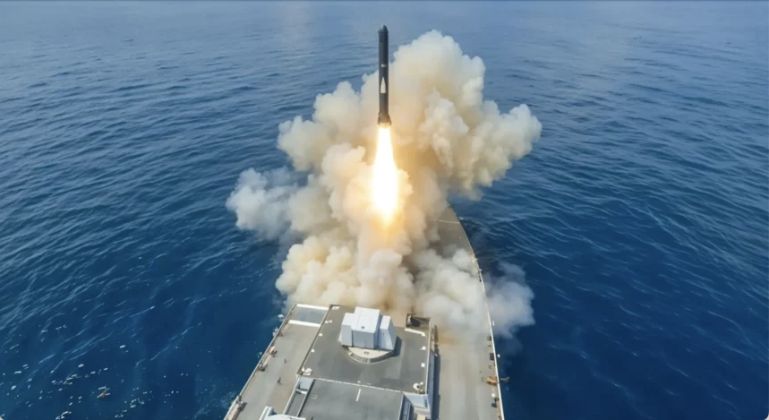
Huntington Ingalls Industries currently has five Flight III Arleigh Burke class destroyers under construction, while another seven ships remain in earlier planning and material procurement stages. The firm’s new distributed shipbuilding model is intended to accelerate destroyer production while easing labor shortages. Rather than fabricating every structural section in Pascagoula, six partner shipyards across Texas, Louisiana, Mississippi, and Florida are producing major hull modules for the warship, which will later be transported to Ingalls for final assembly and systems integration. According to Huntington Ingalls, this approach expands industrial capacity by making use of available workforce and facilities across the U.S. shipbuilding sector, while allowing the firm to concentrate on the most technically demanding stages of construction. The firm expects to outsource more than 2.5 million labor hours of shipbuilding work during 2026 under its distributed production strategy.
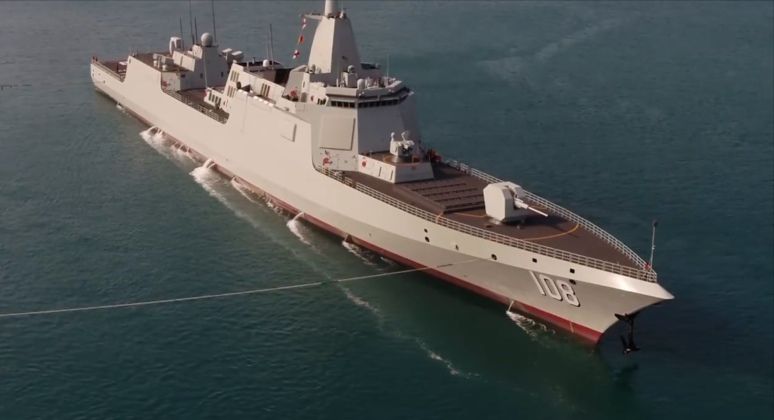
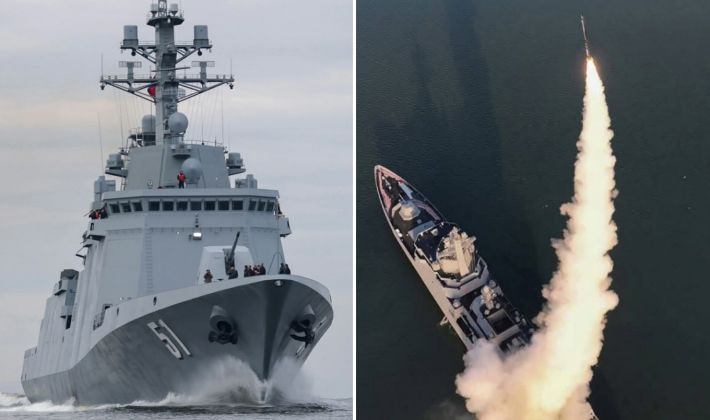
The USS John F. Lehman is projected to be the 83rd Arleigh Burke class destroyer to be brought into service, with the first ship of the class, the USS Arleigh Burke, having been laid down in 1988 and commissioned into service in July 1991. Significant questions have increasingly been raised regarding the ships’ viability against peer level adversaries, and particularly the significantly newer Type 052D and Type 055 class destroyers that form the backbone of the Chinese People’s Liberation Army Navy’s surface combat fleet. While China was previously isolated as the only potential adversary fielding peer level destroyers, North Korea in June 2025 commissioned its first destroyer, the Choe Hyon, into service, with the highly sophisticated vessel’s anti-shipping capabilities in many ways far exceeding those of the Arleigh Burke class. The country’s leadership has announced plans for larger 8,000 ton and 10,000 ton destroyers.
The U.S. Senate Armed Services Committee in June directed the Navy to continue developing the DDG(X) next generation destroyer program, with the capabilities of the Chinese Type 055 class in particular considered a primary factor stimulating concerns regarding the Arleigh Burke class’ inadequacy, most notably its very limited remaining modernisation potential. The USS John F. Lehman is thus expected to be one of the last Arleigh Burke class ships to be laid down. U.S. destroyer production is currently limited to approximately 1.6 ships per year, compared to two per year in North Korea, and approximately six to eight per year in China. A limited ability to increase production having fuelled calls in Washington to outsource the construction of new destroyers to South Korea or Japan, which build similarly advanced vessels.
