
North Korea’s Navy Brings its First Ever Destroyer Into Active Service
Military Watch Magazine Editorial Staff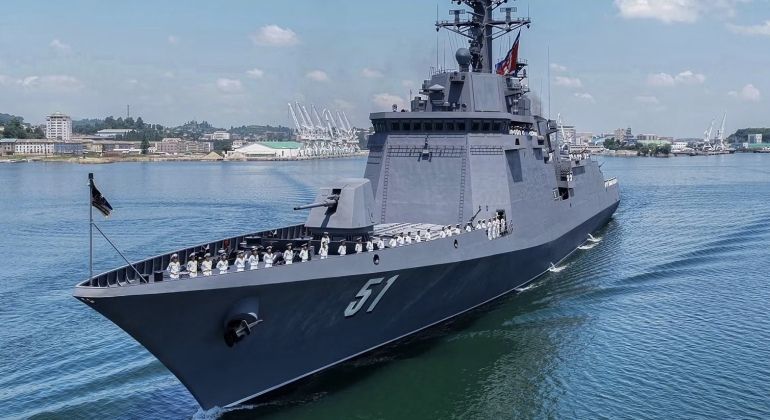
Destroyer Choe Hyon at its Commissioning Ceremony
The Korean People’s Army Navy on June 23 brought its first destroyer, the Choe Hyon, into active service, marking the first time a destroyer has ever become operational in the country. The warship joined the Navy’s West Sea Fleet, which operates in the Yellow Sea, just 14 months after its launch on April 25, 2025. The ship’s commissioning marks the most significant advance in the country’s surface warfare capabilities since the end of the Cold War, and likely in its history, with the Navy having previously relied primarily on small missile boats, corvettes, frigates, submarines, and coastal defence systems. The new destroyer represents a transition toward a blue-water capable surface combatant with a level of firepower and sophistication far beyond anything previously fielded.
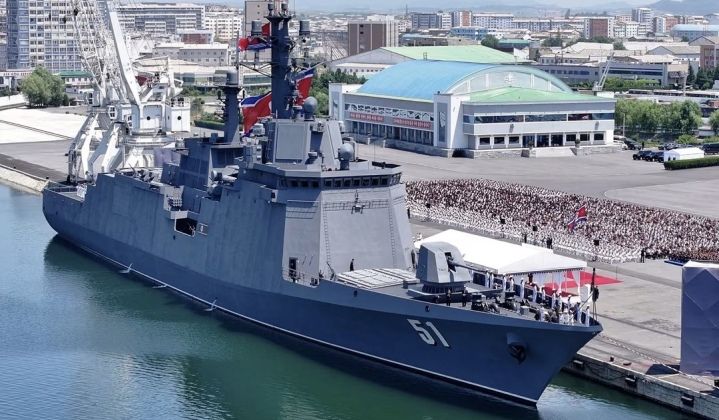
The Choe Hyon is the first ship of its class, with a second, the Kang Kon, currently in sea trials, while at least two more are under construction and scheduled for launch in 2026. The new destroyer class appears designed to support North Korea’s growing arsenal of precision-strike weapons. Of the 74 vertical launch cells onboard, 20 have much higher diameters and are thought to be reserved for nuclear-tipped ballistic missiles. The third and fourth ships of the class are confirmed to have even larger missile loads due to the removal of their main guns.
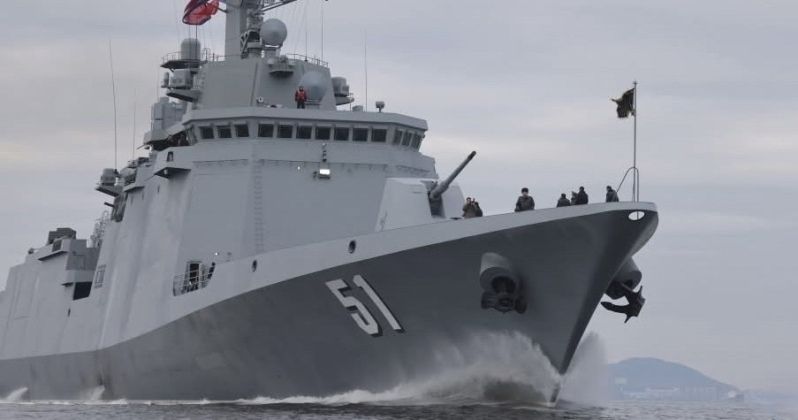
The Choe Hyon class demonstrates significant progress in North Korea’s shipbuilding industry, as the construction of a large guided-missile warship requires expertise in naval architecture, propulsion systems, electronics integration, weapons management, and radar technology. The successful completion and commissioning of such a vessel indicates a higher of indigenous naval engineering capability than many observers previously believed the country had. Imagery suggests the installation of modern phased-array radar systems, which would provide far greater target detection and tracking performance than the mechanically scanned radars found on older North Korean vessels. Combined with advanced combat management systems, these sensors could enable the ship to simultaneously monitor multiple aerial and surface threats while coordinating missile engagements.
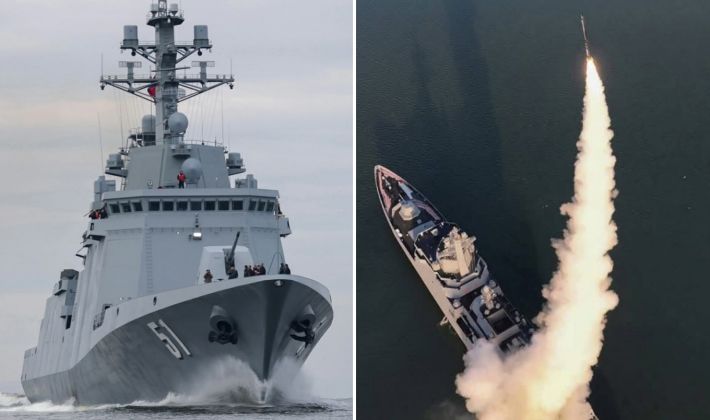
During the first sea trials of the second Choe Hyon class destroyer, the the Kang Kon, in early June, the chairman of the ruling Korean Workers’ Party Kim Jong Un announced that North Korea will build 10,000 ton destroyers in the future. The Choe Hyon class ships have displacements of 5,000 tons, while in March 2026 Chairman Kim revealed that a larger class of 8,000 ton destroyers was under development. It remains uncertain whether the design of the 8,000 ton ships has been revised and enlarged, and that they are now classified as 10,000 ton vessels, or whether three separate destroyer classes of complementary sizes are planned. The Choe Hyon class’ capabilities are in many ways on par with the latest Chinese, Japanese, South Korean and U.S. ships, well ahead of rivals in Europe and Russia.
