
Bigger Than the Arleigh Burke: North Korea Announces 10,000 Ton Destroyer Program
Military Watch Magazine Editorial Staff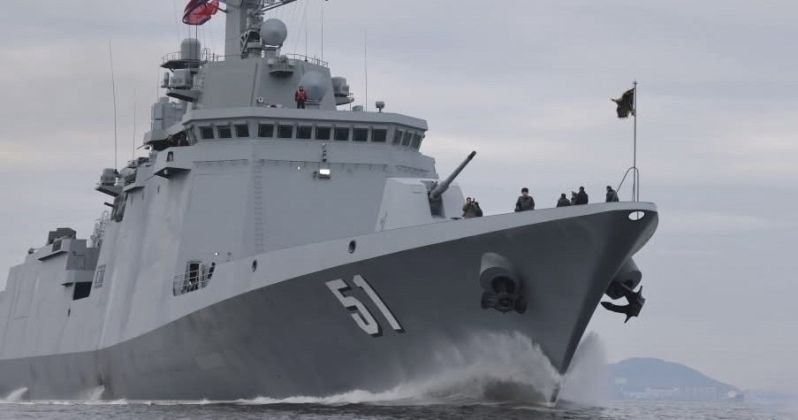
North Korean Choe Hyon Class Destroyer
During the first sea trials of the second destroyer built for the Korean People’s Army Navy, the the Kang Kon, the chairman of the ruling Korean Workers’ Party Kim Jong Un announced that North Korea will build 10,000 ton destroyers in the future, which appears to indicate that a third class of destroyer has already been confirmed. The Choe Hyon class ships, of which two have been launched with a further two confirmed, have displacements of 5,000 tons, while in March 2026 Chairman Kim revealed that a larger class of 8,000 ton destroyers was under development. A further possibility is that the design of the 8,000 ton ships has been revised and enlarged, and that they are now classified as 10,000 ton vessels. The Choe Hyon class’ launch and demonstrated capabilities have led analysts to seriously revise assessments of the capabilities of the North Korean defence sector to build large surface warships, as not only are they the first destroyers built in the country’s history, but they are also cutting edge with capabilities in many ways on par with the latest Chinese, Japanese, South Korean and U.S. ships, well ahead of rivals in Europe and Russia.
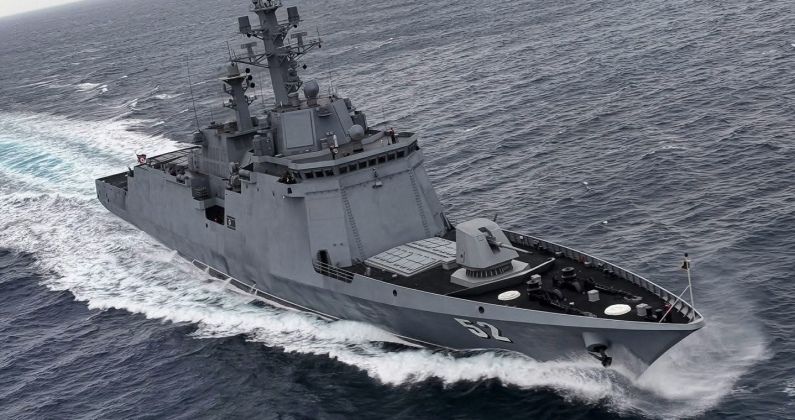
North Korea’s defence sector has recently undertaken outstandingly ambitious naval programs, with its plans for a rapid buildup of the destroyer fleet being made in parallel to the development of the country’s first nuclear powered submarines, although it remains uncertain whether these are ballistic missile submarines for strategic deterrence, attack submarines, or a design which can be adapted for both roles as different variants. A 10,000 ton destroyer would have sufficient space for a much larger array of vertical launch cells, larger radar arrays, improved command-and-control facilities, and greater fuel, food, and ammunition storage. Larger ships can generally remain at sea for longer periods, and allow for greater survivability due to their better compartmentalisation against battle damage. With 5,000 ton Choe Hyon class ships integrating by far the largest number of missile launch cells relative to their sizes, at 74 cells per ship, a 10,000 ton ship is expected to integrate well over 150 launch cells, making it the most heavily armed destroyer design in the world.
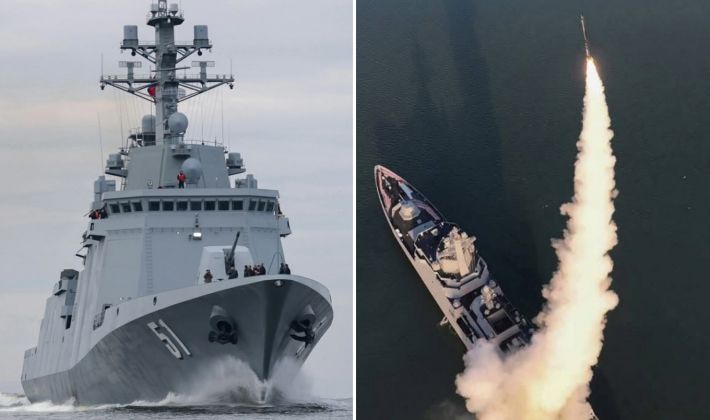
Figures in the North Korean leadership have repeatedly emphasised that the navy should become an integral component of the country’s nuclear forces, and while Choe Hyon class ships are believed believed to have been designed to carry nuclear-tipped ballistic and cruise missiles, a 10,000 ton destroyer could potentially carry a substantially larger arsenal while remaining at sea for much longer. The program also demonstrates a dramatic expansion of North Korea’s shipbuilding ambitions, as the Korean People’s Army Navy transitions from an almost exclusive focus on coastal defence using short range submarines and light missile boats, to a blue water capable fleet. The Choe Hyon class’ capabilities indicate that Pyongyang has already invested heavily in modern shipbuilding infrastructure, and made major advances in modular construction, marine propulsion, electrical generation, combat management systems, and large-scale naval engineering.
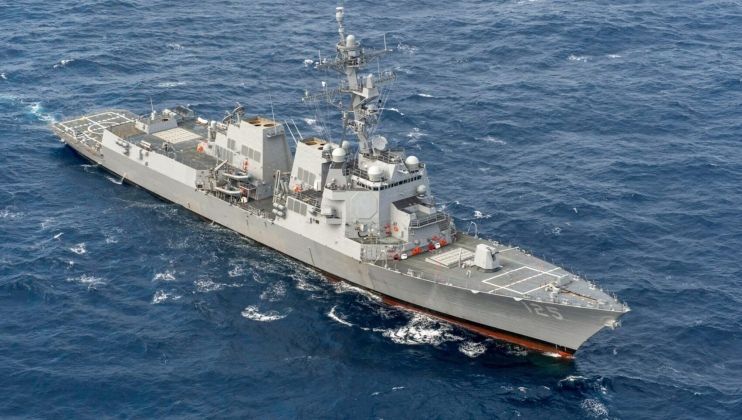
In March Chairman Kim announced a highly ambitious schedule for destroyer production, under which two destroyers will be launched each year under the next Five Year Plan, allowing the fleet to field 12 destroyers near the beginning of the 2030s. This would represent the world’s second largest destroyer production rate outside that of China, with the U.S. Navy itself receiving Arleigh Burke class destroyers at a rate of only 1.6 per year. Where the North Korean destroyers are newly designed, and integrate far more diverse arrays of cruise missiles including hypersonic missiles, the Arleigh Burke class is an ageing late Cold War era design which has only relatively limited growth potential remaining, and integrates only one type of offensive weapon, the subsonic Tomahawk cruise missile.
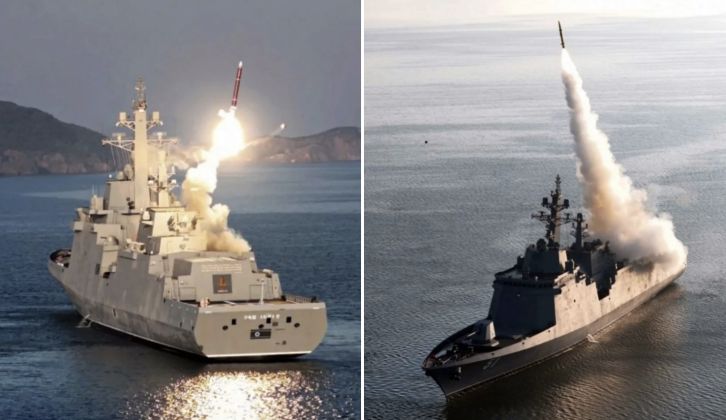
While the Arleigh Burke class integrates just 96 vertical launch cells, which is far from remarkable for its 9,600 ton size, North Korean ships of a similar size are expected to be far more heavily armed. Due to their much newer designs, they will likely also have greater potential for modernisation. With North Korea scheduled to field the world’s fifth largest destroyer fleet by 2032, the future of the country’s blue water shipbuilding efforts remains uncertain beyond its initially planned 12 destroyers and 10,000 ton vessels. While it is possible that 10,000 ton and 5,000 ton destroyers will be built in parallel, it appears more likely that the defence sector will continue to transition to build incrementally larger ships, potentially laying down much larger cruiser-sized vessels in the 2030s.
