
North Korea Unveils First Nuclear Powered Missile Submarine: How Effectively Can it Strike the United States?
Military Watch Magazine Editorial Staff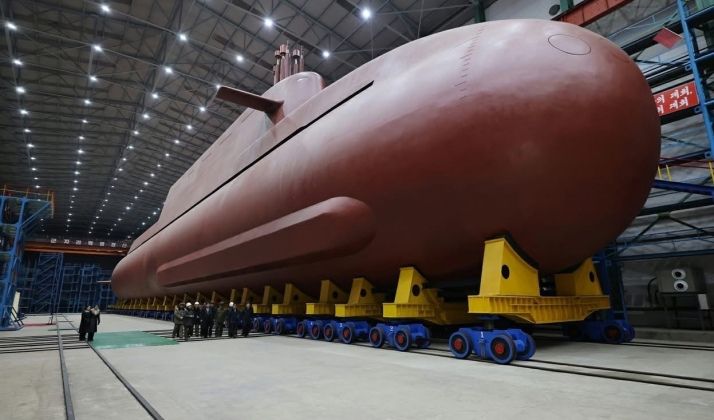
North Korea`s First Nuclear Powered Submarine
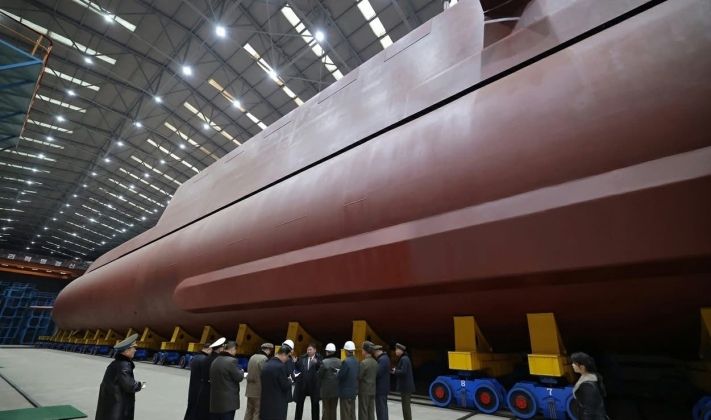
North Korean state media on December 24 published the first images of the country’s long anticipated first nuclear powered submarine, revealing that the ship is currently under construction and displaces 8,700 tons. This follows reports from South Korean military sources in October 2024 that the North had begun construction of the first nuclear submarine, an reports for several years from North Korean government sources that the development of such a ship is planned. The ship’s size makes it significantly smaller than China’s 11,000 ton Type 094 class ballistic missile submarine, than the 18,750 ton American Ohio class submarine, or than the world’s largest operational submarine type the 24,000 ton Russian Borei class. It is nevertheless significantly larger than the earlier nuclear powered submarines developed by all these countries, and is larger than the 7,000 ton Indian Arihant class ships currently in production.
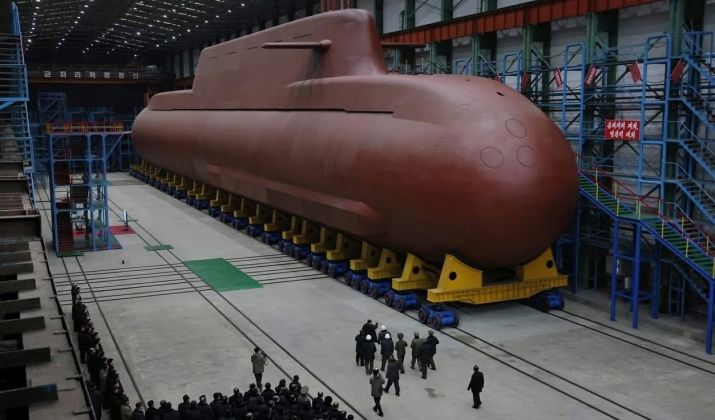
Images show a sail integrated with a raised ‘turtleback’ structure housing missile launch tubes, a side-mounted sonar array, and six torpedo tubes. North Korea has for decades fielded the world’s most numerous submarine fleet, and has over the last decade made revolutionary advances in fielding ships with new capabilities. This included the fielding of its first ballistic missile submarine from around 2017, followed by its first cruise missile submarine in 2023, and an unmanned nuclear armed submarine drone tested from April 2023. Prior work on ballistic missile submarine development has long been considered to have been intended to pave the way towards fielding a nuclear powered ship capable of providing a second arm to the Korean People’s Army’s strategic nuclear deterrent, complementing the development of one of the world’s most potent and diverse land-based nuclear forces.
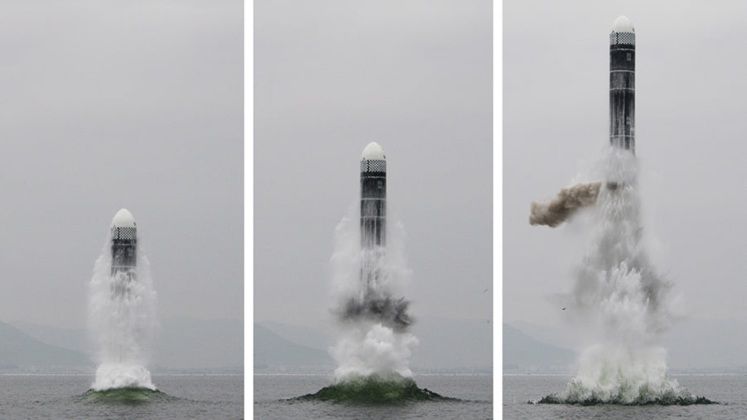
Nuclear powered submarines have significant greater endurances compared to conventionally powered ships, and can remain submerged for months at a time allowing them to launch strikes against targets anywhere in the world with little warning. This ensures a second strike capability even if Pyongyang’s Western adversaries can somehow neutralise its ground-based arsenals. Deploying long range ballistic missiles from submarines also allows strikes to be launched from unexpected directions where missile defences are not heavily built up, such as strikes on the United States mainland from across its southern border. North Korea’s flight testing of hypersonic glide vehicles from 2021, and their operationalisation on the Hwasong-16B intermediate range ballistic missile, has raised a significant possibility that the country’s new nuclear powered submarine deploy missiles that also integrate such vehicles to achieve longer more efficient flight profiles and to significantly improve their ability to bypass adversary air defences.
The ability launch strikes against the U.S. mainland has long been highly prized by Pyongyang, as the United States has on multiple occasions come close to launching large scale attacks on the country including major nuclear strikes. President Barak Obama favoured an attack in 2016, and was reportedly deterred only by to warnings from the Pentagon, while his successor Donald Trump in 2017 drew up plans for mass nuclear attacks which were expected to kill millions of Koreans. The unprovoked strikes were on both occasions deterred largely by North Korean retaliatory capabilities, and by the Pentagon’s lack of intelligence on the locations of its leadership and weapons stockpiles.
Previously the Harry Truman, Dwight Eisenhower and Richard Nixon administrations all very seriously considered nuclear attacks on the East Asian country, while the Lyndon Johnson and Bill Clinton administrations came very close to launching non-nuclear attacks. North Korea has yet to complete the clean up of American munitions from the previous U.S.-led Western bombing campaign during the Korean War, which killed the bulk of the 20-30 percent of its population that died during the conflict. The memory of the Korean War has remained a key driver of North Korean security policy in the face of a perceived serious threat from the United States. The perception of an imminent threat, and of the need for the country to further strengthen its nuclear deterrent, has been reinforced by unprovoked U.S.-led attacks against Libya and Iraq which both surrendered their missile deterrents and weapons of mass destruction.
