
North Korea Confirms Plans to Continue Surpassing U.S. Destroyer Production
Military Watch Magazine Editorial Staff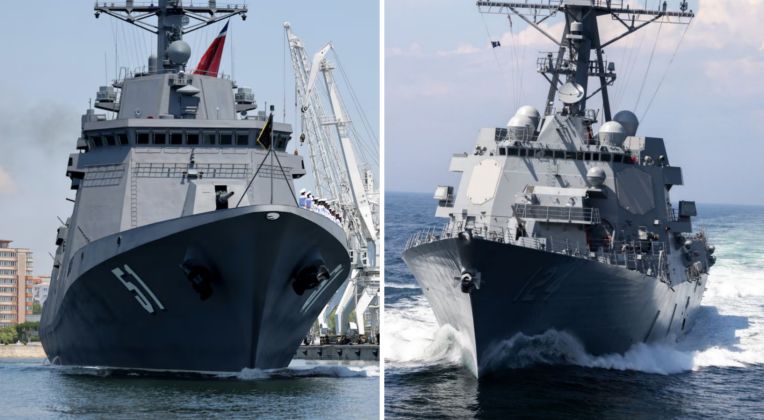
Choe Hyon Class (left) and Arleigh Burke Class Destroyers
At the commissioning ceremony of the Korean People's Army Navy's first destroyer, the Choe Hyon, chairman of the ruling Korean Workers' Party Kim Jong Un reaffirmed plans for the construction of two destroyers each year over the next five years as part of a naval expansion program. The Navy had been the weakest service in the Korean People's Army, the chairman noted, adding that modernisation would bring its capabilities to a level “incredible beyond imagination.” “Building a modernised naval base has emerged as a desperate and essential task,” the chairman added, noting that officials of the ruling Workers' Party's Central Committee discussed plans to build new naval bases at a meeting on June 22. The most important change for the navy would be a shift in its status, role and scope of operations, he added, while highlighting the service's role in the country's nuclear forces.
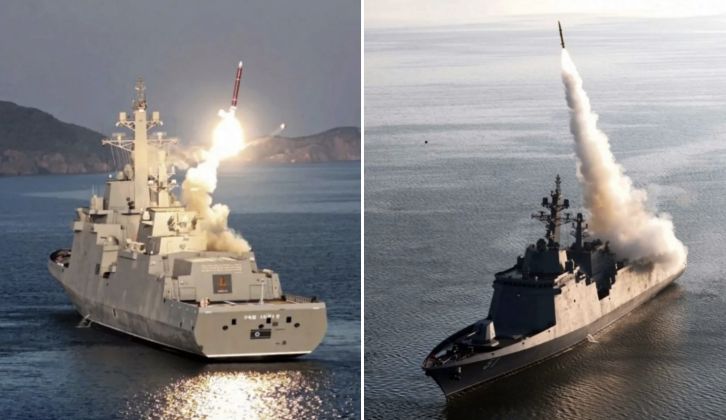
The launch of two destroyers per year, which North Korean shipyards achieved in 2025 and are expected to also achieve in 2026, places the country’s shipbuilding industry ahead of that of the United States, which has averaged an output of 1.6 destroyers annually, in a distant second place behind China which has produced 6-10 destroyers per year. Although the contraction in U.S. production of surface warships has taken place much more slowly than the contraction of civilian shipbuilding over the past 35 years, the fall in the number of surface combat ships, and in the total tonnage launched per year has nevertheless been tremendous. While diminishing standing of the U.S. shipbuilding industry has been viewed with serious concern, the fact that there were no potential adversary navies other than China procuring advanced destroyers previously limited the potential risks this posed to U.S. interests in any situation short of a conflict with the Chinese People’s Liberation Army. North Korea’s sudden emergence as a leading producer of cutting edge destroyers, however, has made these shortcomings more serious, and could have a considerable impact on the balance of power in the Pacific.
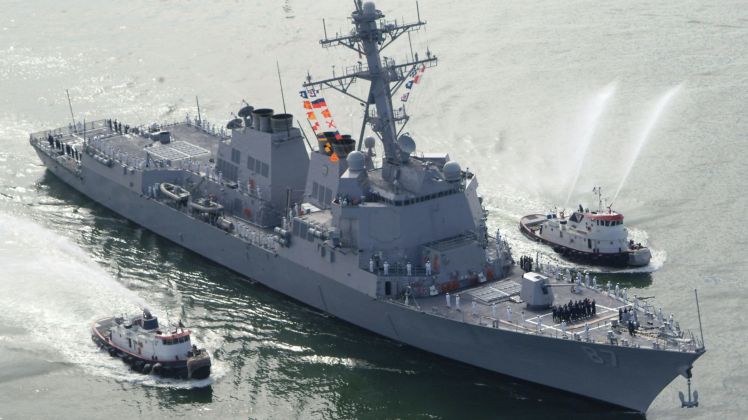
North Korean shipyards launched two Choe Hyon class destroyers in 2025, the first in April, with two more ships of the class with heavier missile payloads scheduled for launch in 2026. Chairman Kim in March also confirmed that a larger 8,000 ton destroyer class is currently under development, and in early July announced a 10,000 ton destroyer class also under development. The first two Choe Hyon class destroyers each integrate 74 vertical launch cells, compared to 96 on the latest variants of U.S. Navy Alreigh Burke class, with later Choe Hyon class ships expected o integrate over 90 cells, while the future 8,000 and 10,000 ton ships are expected to integrate close to 120 and 150 cells respectively. While the Arleigh Burke class integrates just 96 vertical launch cells, which is far from remarkable for its 9,600 ton size, North Korean ships of a similar size are expected to be far more heavily armed.
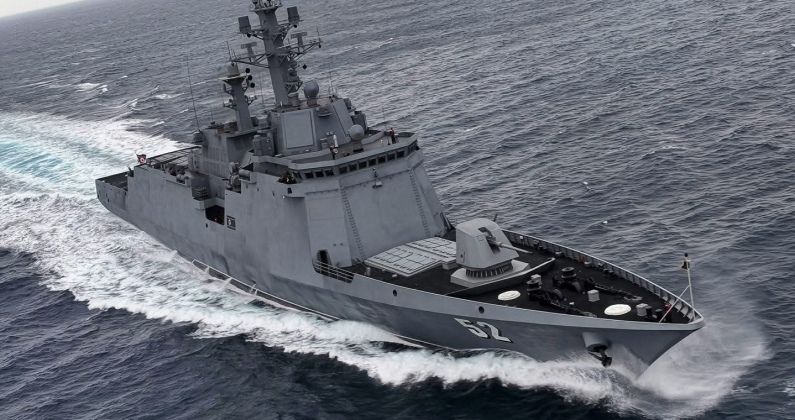
In March Chairman Kim announced a highly ambitious schedule for destroyer production, under which two destroyers will be launched each year under the next Five Year Plan, allowing the fleet to field 12 destroyers near the beginning of the 2030s. This would represent the world’s fifth largest destroyer fleet, overtaking, Russia, France, and the United Kingdom, with ships that are in many respects much more capable than those fielded by the three countries. Alongside its ballistic missile arsenal, Choe Hyon class ships integrate multiple types of cruise missiles, including what appears to be a hypersonic cruise missile with a close resemblance to the Russian Zircon. This would provide an engagement range of close to 1,000 kilometres at Mach 9 speeds, making the Choe Hyon one of the world’s best equipped destroyers for anti-shipping roles. The ships have been developed to operate in seas and oceans that are dominated by larger numbers of heavier U.S. Navy destroyers, meaning anti-ship capabilities were from the outset expected to be a leading priority.
