
Chinese J-16s and J-11s Carry Out Exercises Near Contested Ladakh Region: Why India’s Air Force is Worried
Military Watch Magazine Editorial Staff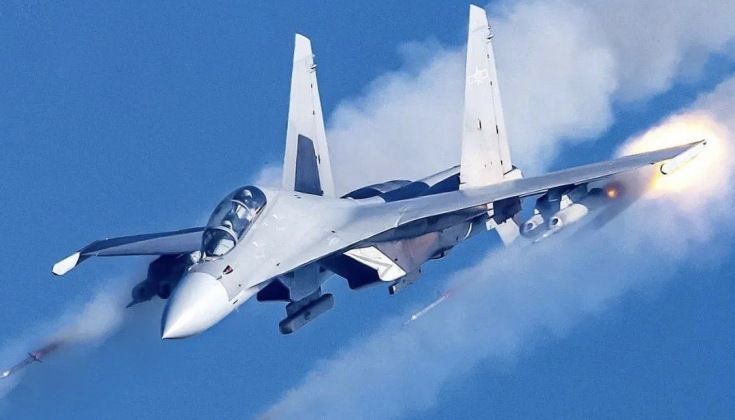
Chinese J-16 Heavy Fighter
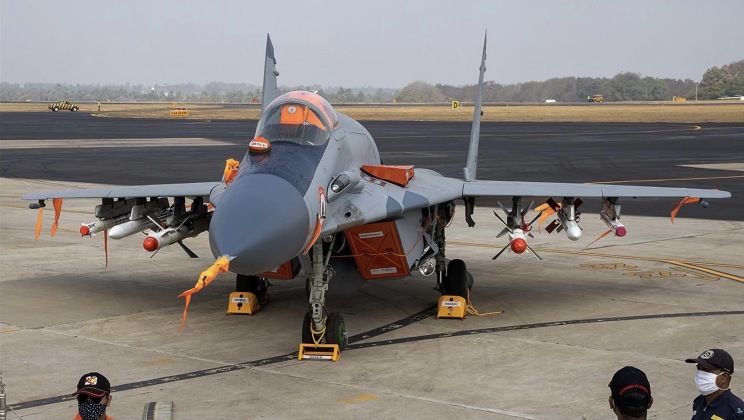
Marking a year since clashes between Indian and Chinese forces in the Ladakh border region led to the former taking over 150 casualties in June 2020, Indian media outlets have reported that China has carried out air exercises near Indian territory. Defence sources cited by local media reported that around 22 Chinese J-11 and J-16 fighters held drills in the area, which were closely watched by Indian forces. They highlighted that India had deployed MiG-29UPG fighters to Ladakh, which were optimised for high altitude operations in the harsh climate and had been stationed there in larger numbers following clashes in 2020. Although the MiG-29 has excellent manoeuvrability, it lacks missiles comparable to the J-16’s PL-10 for short range engagements which could leave it at a disadvantage. At longer ranges, the Chinese advantage is even greater with the J-16 and J-11B having more powerful and much larger sensor suites, and the J-16 boasting stealth capabilities as well as AESA radars and access to AESA radar guided PL-15 long range air to air missiles. The PL-15 has over double the range of the MiG-29’s R-77 missile, and complements the Chinese fighter’s superior next generation avionics.
Supplementing heavyweight fighter jets in the area, China has also deployed HQ-9 and HQ-16 air defence systems with high mobility to the area - the former which can engage targets over 250km away. India has no equivalent to these systems, although it is expected to activate its first S-400 system from Russia within 18 months which could be deployed to the region. The S-400 is thought to have some advantages particularly in terms of situational awareness over the HQ-9B. India has also flown its small contingent of Rafale lightweight fighters over the region, which though limited in many aspects of their performance such as speed and altitude, deploy more modern sensors than the MiG-29UPG which come closer to matching those of the J-16. Both the J-16 and the Rafale deploy AESA radars with comparable sophistication, although the J-16’s radar is considerably larger. India’s most capable fighter, the heavyweight Su-30MKI, is a closer match for the J-11 and J-16, but cannot operate effectively from the extreme climates of frontline airbases in Ladakh. The J-16 remains the dominant fighter in the Ladakh region, with is sensors and PL-15 missiles allowing it to fire far into Indian territory, and exercises involving the fighters in the region are thus cause for major concern in India.
