
Origins of China’s J-11B Air Superiority Fighter: How the ‘Flanker’ Design Was Drastically Improved
Military Watch Magazine Editorial Staff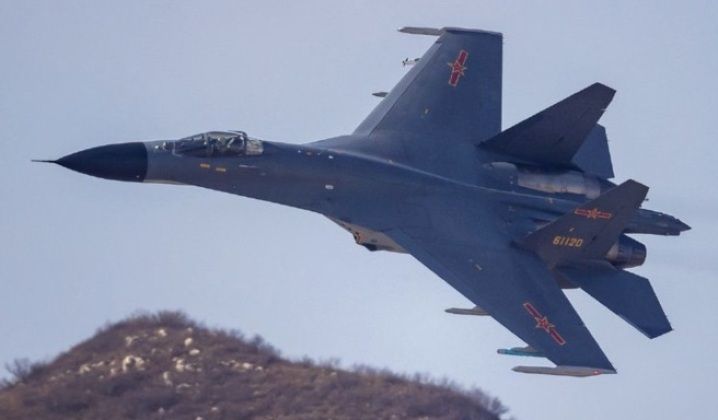
J-11B Fighter
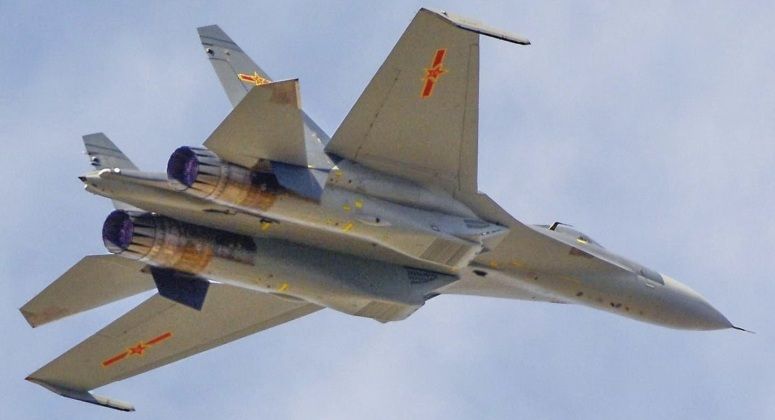
The J-11B today forms the backbone of China’s fleet of heavyweight fighter jets, and is considered one of the most capable fourth generation combat jets in service in terms of both air to air and strike capabilities. Over 200 of the elite fourth generation heavyweight fighters are currently in service including at least 70 in the Navy and at least 140 in the Air Force, although the exact number remains uncertain as the aircraft are produced behind closed doors in China and without the need for foreign components. The J-11B's design is based on the Soviet Su-27 Flanker airframe, which was widely considered the most capable fighter fielded by any air force in the Cold War era in terms of its air to air combat capabilities. The Flanker's primacy was confirmed by multiple U.S. officials after America gained access to the aircraft following the Soviet collapse. China acquired Su-27 fighters from Russia from 1992, with sales having been approved by the Soviet Union as the only Soviet-era Flanker export deal shortly before the state's collapse.
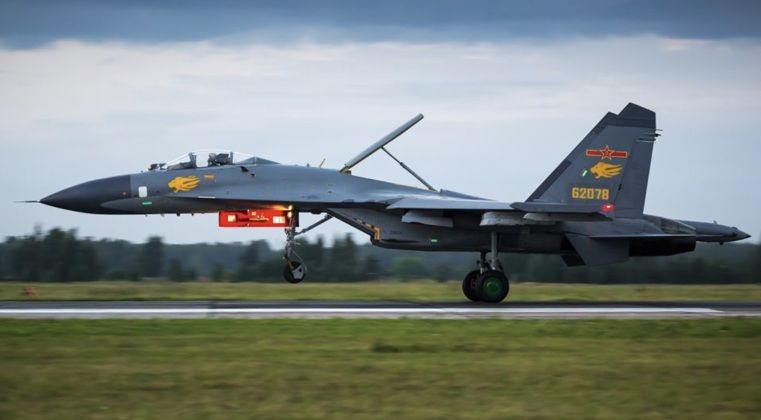
Following the end of the Cold War China faced a highly unfavourable balance of power in the air, with the bulk of its fleet formed of fighters at least two generations behind the Su-27 and none of its fighters having even endurance, situational awareness or thrust of the Flanker. With the Su-27 having been designed specifically to combat the F-15 Eagles of the U.S. Air Force, which by then had been exported to Japan in large numbers, the aircraft revolutionised China’s aerial warfare capabilities even though it was acquired in small numbers. The fighters also came equipped with R-73 short ranged air to air missiles, which when tested by NATO were found to provide a considerable advantage over Western aircraft at short ranges, as well as R-27 long range missiles which had well over double the engagement range of any missile previously in Chinese service. China briefly manufactured the Su-27 under license under a contract which valued the aircraft at just $12.5 million each in terms of their basic flyaway cost. The jets were designated as J-11s and were overall similar to the Su-27s in the Russian Air Force, but as its domestic defence sector continued to improve the country began to seek more capable heavyweight fighters and began work on an enhanced Flanker under the J-11B program.
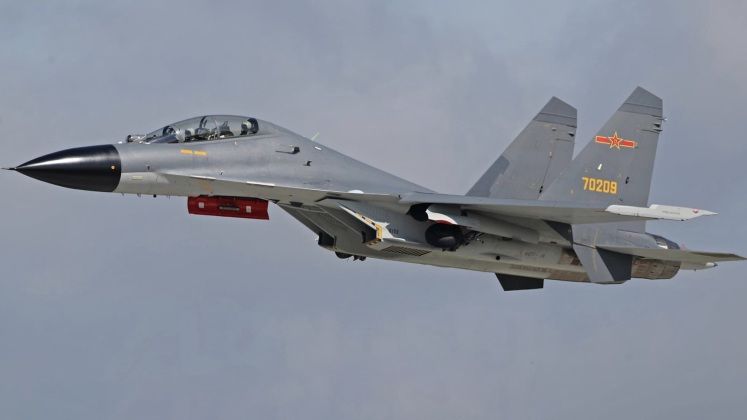
Ten years after the first Su-27s were delivered, the first mockup of the J-11B was revealed in 2002 by the Shenyang Aircraft Corporation, which had been responsible for license production of the Soviet Flanker design. The fighter began serial production some time around the middle of the decade and boasted multiple very substantial improvements over the original Flanker design. The aircraft made much greater use of composite materials, a field in which China had overtaken Russia by this time, making the airframe both lighter and more durable and in turn improving its flight performance due to a lower weight. New electronic warfare systems and sensors were also integrated, including both a Chinese designed Type 1493 pulse doppler radar and an IRST system the latter which was considerably more powerful that the already formidable original Soviet N001E radar. The new radar could reportedly detect medium weight fighters at ranges approximately 150-170km and surface warships at around 350km.
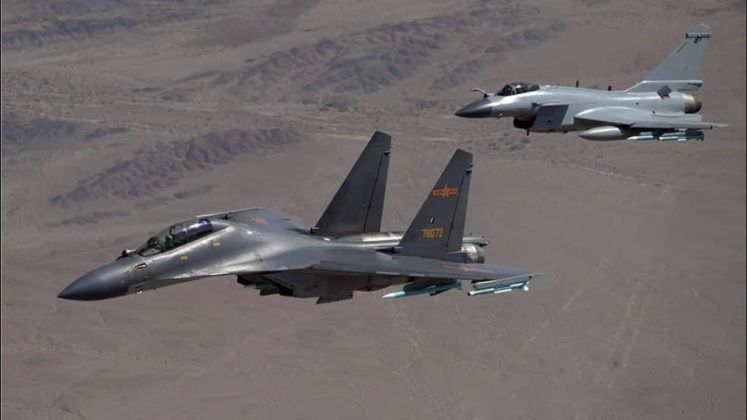
New avionics and sensors also allowed the J-11B to operate much more effectively in air to ground and maritime strike role than the Su-27 could, an example being its ability to deliver precision guided bombs and missiles against enemy targets. A glass cockpit, a new Optical Missile Approach Warning System, digital flight control system and new heads up displays were among its other new features. The J-11B made use of an indigenous WS-10 Taihang engine - one of the most powerful turbofans ever designed for a fourth generation aircraft, which benefitted from study of American CFM56 engines as well as the Su-30 and Su-27’s AL-31. While the original engine design was less capable than that of AL-31 engine and initially faced performance issues, the later development of the WS-10B represented a major improvement. The fighter also replaced the R-27 semi active radar guided air to air missile with an indigenous PL-12 missile with active radar guidance - allowing it to engage more targets simultaneously and providing ‘fire and forget’ capabilities against target aircraft. This placed the aircraft on par with the latest U.S. competitors in terms of firepower, with American fighters in the 2000s having begun to field the AIM-120C with similar active radar guidance capabilities and a similar range of around 100km. The PL-8 air to air missile replaced the R-73 and had a similar performance.
The J-11B’s entry into service followed on from the J-10A fourth generation lightweight fighter, which joined the Air Force from 2006 and was a cheaper and less complex design. China’s fourth generation fighters would improve very considerably in terms of capabilities over the next decade, with the J-16 fighter also based on the Flanker design entering service from 2013 and boasting the first Chinese AESA radar integrated onto a fighter - something the country achieved six years ahead of Russia. This provided it with a detection range against fighters of approximately 400km, and was considerably more difficult to jam or interfere with than a passively scanned radar. The J-16 was more capable than the J-11B in both air to air and strike roles, not only due to its radar but also its stealth coatings, electronic warfare systems, armaments and avionics including helmet mounted sights. The fighter's PL-15 missile had a range estimated at 250-300km, and was the first air to air missile outside Japan to use an AESA radar. The J-16's PL-10 missile built for short range combat far surpassed the capabilities of older generations of missiles.
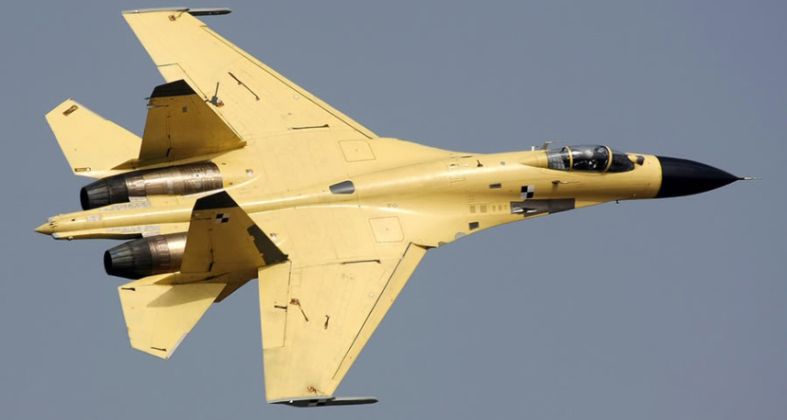
The J-11 would subsequently be enhanced to bring it up to a closer level to the J-16, with the J-11BG fighter integrating an AESA radar thought to be based on that of the J-16 as well as new avionics. These together allowed it to make use of PL-15 and PL-10 air to air missiles that revolutionised its air to air performance. This provided upgraded J-11s with an overwhelming performance advantage over standard fourth generation fighters. In addition, much as the lighter J-10 fighter was developed into the J-10C with ‘4++ generation’ technologies including stealth coatings, an AESA radar, a reduced radar cross section and a high composite airframe, so too is the new variant of the J-11 the J-11D set to benefit from all these upgrades - making it very likely the most capable derivative of the Flanker ever developed for air to air combat. It remains uncertain whether the J-11D will also be produced to over 200 units as the J-11B was, or how much of the J-11B fleet will be upgraded to the J-11BG standard. As China continues to develop new technologies for fifth and sixth generation fighter aircraft, however, it is likely that the J-11 series will continue to be enhanced to allow them two compete on either favourable terms or at worst at a peer level with leading potential challengers.
