
China’s HQ-9 Air Defence System Faces Strenuous Test Against Drones and Electronic Attacks
Military Watch Magazine Editorial Staff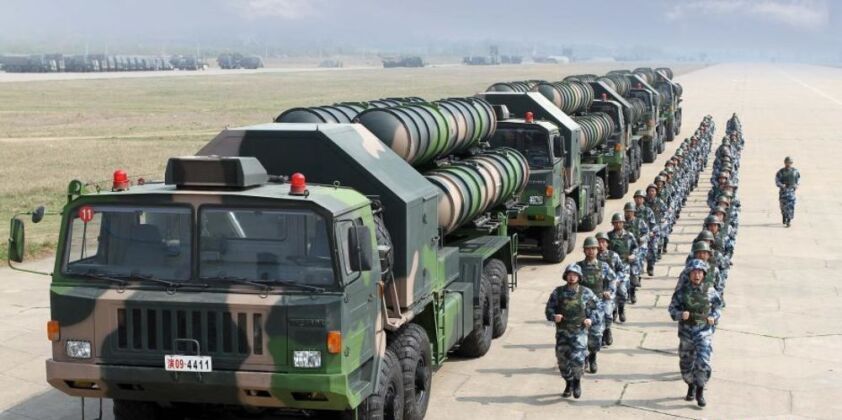
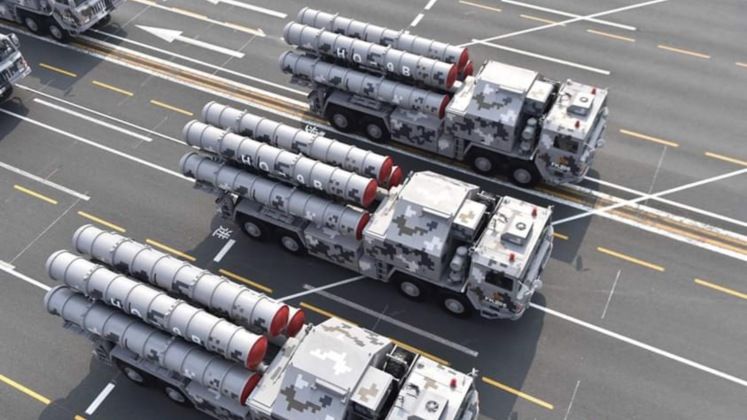
Chinese HQ-9B Surface to Air Missile Batteries
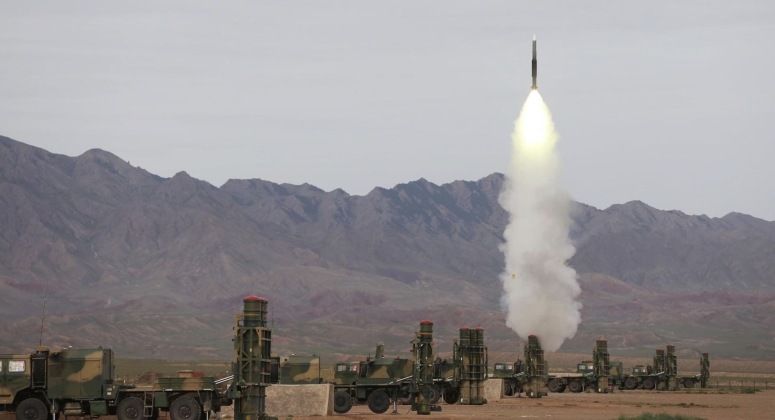
China’s People’s Liberation Army has deployed units operating an enhanced version of the country's HQ-9 long range surface to air missile system 500km into unfamiliar terrain for a strenuous combat test. During the test, HQ-9B units faced simulated challenges including electromagnetic interference and attacks by enemy aircraft in a red vs. blue team drill. Th HQ-9B is the most capable ground based long range air defence system in Chinese service, with the sole exception of two regiments of S-400 systems acquired from Russia. Like the better known S-400s, the missile system emphasises a high mobility and deploys missiles, radars and command units from mobile trucks to improve survivability. The HQ-9Bs in the exercise managed to intercept aerial targets under simulated combat conditions at impressive ranges of 250km - a longer range than any Western or Japanese ground based anti aircraft system is capable of.
PLA Air Force commander Du Tao stressed in an interview on the exercises using the HQ-9B: “[We] want to learn how to protect and maintain the new weapon system under rugged surroundings, as well as to better camouflage it and … try all efforts to fulfil our task.” Former PLA instructor Song Zhongping said the drill showed that PLA air defence units could operate complex weapon systems such as the HQ-9B in unfamiliar terrain at any time, stating: “Those kinds of long distance deployment and massive joint operation drills are aimed at enhancing the PLA’s manoeuvrability,” Song said. “It’s important to test and operate a new weapon system as soon as possible after its commissioning, which could also beef up combat capability.”
Testing the ability to operate the HQ-9B in all conditions is particularly important considering the vital role it plays in China’s defence, as part of what may well be the most complex and multi layered air defence network in the world. Although it is fielded alongside multiple other long range surface to air missile systems such as the older S-300PMU-2, S-300PMU-1, and the original HQ-9, as well as the newer S-400, it is deployed in significantly larger numbers including to major potential hotspots such as strategically located islands in the South China Sea. Much remains unknown about the missile system, including how fast it can perform interceptions, with the rival S-400 system able to fire Mach 14+ capable missiles which can intercept targets at high hypersonic speeds - as S-400s in Chinese service have themselves demonstrated. China has not sought to extensively market the HQ-9B abroad, although Pakistan is considered a leading possible client which may be offered highly favourable contracts to bolster it against threats from neighbouring India.
