
China’s Successful Integration of Hypersonic Ballistic Missile Onto H-6N Falls Short of a Strategic Deterrent
Military Watch Magazine Editorial Staff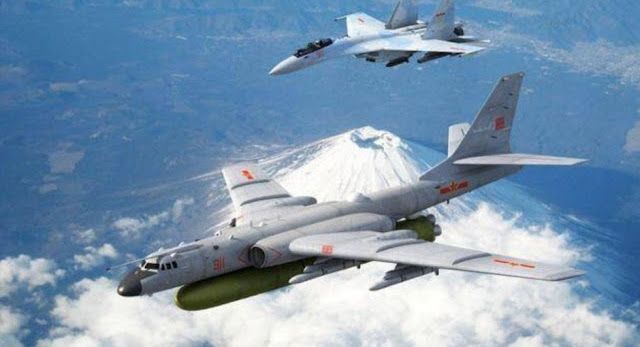
Chinese H-6N Bomber with Ballistic Missile and Su-35 Escort - artwork
The Chinese People’s Liberation Army (PLA) Air Force has reportedly inducted its first H-6N heavy bombers equipped with CH-AS-X-13 ballistic missiles into service, representing the latest of many modifications to the venerated and highly versatile design as it enters its 50th year in service. According to the annual public assessment of China’s military capabilities released by the U.S. Department of Defense (DoD), the deployment of the new bombers equipped with nuclear capable intermediate range ballistic missiles has for the first time provided the PLA with an effective means of delivering nuclear strikes by air - the third arm of the state’s nuclear triad alongside ground based and submarine launched ballistic missiles acquired in the mid 1960s and early 1980s respectively. The DoD report stated: “Its (the CH-AS-X-13’s) deployment and integration would, for the first time, provide China with a viable nuclear ‘triad’ of delivery systems dispersed across land, sea, and air forces.” The development of the platform, and a modified H-6 bomber known as H-6N designed to carry it, was previously noted by Lt. Gen. Vincent R. Stewart, former director of the Defense Intelligence Agency, in 2017. The General referred to “two, new air-launched ballistic missiles, one of which may include a nuclear payload.” The H-6N for its part integrates new more powerful engines and many of the same structural and avionics upgrades as the H-6K and H-6J, reducing its maintenance requirements and increasing its payload, range and weapons carriage relative to the original Cold War variants of the bomber.
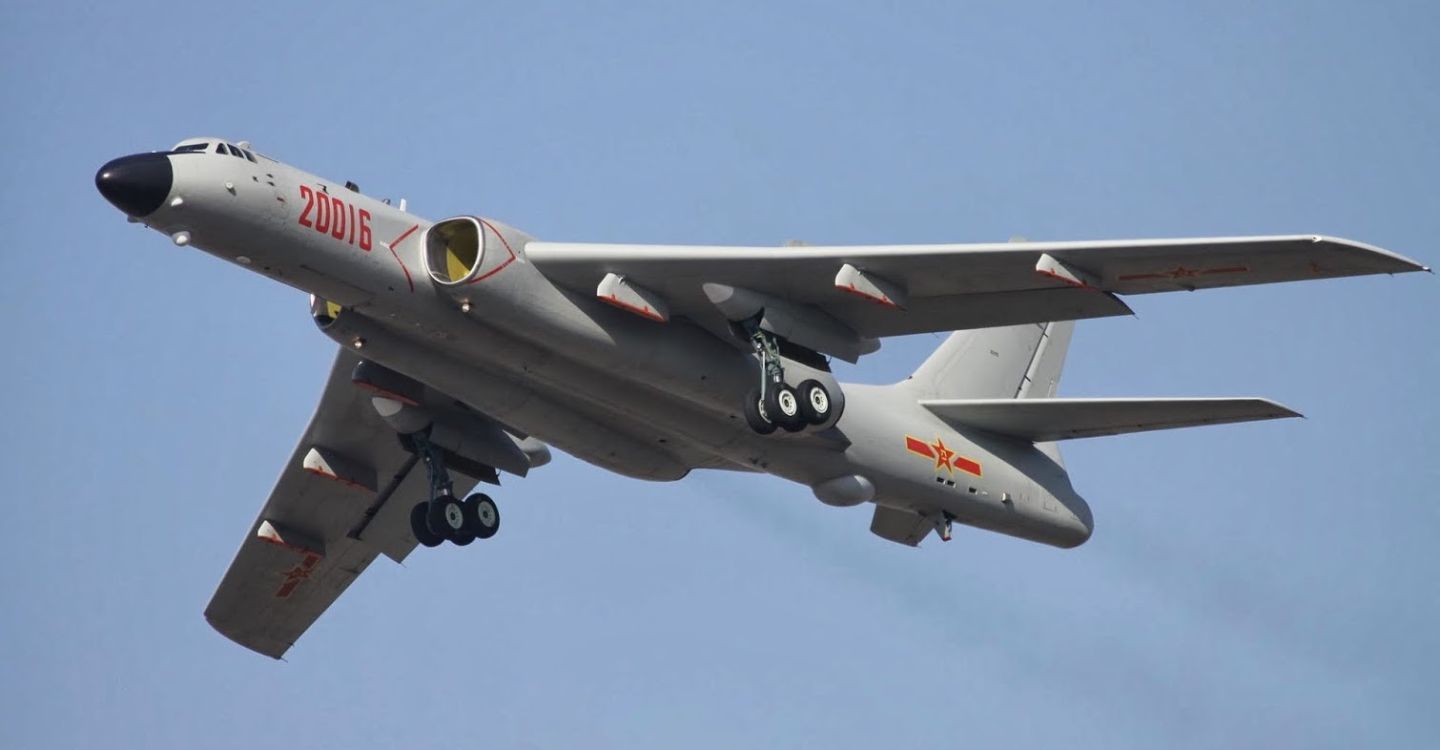
The CH-AS-X-13 is reportedly directly derived from the DF-21 land based ballistic missile, one of two tactical intermediate range platforms currently in service alongside the DF-26 ‘Guam Killer.’ The exact role of the air launched variant remains uncertain and could include nuclear delivery, conventional strikes on enemy bases in the Pacific, and possibly even ship hunting. The DF-21D variant of the missile, dubbed ‘carrier killer,’ entered service sometime in the mid 2010s with the specific role of neutralising large enemy warships at ranges of over 1,500km. The missile’s ability to impact targets at hypersonic speeds of Mach 10 with a high degree of precision has led the United States Naval Institute to conclude that the missile could destroy an American supercarrier in a single strike - with no defences currently capable of intercepting or else diverting such an attack. Should the H-6N be compatible with anti ship variants of the CH-AS-X-13 with a similar specialisation to the DF-21D, it could allow the PLA to threaten large hostile surface ships well beyond its previous maritime anti access area denial zone.
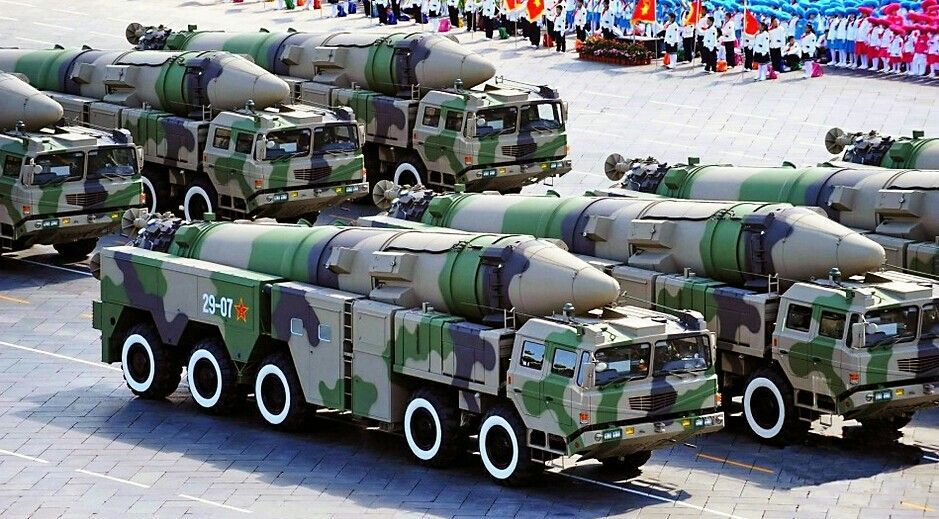
While the ballistic missile armed H-6N is a potentially formidable asset, it is important when assessing its role to understand the doctrine under which China’s nuclear arsenal is governed. China remains one of three states alongside India and North Korea with a nuclear non first use doctrine, and unlike the United States, Russia and Pakistan it does not widely assign tactical roles to its nuclear assets. As the H-6 is a theatre bomber, and lacks the intercontinental range of American and Russian platforms such as the B-2 Spirit Tu-160 Blackjack, it is unable to deliver nuclear strikes to the U.S. mainland - the primary target of Chinese strategic deterrence. Even with the H-6N reportedly retaining an extended range of almost 6000km, combined with the 1,800km range of the DF-21, this would still leave the U.S. mainland out of reach. This remains the case even if the bomber were to refuel in the air repeatedly to double its endurance. Such range restrictions indicate that the H-6N’s role is almost certain be tactical rather than strategic - which taking China’s nuclear doctrine into account indicates that the CH-AS-X-13 may not be a nuclear asset. If nuclear armed, the missile almost certainly deploys miniaturised low yield warheads rather than thermonuclear warheads - which are reserved for Chinese intercontinental range delivery systems such as land based and submarine launched ballistic missiles. Thus while the H-6N may give China's nuclear triad a third arm, the PLA still lacks an effective means of delivering high yield nuclear strikes over long ranges by air necessary to constitute a viable strategic deterrent - a capability which remains solely Russian and American. The development of an air launched ballistic missile capability, however, could be a stepping stone to the development of aircraft capable of strategic nuclear strikes - with the upcoming H-20 stealth bomber expected to have an intercontinental range and potentially integrate long range nuclear missiles - either cruise or ballistic - of its own.
