
JL-3 ICBM Nears Completion; China May Have Just Tested the World’s Most Powerful Submarine Launched Nuclear Ballistic Missile
Military Watch Magazine Editorial Staff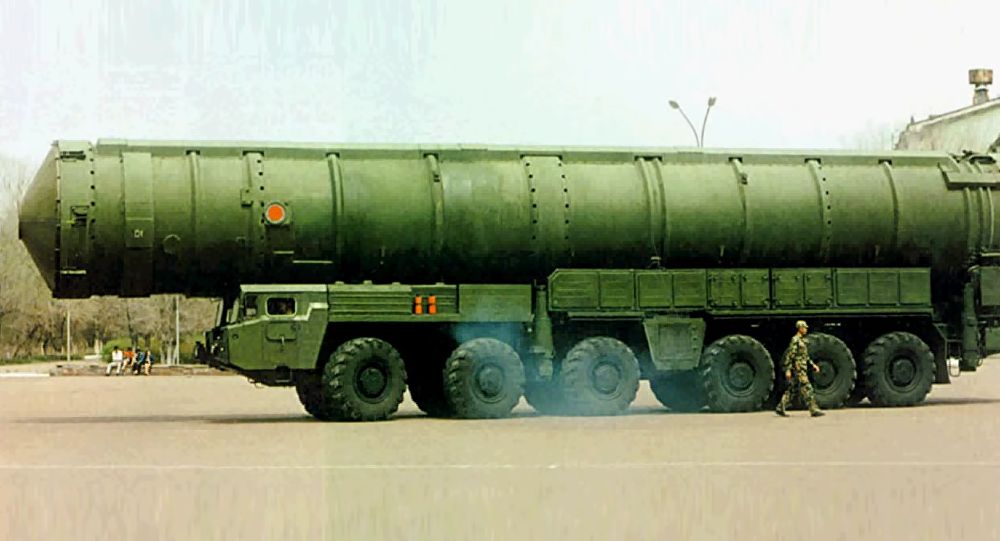
DF-41 Hypersonic Intercontinental Range Ballistic Missile
China’s People’s Liberation Army (PLA) Navy began to invest in the development of a submarine launched nuclear capable ballistic missile in the 1970s, with the first Type 092 submarine armed with JL-1 ballistic missiles entering service in 1981 - almost three decades after the USSR had first tested such a system closely followed by the United States. The the technological sophistication of the PLA was overall far behind those of the United States or Soviet Union at the time, was surpassed even by small European states such as Britain and France. While the PLA would comprehensively modernise its capabilities in the three decades following the induction of the Type 092 and China's defence doctrine has evolved considerably, the navy has continue to give a strong priority to the development of a submarine based nuclear deterrent - which has more recently materialised in the development of the JL-3 third generation submarine launched ballistic missile. While the capabilities of China’s submarines are currently well behind those of the country’s American and Russian counterparts, the country’s ballistic missile technologies have progressed considerably to close the gap with its rivals - as exemplified by the induction of both the DF-21D ‘carrier killer’ tactical ballistic missile and the DF-41 strategic hypersonic intercontinental ballistic missile. These new additions to the Chinese arsenal, without parallel anywhere in the world at the time of their entry into service, demonstrated that the PLA's ballistic missile capabilities were at the cutting edge - leading to much speculation that the country would attempt to develop submarine launched platforms making use of similar technologies.
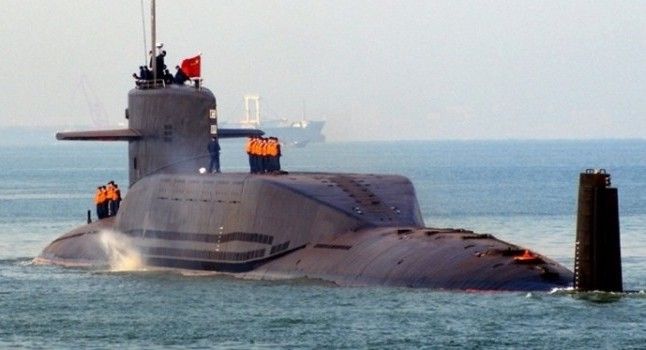
While the full specifications of the JL-3 are currently unknown, the missile is considered a close analogue to the land based DF-41 - with a performance in many ways comparable. The missile reportedly saw its first test in late November 2018 - and is estimated to have a range of 12,000-14,000km. The missile’s estimated impact speed of over Mach 20 make it extremely difficult to intercept, as does its ability to carry multiple independent warheads, making it a particularly valuable asset for the PLA’s strategic arsenal. With current U.S. surface to air missile systems struggling considerably to intercept anything travelling at over Mach 3, the JL-3 will ensure mutual vulnerability to nuclear strikes between the two powers. The new missile is likely to be deployed from future Chinese ballistic missile submarines, the Type 096 Class, which are expected to have capabilities comparable to the elite U.S. and Russian platforms currently at sea. Deployment from the existing fleet of older Type 096 Class warships is also likely - replacing the older JL-2. Investment in the weapons platform comes alongside the development of more capable land and air based nuclear delivery systems such as the H-20 strategic bomber - as the PLA seeks to comprehensively modernise its nuclear triad.
