
China Makes Significant Progress on Elite New Stealth Bomber - Why the PLA Needs the H-20
Military Watch Magazine Editorial Staff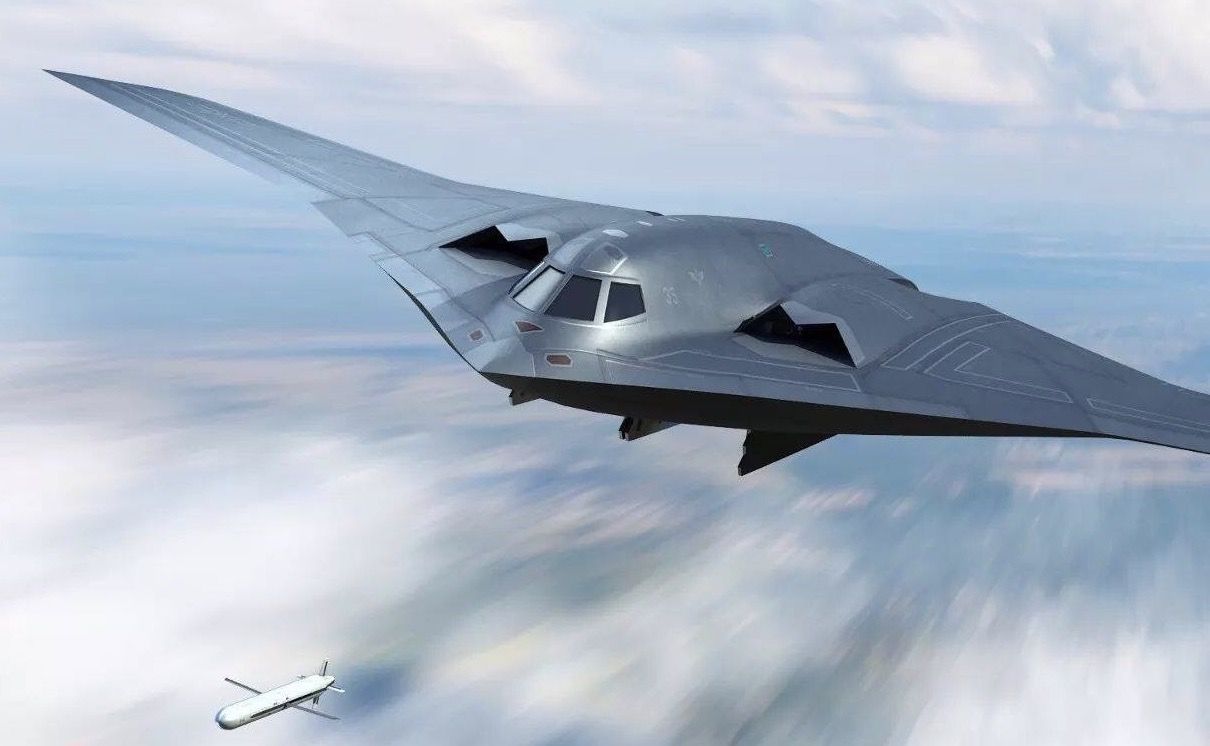
Chinese H-20 Stealth Bomber - concept art
Confirming the long speculated name of the much anticipated new weapons platform, Chinese state media has declared “excellent progress” in developing the H-20 next generation long range bomber. The new platform is expected to make its first public flight in the near future, with the design of the aircraft as of yet only speculated. Public revelation of the new aircraft is likely to coincide with rising tensions with the Untied States, with an escalating trade war and a growing American military presence in the Asia-Pacific primarily targeting China. The H-20 represents part of a growing trend towards China becoming a world leading military aviation power alongside the United States and Russia, one which combines the generous funding of the former with the efficiency of the latter that may well lead it to eclipse both in the near future. With the J-20 fifth generation air superiority fighter’s entry into service in 2017 and the completion of the WS-15 advanced jet engine the following year, both of which came as surprises to Western analysts - many of whom had expected these developments to occur in the early 2020s - the H-20 may well enter service sooner and be more capable than China’s rivals have predicted.
China is one of just four powers to field heavy bombers alongside North Korea, Russia and the United States - though it lacks intercontinental range bombers comparable to those developed by the two Cold War era superpowers and instead relies on the shorter ranged H-6 - a heavily modernised platform based on the Soviet Tu-16. With Chinese efforts to obtain the Soviet Tu-160 ‘White Swan’ from a cash strapped Ukraine following the Soviet Union’s collapse, currently overall the most capable bomber in the world, due to Western intervention, the H-20 is set to represent the country first ever intercontinental range bomber. The new platform is capable of penetrating well beyond the first island chain without aerial refuelling, and may well be used to conduct patrols off the United States’ west coast - much as the U.S. has regularly flown its own bombers near Chinese territory and over territorial waters claimed by Beijing.
There is little doubt that the primary target of the H-20, much like many of China’s new weapons platforms - particularly those capable of carrying nuclear warheads - is the Western Bloc and the Untied States in particular. The new bomber will reportedly be the first other that the U.S. B-2 Spirit to make use of a stealth airframe, though with the B-2 having undergone a very small production run of just 20 aircraft, and slated for an early retirement due to considerable performance issues and extreme delicacy, the H-20 may well be the world’s first successful stealth bomber design to enter service. Unlike the B-2, a subsonic platform unable to carry missiles, the H-20 is set to deploy standoff munitions - namely cruise missiles - to enhance both its survivability and its striking power. The aircraft is likely to have to contend with two major upcoming rivals - the U.S. B-21 Raider set to replace the B-2 and ageing B-1B, and the Russian PAK DA, neither of which have been revealed publicly. North Korea for its part, other than possible upgrades of older designs, has not invested in modernising its own bomber fleet with new aircraft - instead favouring more cost effective ballistic missiles to deliver long range strikes. The H-20 is set to play a major role in modernising the Chinese People’s Liberation Army’s (PLA) strike capabilities - reinforcing the air arm of the country’s nuclear triad and thus ensuring mutual vulnerability remains between it and its major regional rival.
