
China's New Strategic Bombers and their Role in the Pacific
Military Watch Magazine Editorial Staff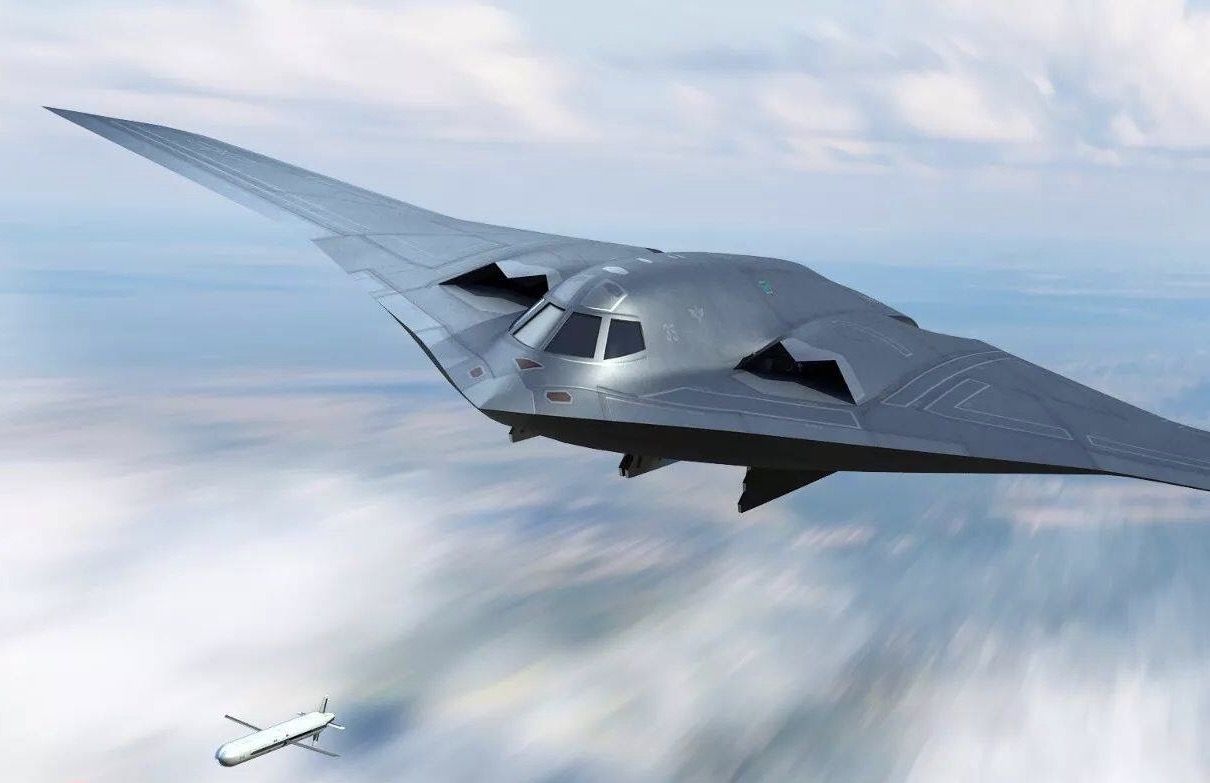
H-20 Strategic Bomber Concept Art
Amid growing tensions with the United States, China has invested heavily in modern strike capabilities for its Air Force and strategic missile forces to better allow the country to target U.S. assets across the Pacific. As part of its military modernisation program the People's Liberation Army has extensively modernised its large fleet of H-6 strategic bombers, most recently developing the platforms into the H-6K variant featuring limited stealth capabilities, improved engines and long range strike capabilities facilitated by advanced long range cruise missiles. Alongside the modernisation of its older bombers, China has also sought to develop an entirely new and more modern platform capable of better evading enemy defences and more effectively projecting power far across the Pacific. On September 1st 2016 Chinese Air Force Commander General Ma Xiaotian confirmed the development of a new heavy bomber, noting that the program was already well under way. While presenting the new H-6K to the public at the Air Force's open day, the General stated: “the Chinese air force has now entered a phase of transition, we want to build a powerful Air Force both defensive and offensive.” Pointing to the H-6K he continued: “Our long range strike capability has much improved compared to the past, and an even bigger improvement is coming. We are developing a new generation of long range bomber."
The new bomber is expected to allow the Air Force to better project power over long distances, making U.S. military facilities on Guam, Hawaii and elsewhere in the Pacific far more vulnerable. If armed with long range cruise missiles, possibly platforms comparable to the 3000km range platforms deployed by the Russian Tu-160, it would also allow these bombers to threaten facilities on the U.S. mainland and serve a complementary role to the capabilities of the country's strategic missile forces. According to Chinese military sources cited by China Daily, the country's new strategic bomber was designed for long range power projection with the ability to strike targets beyond the South China Sea's second island chain without relying on aerial refuelling - all while carrying a payload of at least 10 metric tons.
Few details of the new Chinese bomber have as of yet been confirmed, though the platform is expected to incorporate advanced stealth capabilities far exceeding those of the H-6K and comparable to those of the U.S. B-21 currently under development. One significant uncertainly is whether the platform will primarily be developed for nuclear or conventional strikes, as the role could impact the aircraft's design. Weather the bomber will be a supersonic platform like the Tu-160 or a subsonic one like the B-2, and whether it will carry long range cruise missiles like the former or rely on conventional bombs dropped from short ranges as per the latter remain to be seen. Cruise missile capabilities remain far more likely however, as the ability to conduct long range strikes will substantially increase the bomber's survivability when operating against heavily defended targets in the Pacific while also increasing its strike range without aerial refuelling.
The Xi’an Aircraft Industrial Corporation and its affiliated no. 603 Institute will be responsible for the H-20's development. Xi'an has also been responsible for both developing and modernising the H-6 strategic bomber as well as the JH-7 strike fighter, and has substantial experience in the development of heavy aircraft. China's new bomber is expected to be designated H-20, although this too is remains uncertain and H-9 remains another possibility. Ultimately China's People's Liberation Army remains one of only four militaries in the world fielding heavy strategic bombers, and while the state of North Korea's bomber fleet remains a well kept secret both Russia and the United States have sought to significantly modernise their platforms for both conventional and nuclear strikes while inducting all new aircraft into service. While China has long lagged behind the two powers in its bomber capabilities, the induction of the H-20 could potentially lead the PLA to field the world's foremost bomber fleet and gain a qualitative advantage over platforms fielded by both Russia and the United States.
