
China’s Successful Ballistic Missile Interception Test Signals Growing Space Warfare Capability
Military Watch Magazine Editorial Staff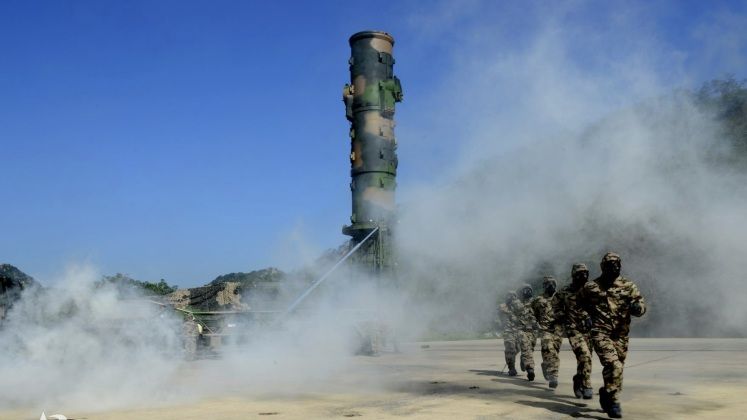
Launch of Chinese DF-21 Medium Range Ballistic Missile
The Chinese Ministry of Defence reported on February 4th that the country had carried out a successful midcourse interception of a simulated intermediate range ballistic missile, which officials claimed was purely defensive and was not meant as a signal to any country in particular. Intermediate range ground based missiles are deployed by neighbouring India, but are expected to be deployed by the United States Military to East Asia in future following Washington’s withdrawal from the INF Treaty which has prohibited it from deploying such weapons. Technologies needed for midcourse interception of intermediate range ballistic missiles also have considerable applications for space warfare and can be used to shoot down enemy satellites - a growing field of concern for the United States. The launch was carried out from the Taiyuan Satellite Launch Center in Shanxi Province, which plays a key role in testing new weapons for the People’s Liberation Army Rocket Force.
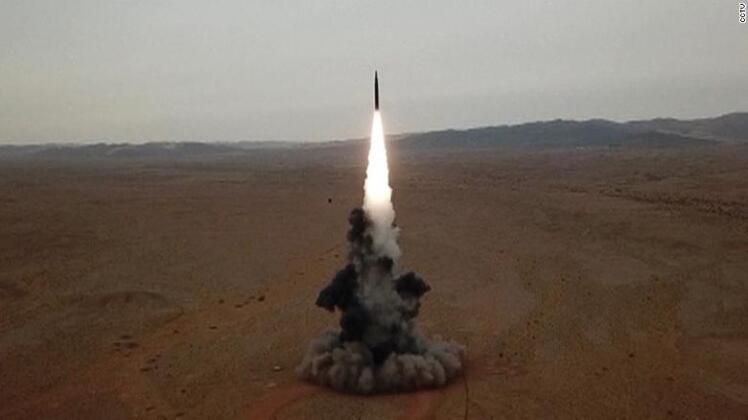
The U.S. notably deployed one of its three RC-135S Cobra Ball jets near Taiyuan, although it remained in international waters, with these aircraft specially configured to collect intelligence from missile launches. This indicates that the U.S. likely had prior knowledge of the test, and a closer assessment of Chinese capabilities potentially allowed it to better develop countermeasures to interception for its missiles and satellites. China has sought to develop an early warning capability with Russian assistance against possible Western ballistic missile strikes, and although it has pulled ahead of Russia in a number of key technological fields it still remains behind in its strategic air defence and nuclear deterrence capabilities. Russian missile defence systems such as the S-500 and A-235 are considered the most capable in the world and are well suited to neutralising space and hypersonic targets, and China is expected to field more of these types of armaments in the coming years. With Russian and the U.S. media both reporting on their respective countries’ intentions to develop space aircraft with combat roles, China is also speculated to likely be pursuing such aircraft which have the potential to play an important role in cuing ground based defences and possibly even shooting down enemy intermediate and intercontinental range ballistic missiles.
