
Deterring American Nuclear Strikes: Russia Reports Fast Progress Setting Up Strategic Missile Early Warning System for China
Military Watch Magazine Editorial Staff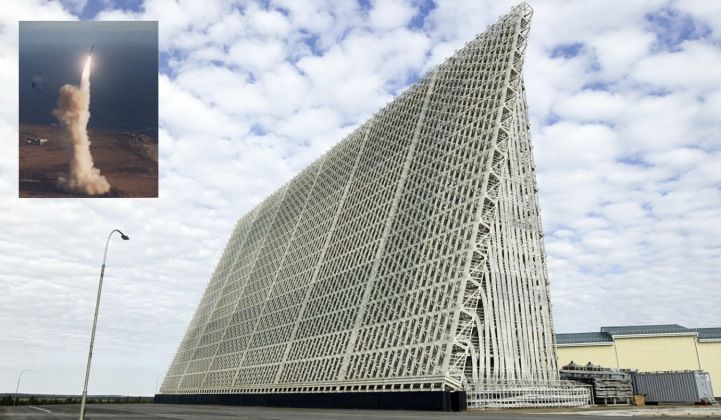
Russian Voronezh Radar and American Minuteman ICBM
Following the announcement that Russia would help its neighbour and close defence partner the People’s Republic of China to establish a missile attack early warning system in December 2019, there has reportedly been rapid progress in work on this program. Russia and the United States are currently the only countries in the world with such warning systems, which are relied on to detect incoming enemy intermediate and intercontinental range ballistic missiles in flight and allow the country to retaliate before it is itself struck. The purpose is to deter a superpower adversary from attempting a nuclear first strike to eliminate an enemy’s nuclear arsenal, by ensuring that retaliatory nuclear strikes will be launched before the enemy missiles even reach their target. The need for this has grown considerably as China has increasingly become the target of a major western arms buildup, and as the U.S. plans to deploy intermediate range missiles in the Pacific to complement its existing arsenal of intercontinental range missiles.
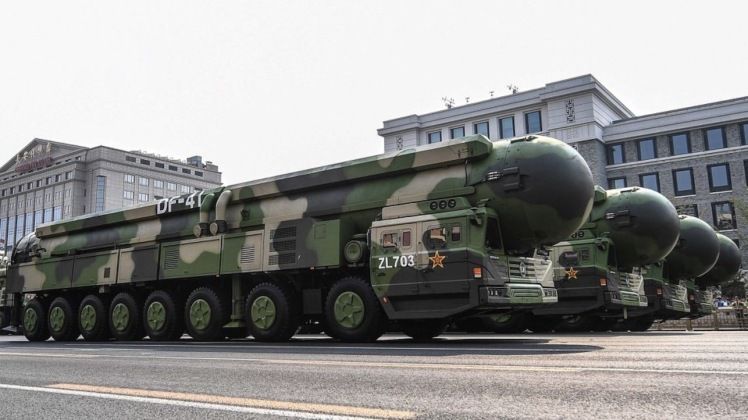
Chief Designer of Russia’s missile attack warning system, CEO of the Vimpel Company Sergei Boyev, stated regarding the development of an early warning system for China: "Today we are carrying out work in a whole number of areas, on the elements [of the system] under the contracts signed, in particular, in the area of space control. There are certain successes, certain results… Cooperation is proceeding in a planned manner and all that relates to more specific things will be understandable at the next stage when the preliminary studies are complete and assessments are given.” While China overall has a larger defence sector than Russia, and is thought to have overtaken its neighbour in many key technologies from radar absorbent aircraft coatings to data links and air to air missiles, Russia retains leads in a number of technologies which it has been able to provide to its neighbour to further strengthen Chinese defences. Access to technologies from not one, but two fo the world’s three leading defence sectors, has been a major boon for China’s military modernisation efforts.
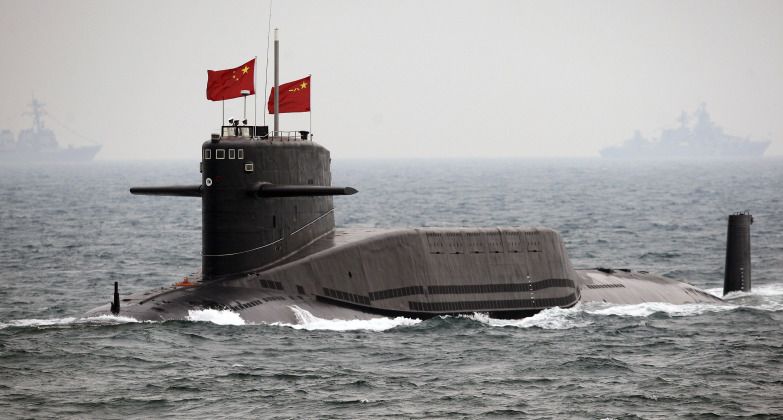
China’s nuclear arsenal remains a small fraction of the size of those of either Russia or the United States, and its ballistic missile submarine fleet which provides a second stage of strategic deterrence is also small and overall less sophisticated than its counterparts from the two Cold War superpowers. China also lacks intercontinental range nuclear-capable bombers, the third arm of the nuclear triads of both states, although this could soon change as the Chinese People’s Liberation Army Air Force looks to commission the H-20 long range stealth bomber in the near future - which is expected to have major advantages over its current American and Russian rivals the respective B-2 and Tu-160. China’s upcoming Type 096 Class ballistic missile submarine is also expected to bridge the gap with, if not comfortably overtake, its U.S. and Russian competitors and will use a wide range of next generation technologies to provide an unprecedented level of quietness.
