
China’s J-8 Interceptors; Heavily Upgraded and Still in Service 50 Years Later
Military Watch Magazine Editorial Staff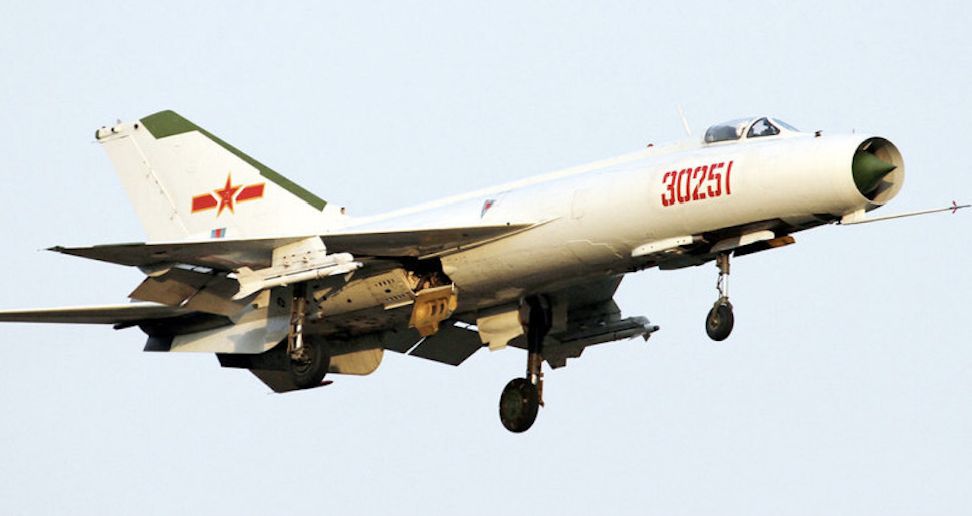
Shenyang J-8 Interceptor
July 5th 2019 marks fifty years since China’s Shenyang J-8 twin engine interceptor made its first flight in 1969, and the beginning of flight testing for the People’s Liberation Army’s (PLA) very first third generation combat jet. The Shenyang Aircraft Corporation had manufactured a number of Soviet designed aircraft under licence including the MiG-17 first generation fighter as the J-5 from 1956 and the MiG-19 second generation fighter as the J-6 from 1959. These continued to form the mainstay of the Chinese fleet throughout the 1960s and beyond - with the more advanced J-7 making its first flight in 1966 but only entering service years later. The J-7 was a reverse engineered Soviet MiG-21 based on incomplete components and blueprints China was able to acquire, but was not produced under licence. It was far from a fully indigenous combat jet, and as a second generation platform it remained behind its time with its Soviet analogue having entered service in the late 1950s and both the Soviet and American air fleets having moved on to third generation systems by 1970.
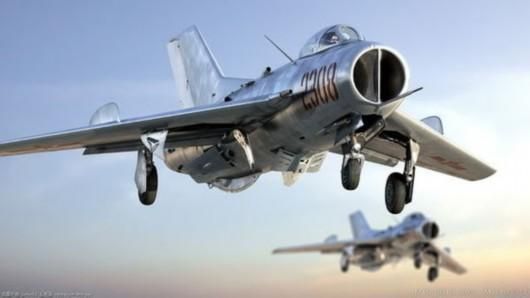
A number of factors seriously undermined China’s ability to modernise its air fleet. The Sino-Soviet split meant that the PLA no longer had access to the latest Soviet combat jets either for mass production or for direct purchase, and relations with the Western Bloc remained hostile. Political turmoil and economic downturn domestically meanwhile undermined prospects for either the manufacture of greater number of second generation jets or the development of more advanced technologies for avionics and radar systems or air to air missiles to equip them, meaning the fleet was comprised primarily of near obsolete first generation fighters even by 1970. The PLA nevertheless recognised the need to field more capable fighters, even if in small numbers, and therefore invested heavily in both modernisation of the J-7 design - which was still considerably inferior to the original MiG-21, and in developing a new third generation jet. Two rival programs were proposed by the Shenyang and Chengdu companies - the former developing the J-8 twin engine interceptor and the latter the J-9 single engine fighter.
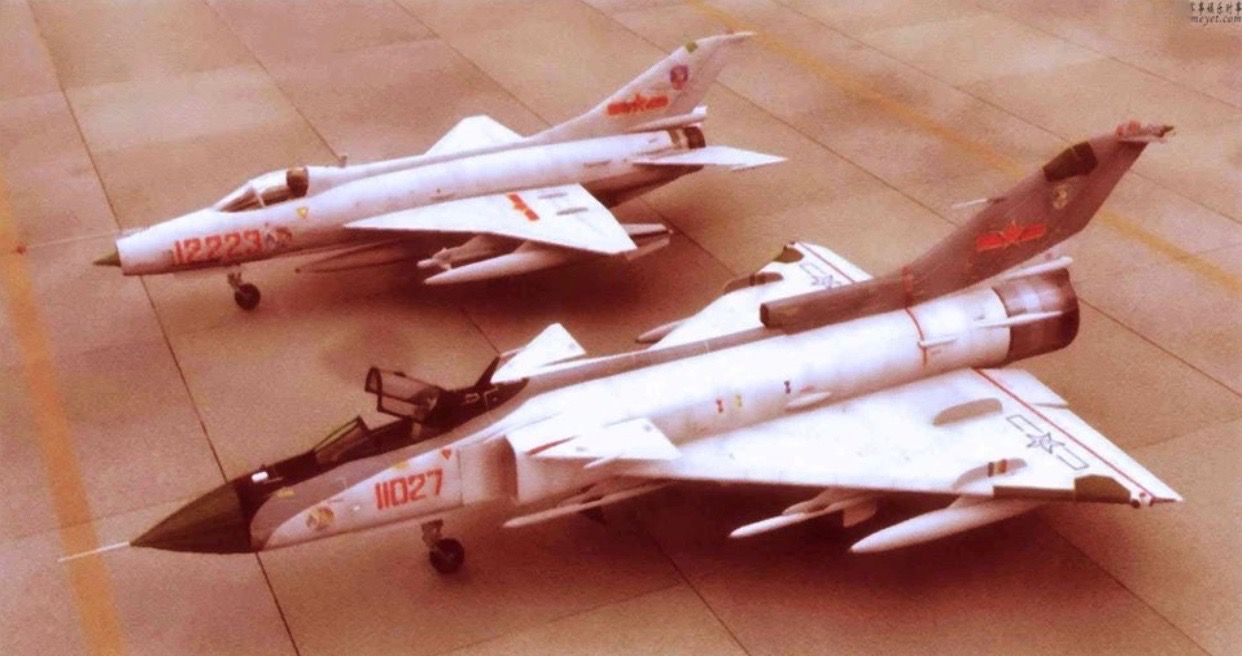
Of the two next generation fighter programs, the J-9 was by far the more ambitious. The platform was to be able to operate at speeds of Mach 2.4 and altitudes of 20km - specifications no single engine fighter has to date ever been met. These specifications were likely influenced by the U.S. development of the Valkyrie Mach 3 strategic bomber and the Soviet development of the MiG-25 interceptor and MiG-25RB bomber - all of which were capable of exceeding Mach 3 and reaching similarly high altitudes. Difficulties developing the fighter led the PLA, which needed a new aircraft urgently, to opt for the simpler J-8 design - although the J-9 design would heavily influence that of the J-10 fourth generation fighter in later years. The J-8’s design used technologies closely derived from the J-7 and MiG-21, with an airframe which closely resembled the former only on an enlarged scale. Furthermore, the fighter’s twin Wopen-7A turbojet engines were closely derived from those on the J-7. Even this program, however, saw considerable delays due to the political situation at the time - and would not enter service for over 11 years until 1980. By this time Both the U.S. and the USSR had had more capable third generation designs in service for over ten years, and their replacement with the first fourth generation fighters was well underway.
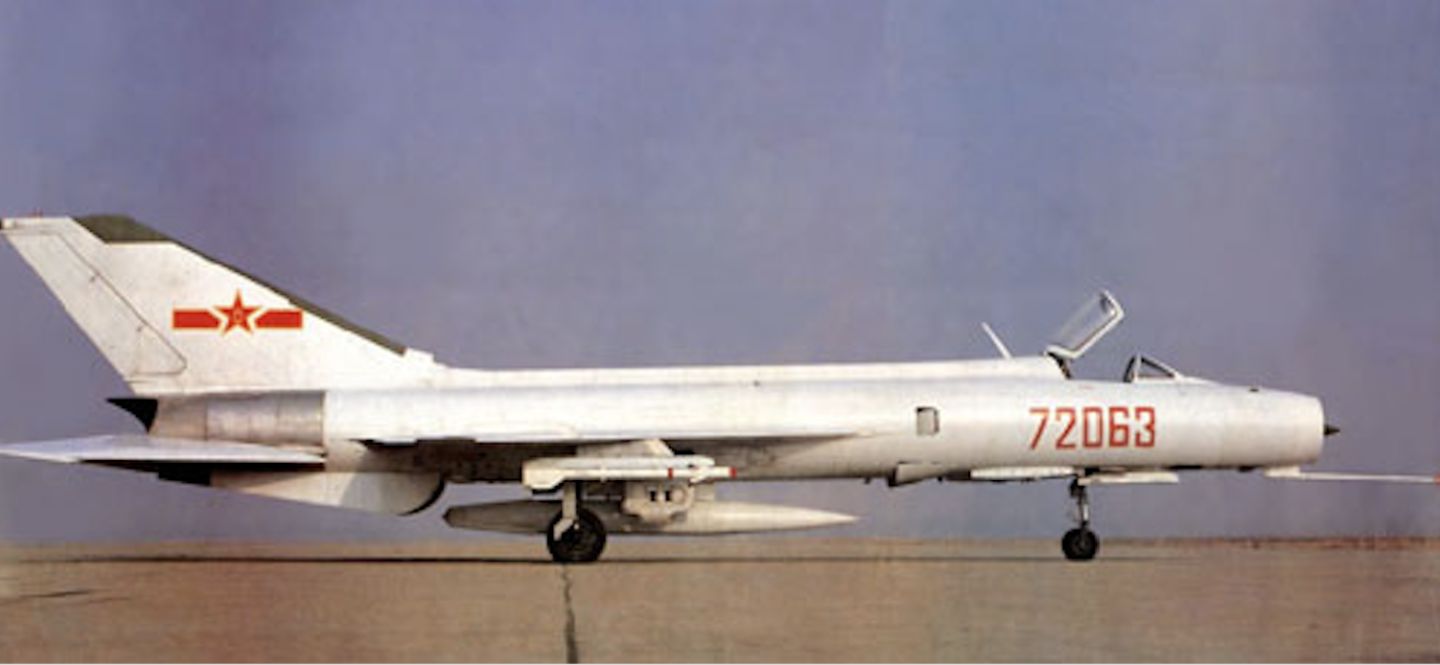
The J-8 design reportedly benefitted considerably from access to the Soviet MiG-23 for reverse engineering, with these jets sold to both China and the United States illegally following a purchase from the Soviet Union in the early 1970s. The design was nevertheless somewhat unremarkable in its initial performance specifications with poor sensors, electronic warfare systems and avionics for its time and a light carriage of just four air to air missiles. Its weapons systems were far outdated by their American and Soviet counterparts such as the AIM-7 and R-40 - which alone guaranteed a considerable disadvantage. By 1991 only around 100 J-8 aircraft were in service, meaning that third generation platforms at the time comprised just 2.5% of the entire PLA Air Force's fleet of fighters an interceptors with 75% comprised of the very early 2nd generation J-6 fighters. The PLA Navy's fleet was if anything even less modern. That year the PLA would acquire its first fourth generation combat jets - arguably the most capable in the world at the time - with the purchase of two dozen Su-27 jets from the USSR. Throughout the 1990s the modernisation of China’s aerial warfare capabilities would rely overwhelmingly on technology transfers and direct from the Soviet Union - leaving a marginal role for the indigenous J-8 which was still the most advanced China had developed indigenously.
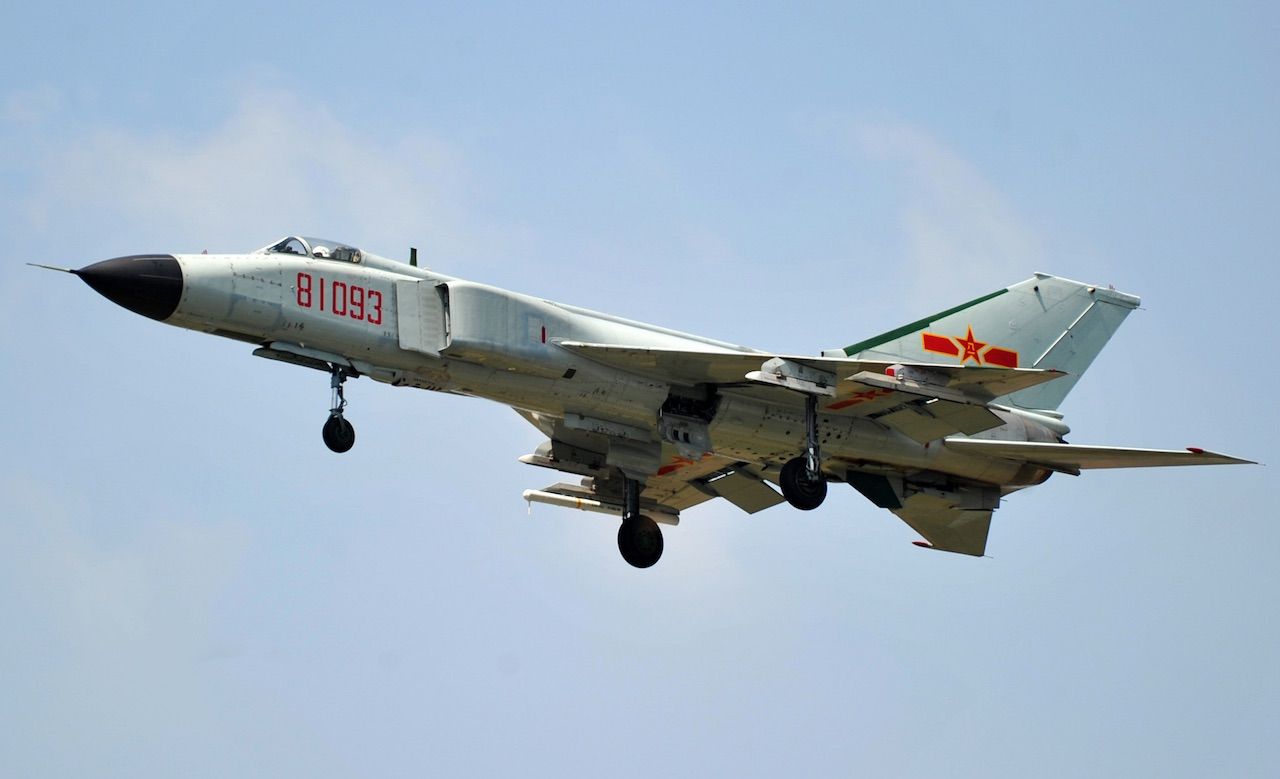
The J-8 remained in production until 2010, and the design was considerably enhanced alongside the lighter J-7 which itself remained in production until 2013. The interceptor’s MiG-21 style nose air inlet was replaced with a solid nose capable of housing a larger radar and with lateral air intakes on the sides. The aircraft were equipped with new PL-12 air to air missiles, munitions with high precision, a 100km range and speeds of Mach 4 placing them on par with the most advanced Russian and American armaments of their time. Sensors on newer variants of the J-8 were not only heavier, but also more sophisticated, providing situational awareness decades ahead of its predecessor. The PLA acquired the U.S. made AN/APG-66(v) radar installed on Block 15 fourth generation F-16 fighters, and these were subsequently introduced onto the J-8 interceptors before being replaced by Doppler radar based on the Israeli Elta EL/M 2032 and eventually by more advanced indigenous radars on later production variants. WP-13B turbojet engines, digital fire control systems, a glass cockpit, and multifunctional displays all served to further enhance the J-8's performance. Fifty years after its first flight, and thirty nine years after it entered service, the J-8 is set to remain in service with the PLA Air Force for many years to come. The interceptor was China first full attempt at a modern indigenous jet for air to air combat, and will continue to retain a special place in PLA history as a result. A look back at the J-8 program shows how far China’s military aviation industry has come in the past 50 years, with the country the first in the world other than the United States to deploy indigenous fifth generation stealth jets - the J-20, alongside what is today perhaps the world’s most capable widely used air to air missile - the PL-15, and very soon what may well be the world’s most capable bomber - the H-20.
