
Su-27 Celebrates 42 Years Since First Flight; How the Soviet Flanker Changed Military Aviation
Military Watch Magazine Editorial Staff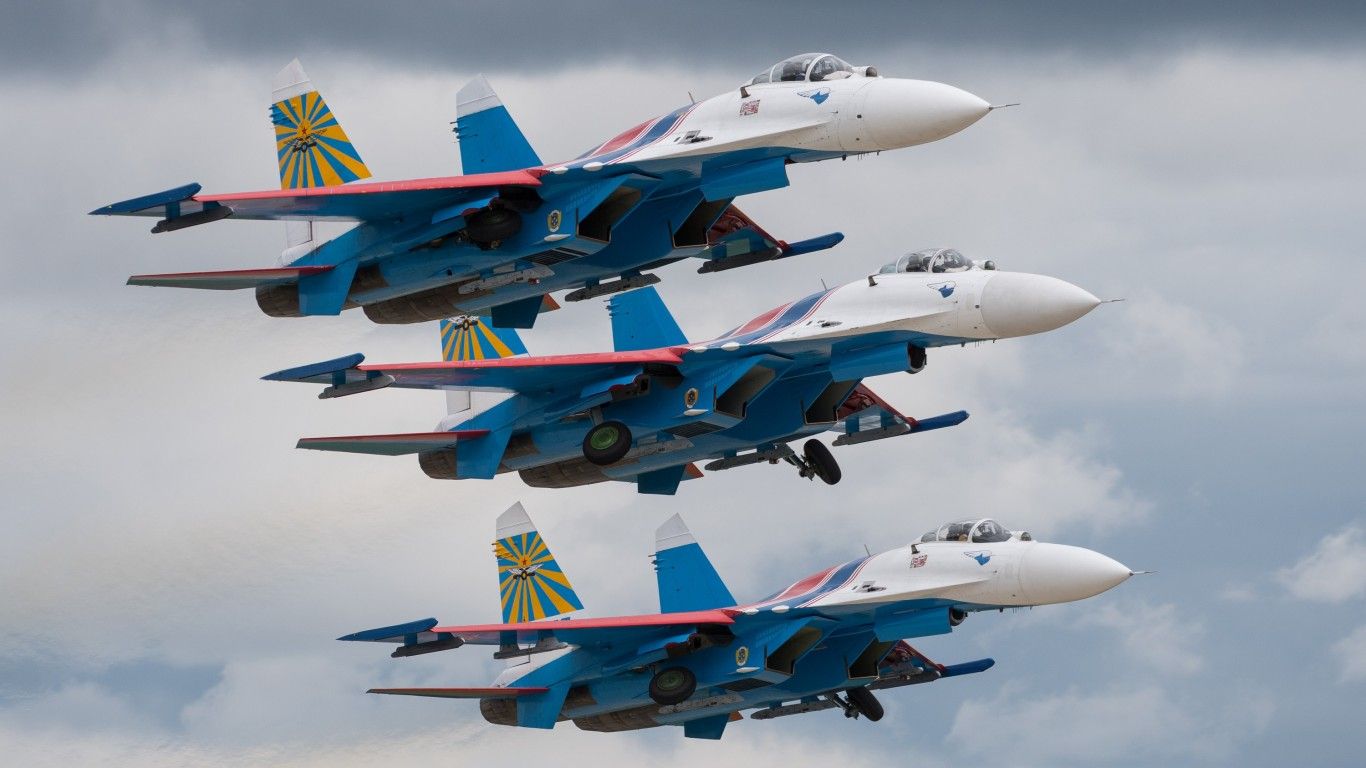
Su-27 Fighters in Formation
On May 20th 2019 the Soviet Su-27 Flanker fourth generation twin engine air superiority fighter celebrates 42 years since its first flight in 1977 - the country’s first fourth generation fighter jet to fly shortly following the MiG-31 Foxhound interceptor less than two years prior. The Flanker provided the Soviet Air Force with a direct analogue to the American F-15 Eagle, and while it lacked the powerful sensors of the heavier Foxhound or the F-14 Tomcat in American service due to its lighter weight it was capable of comfortably outperforming the F-16 Fighting Falcons and F-18 Hornets which comprised the bulk of NATO air and naval fleets. The aircraft was unrivalled in low speed manoeuvrability, and while the F-15 could manoeuvre marginally better at high speeds and was faster the Flanker compensated with a heavier armament, longer range, superior thrust/weight ratio and a better climb rate facilitated by its more powerful AL-31F turbofan engines. The Flanker was delayed in its entry into service alongside its lighter export oriented counterparts the MiG-29, with the government of Leonid Brezhnev undervaluing their capabilities and placing more faith in the MiG-31 and less costly upgraded variants of third generation fighters. Yuri Andropov's brief time as head of state and General Secretary from November 1982 however saw the program rapidly escalated with a boost in funding, with the aircraft entering service less than three years later. The Flanker was quickly entered into mass production and was expected to form the mainstay of the Soviet fighter fleet, with no offers for exports with the exception of a planned sale to the People’s Republic of China just months before the state's collapse. This came as a result of economic downturn, and was also seen as a means to further the Sino-Soviet rapprochement initiated in the late 1980s. While the Su-27's export had been restricted in the Soviet era, Soviet successor states would widely export the fighter and following the state's collapse - and the Flanker alongside its enhanced derivatives would enter service in over 20 countries despite their considerable cost both to acquire and to operate. The Su-27 would serve in the air forces of thirteen countries, five of which were Soviet successor states, with the platform exported to Angola, China, Vietnam, Mongolia, Indonesia, Ethiopia and Eritrea. The United States also acquiring jets inherited from Belarus for performance evaluation, which was considered particularly vital as the Chinese People's Liberation Army Air Force emerged as a leading potential challenger to Western primacy in the air from the mid 1990s.
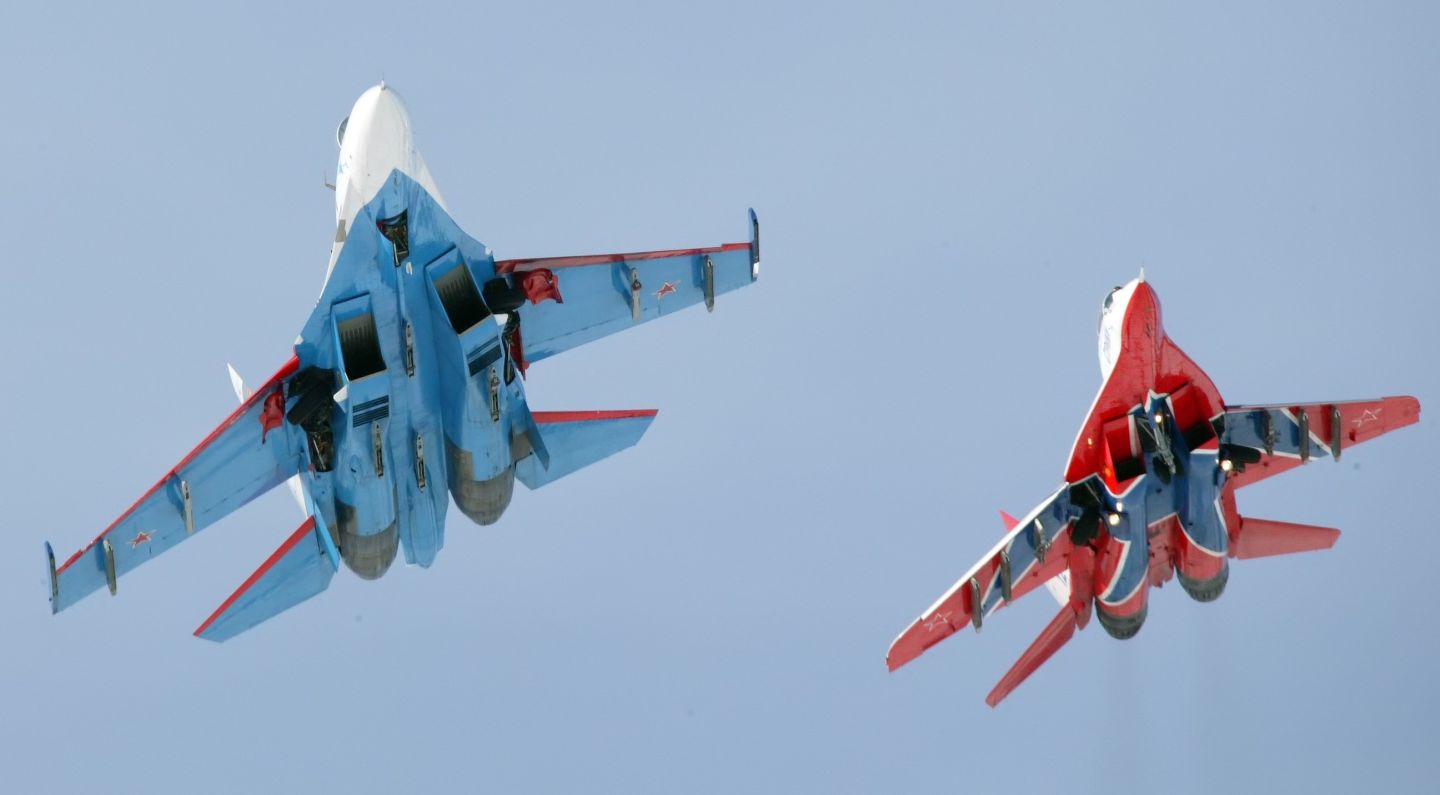
Unlike the F-15C, which was able to demonstrate its advanced capacities in a 'moment of glory' in 1982 when it delivered an overwhelming victory to the Israeli Air Force over the Syrian air fleet of third generation fighters, and again in 1991 in U.S. hands against the Iraqi Air Force, the Su-27 never had a chance to similarly make its mark during the Cold War. Air to air engagements have been few and far between since, and while its heavily enhanced derivative the Su-35 has been given a wide birth over Syrian skies since deployed there by the Russian Air Force in early 2016 the only air to air engagement the Flanker has had was over Ethiopia, where the country’s small fleet destroyed two Eritrean MiG-29 jets in the mid 1990s. While this engagement demonstrated the undisputed superiority of the Flanker over its lighter and cheaper Soviet counterpart, it did not provide the fighter with the chance to demonstrate superiority over Western jets or to challenge the F-15. The recent performance of the Su-35 against the American F-22 however, evading detection and forming a lock on the Western stealth fighter over Syria, is testament to the design’s capabilities - albeit in a heavily enhanced form.
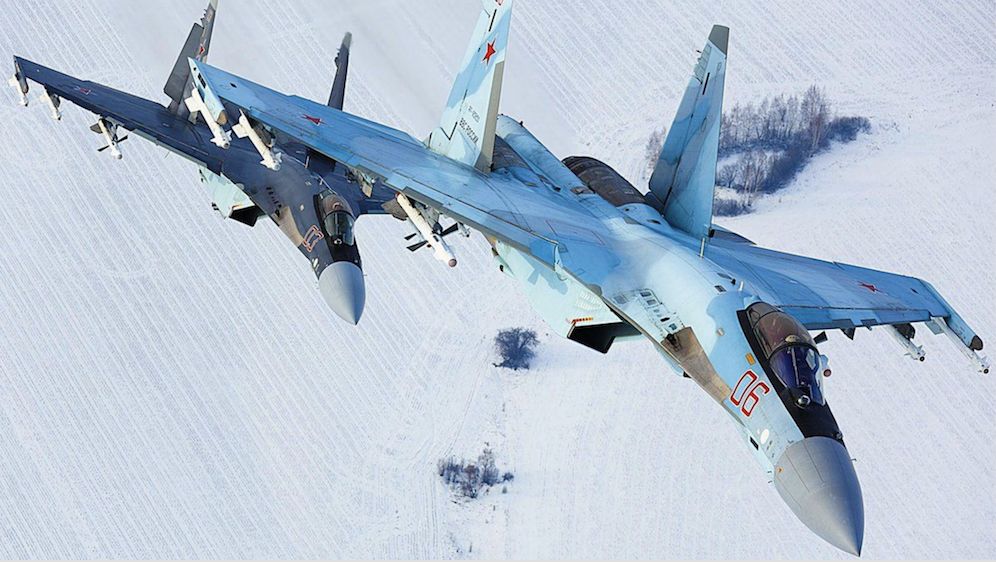
The Su-27 today forms the mainstay of the Russian fighter fleet with over 350 in the Air Force's inventory, many of which are of the enhanced ‘4+ generation’ Su-27SM2 or SM3 variants with an expanded weapons carriage, greater use of composite materials and integration of modern avionics, electronic warfare systems, armaments and sensors including an Irbis-E radar from the Su-35. Flankers have increasingly been made compatible with a wider variety of munitions allowing them to conduction long range strike and ship hunting roles, and newer and more capable air to air munitions such as the R-37M, R-77 and R-27ER have also been integrated to enhance combat performance in an air superiority role. The Su-27's close derivative, the Su-30MKI, forms the bulk of the Indian air fleet with a dozen operational squadrons today and over 300 jets planned. The original Su-27 alongside over half a dozen other derivatives, also form the mainstay of the Chinese People’s Liberation Army’s aerial warfare capabilities. China currently operates well over 500 Flanker derivatives including both Russian designed Su-27, Su-30 and Su-35 jets and indigenous J-11B air superiority fighters, J-15 carrier based fighters and J-16 strike fighters - soon to be followed by the J-11D ‘4++ generation’ platforms. Other countries currently relying on Su-27 derivatives to serve as the bulk of their air fleets include Vietnam, Indonesia, Malaysia, Algeria, Ethiopia, Eritrea, Venezuela, Ukraine, Mongolia, Kazakhstan, Uganda and Angola. A key to the Flanker’s success has been its ability to incorporate next generation technologies, with Russia's latest variants the Su-34 strike fighter and Su-35 entering service in 2014 and built to go head to head with the American fifth generation and integrating technologies decades ahead of the original platform. Upgrades will mostly likely keep the Flanker design viable into the 2040s - perhaps longer still - with the upcoming J-11D set to be by far the most formidable derivative yet. Whether Russia for its part will invest in developing more capable Flanker derivatives following the Su-35 remains to be seen.
