
China’s First Indigenous Fighter: Air Force Withdrawing Last J-8s From Service Amid Rapid Modernisation
Military Watch Magazine Editorial Staff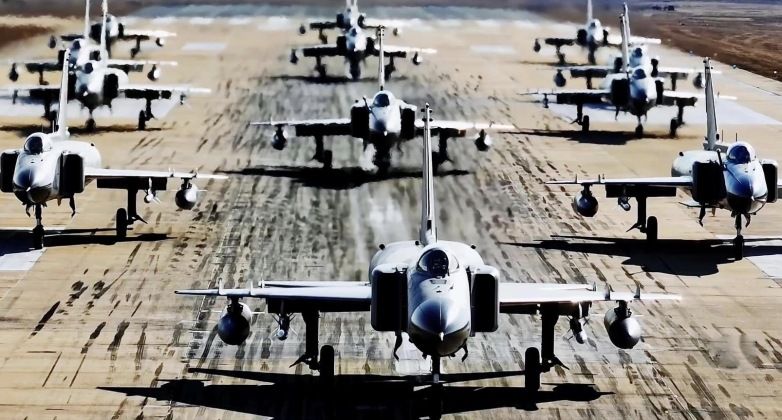
J-8 Interceptors on Elephant Walk
The Chinese People’s Liberation Army Air Force has continued to rapidly withdraw remaining J-8 interceptors from service, with these being the tactical combat aircraft from the Cold War era that are still widely in service. The J-8 is being retired through a gradual phasing-out, with most frontline interceptor squadrons that once operated the type having already transitioned to field more modern aircraft such as the J-11 and J-16. Unlike the wholesale retirement of older J-7 fighters, many remaining J-8s were first reassigned to secondary missions, particularly high-altitude reconnaissance. Equipped with reconnaissance pods instead of air-to-air weapons, these roles exploit the J-8’s excellent speed and high-altitude performance to conduct tactical intelligence missions, while preserving newer fighter types such as J-10s for combat duties.
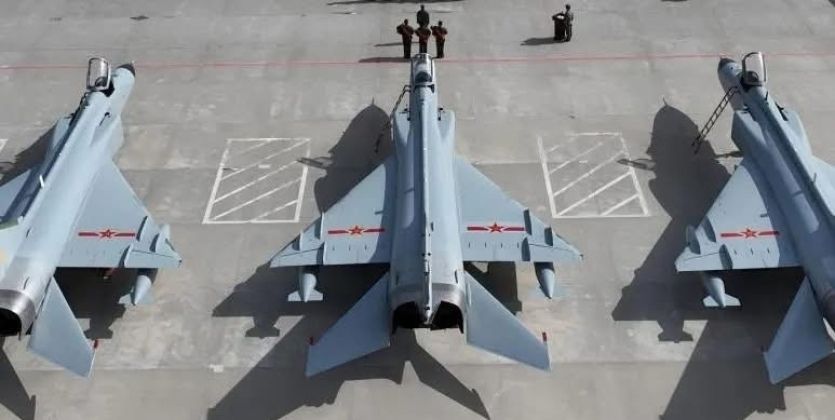
The J-8 underwent one of the most significant evolutionary processes of any Chinese fighter or interceptor type, with successive variants having incorporated increasingly sophisticated avionics, radar systems, weapons, and airframe refinements, transforming it from an enlarged twin engine derivative of the J-7 with basic late second generation level capabilities, into a capable fourth generation era combat platform. The original J-8 was conceived during the 1960s to provide a superior capability to the J-7 for intercepting high-altitude bombers and reconnaissance aircraft, with its design essentially being an enlarged J-7 which could carry more fuel for a longer range, operate at higher altitudes, and carry more weaponry. The J-8 was the first locally designed fighter type to enter service, contrasting to the J-5, J-6 and J-7 which had been developed as local production models of the Soviet MiG-17, MiG-19 and MiG-21, rather than being designed in China itself.
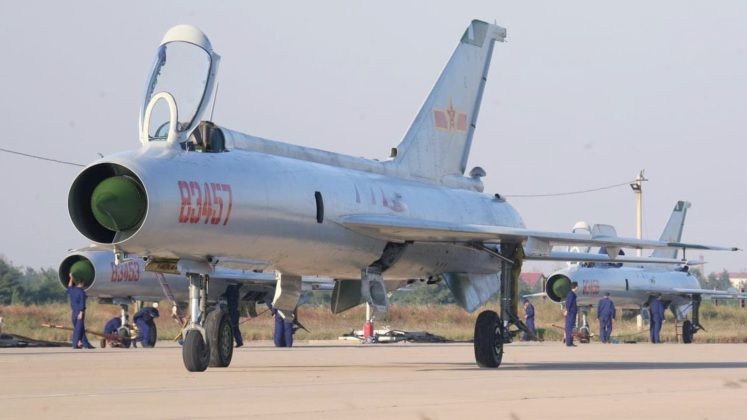
The J-8 was designed during the Cold War as a high-speed interceptor, optimised to climb rapidly and destroy high-altitude bombers or reconnaissance aircraft. While relatively few were built during the Cold War, the J-8 design was deeply redesigned during the 1980s with a completely redesigned forward fuselage to accommodate a larger radar, adding side-mounted air intakes to avoid needing to take in air through the nose. The J-8F, the most advanced interceptor variant, introduced compatibility with the integrated modern PL-12 active radar-guided missiles as its primary armament, giving it a highly potent beyond-visual-range engagement capability for its time. The PL-12 was broadly comparable to the U.S. AIM-120C, and combined well with the fighter’s improved, data links and pulse doppler radar to transform it from point-defense interceptor into a much more capable air-defence platform.
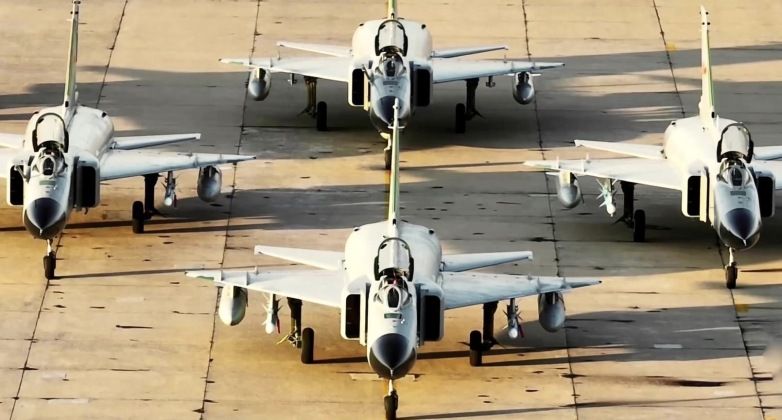
While the basic twin-engine arrangement remained unchanged, successive variants received improved versions of the WP-13 turbojet engine, offering greater thrust and improved reliability. These improvements brought many aspects of the J-8’s performance fully up to date with the J-10A and J-11B fourth generation fighters. Work on the J-8 program, alongside the J-10 and J-11 programs, represented important turning points for the Chinese combat aviation industry between very limited capabilities that were decades behind the cutting edge in the late Cold War era, and the development of world leading fifth generation fighters from the 1990s which entered service in 2017. This in turn paved the way for China to gain a lead of close to ten years over the U.S. in developing sixth generation fighters.
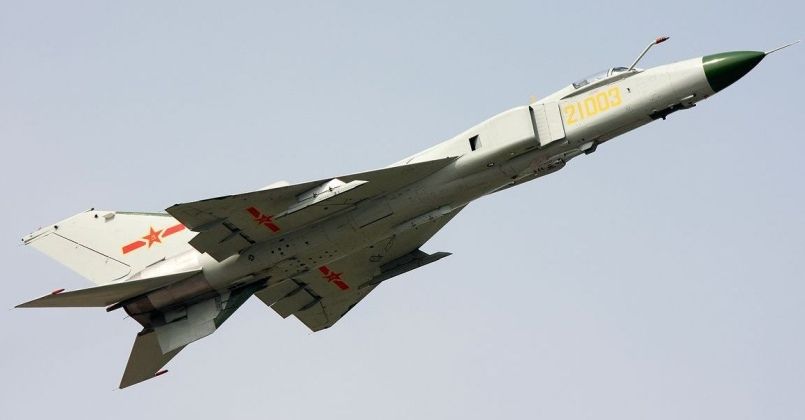
Chinese military commentators have described the J-8F modernisation as giving the aircraft “one final role” before complete retirement. As modern air combat increasingly emphasises long-range sensors, networked operations, beyond-visual-range missiles, and multirole flexibility, however, which are areas in which newer fighter types are vastly superior, the retirement of the J-8F reflects changing operational requirements. The Air Force’s remaining J-8F fighter jets have rarely been seen in public, with the removal of the ejection seats from many of the aircraft that have been observed suggesting they have been retired, but that they remain at their original airfield. This may indicate that they are being used by ground crews for maintenance training.
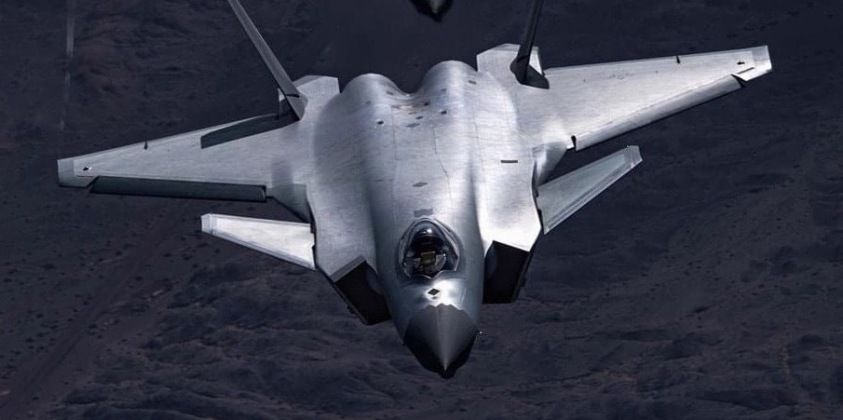
According to the accompanying photos, the Western Theatre Command Air Force reconnaissance regiment, which previously operated the J-8F, has begun converting to the J-11A fighters, while the Eastern Theatre Command Air Force reconnaissance regiment had already completely phased out its J-8F aircraft, replacing them with newer J-11B fighters. The considerable expansion of the production of J-20 fifth generation fighters, continued large scale production of J-16 and J-10C fighters, and initiation of production of the new less costly J-35 fifth generation fighter as a lighter counterpart to the J-20, have all allowed for much more rapid retirements of older fighter types like the J-7 and J-8. The last J-8s are expected to be retired by the end of 2026.
