
World’s First Sixth Generation Fighter Program Brings Fourth Prototype Into Flight Testing in China
Military Watch Magazine Editorial Staff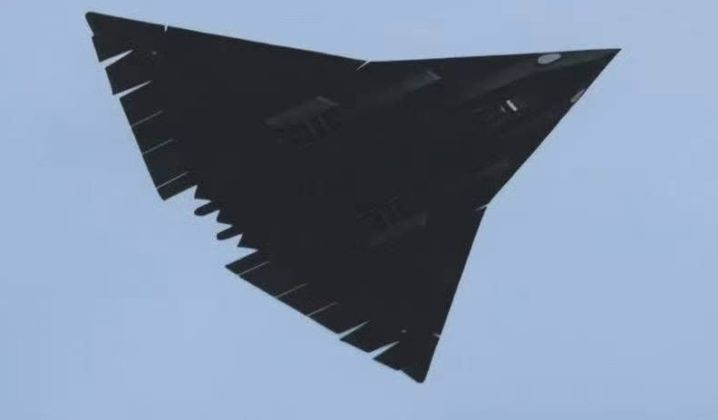
Chinese Ultra-Long Range Sixth Generation Fighter Fourth Flight Prototype
Work to develop a very heavy ultra long range sixth generation fighter for the Chinese People’s Liberation Army Air Force has reached a further milestone, with the fourth prototype airframe having reportedly made its first flight. This occurred little over a year after the fighter’s unveiling on December 26, 2024, with the entry of four separate incrementally more refined aircraft into flight testing highlighting the rapid progress being made by the program. This has been interpreted by analysts as an indication of its priority status and the considerable quantities of funding which have been made available. It has occurred approximately one month after the unveiling of the third prototype on December 25, 2025. Chinese fighter programs have a consistent history of being able to pioneer major advances and transition from flight testing to serial production and frontline service entry in fractions of the time required by other countries, with the new fighter’s predecessor the J-20 fifth generation air superiority fighter having entered service just six years after its first flight in January 2011.
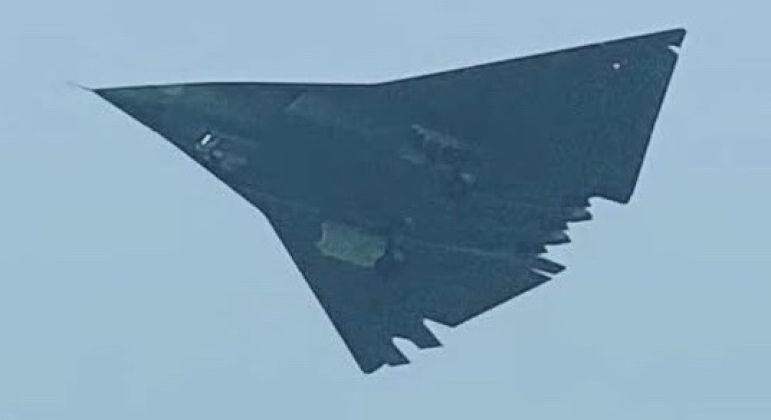
Current geopolitical tensions, and the stronger position of the Chinese defence sector and industrial base compared to 15 years ago, have raised the possibility that the new ultra-long range sixth generation fighter could may be intended to enter service even more quickly after its first flight than the J-20 had, potentially as early as 2030-2031. While China had not developed ‘4+ generation’ fighters before the J-20, meaning the program represented a particularly significant technological leap, the J-20 is itself being developed into what is widely being termed a ‘5+ generation’ fighter with the integration of a wide range of new technologies that set it far apart in its capabilities from baseline fifth generation fighters. This may make the transition to serially producing and operating a sixth generation fighter significantly smoother.
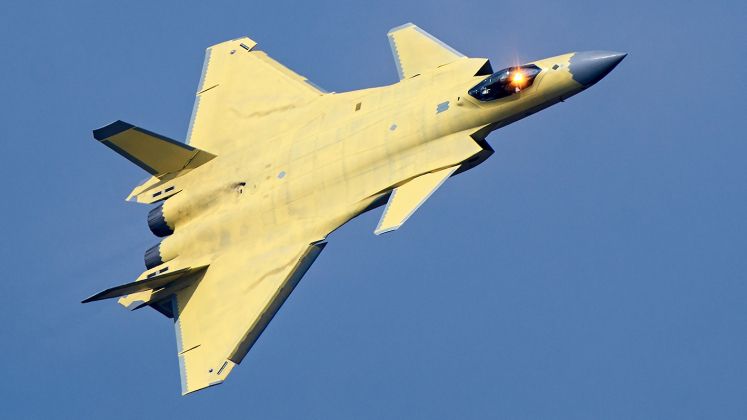
Both the J-20 and its successor have been developed by the Chengdu Aircraft Corporation, while their respective lighter counterparts the J-35 and an unnamed second sixth generation fighter were developed by the Shenyang Aircraft Corporation. Chengdu’s sixth generation fighter stands out as the world’s first with a triple-engine configuration, and is expected to have by far the longest range, largest and most powerful radar, and highest weapons carrying capacity of any fighter type in the world. The new aircraft’s range is expected to be entirely in a league of its own with a combat radius exceeding 4000 kilometres, with its combination of advanced stealth capabilities, a particularly large radar, and a high weapons carrying capacity allowing it to operate unsupported and seriously threaten Western Bloc aircraft across the western and mid-Pacific. While the J-20’s 2000 kilometre combat radius is already more than double that of the rival American F-22 and F-35 fifth generation fighters, the new aircraft is expected to boast a combat radius of over 4000 kilometres.
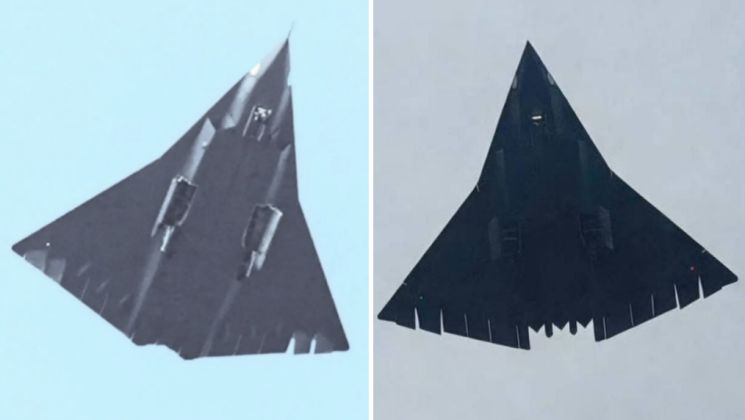
The new Chinese fighter is expected to enter service more than half a decade ahead of the rival F-47 sixth generation fighter under development for the U.S. Air Force, which is intended to make its first flight only in 2028, and is projected to enter service in the latter half of the 2030s. No third countries are expected to field similarly capable fighters at least until the 2040s, with only Russia having operationalised indigenous fifth generation fighters, but in very limited numbers and with less advanced capabilities than their Chinese and American counterparts, while South Korea lags further behind with the much more conservative KF-21, which has been termed a ‘5- generation’ fighter. In early June 2025 a new image of the new Chinese ultra-long range fighter provided the clearest frontal view of its design, showing three open ventral weapons bays with a capacity for ordinance that appears to be several times that of any other known fighter design including the J-20. The aircraft is expected to carry a wide range of ballistic and cruise missiles types, as well as oversized air-to-air missile types such as the PL-17, which can engage targets at ranges approaching 500 kilometres.
