
B-52 Bombers and Nuclear Missiles Against S-300s: America’s Insane Plan to Destroy Soviet Air Defences
Military Watch Magazine Editorial Staff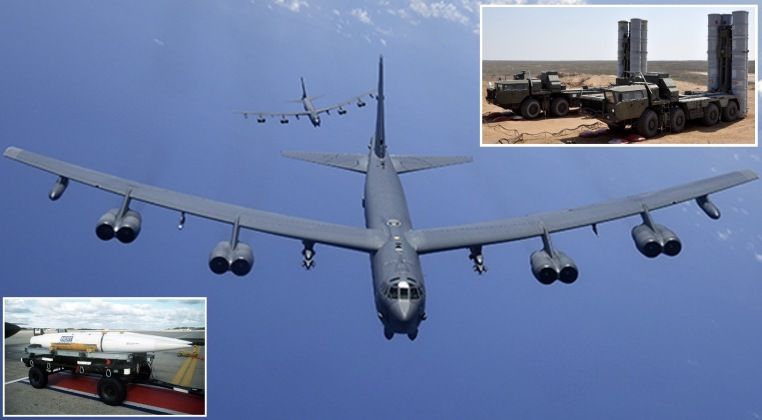
B-52H Bomber, S-300 Air Defences, AGM-69 Nuclear Missile
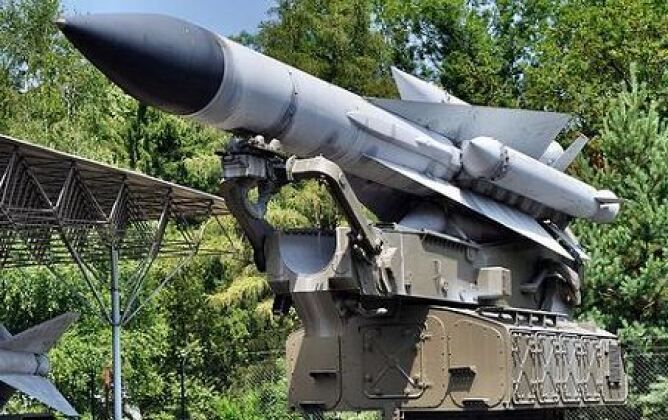
During the Cold War the air forces of the United States and its NATO allies were faced with the challenge developing means of penetrating an increasingly dense and sophisticated Warsaw Pact air defence network, which on the soil of the Soviet Union itself was widely considered the most capable in the world. The U.S. Military invested heavily in a number of means to penetrate modern defence systems and deliver tactical and strategic nuclear strikes against Soviet territory, which formed part of a much wider arms race with the Soviet Union also investing heavily in the continuous modernisation of its defences. The Soviet air defence network by the early 1980s deployed a range of systems which had few rivals worldwide, including the first variants of the highly mobile S-300 air defence system, and the very long ranged but less mobile S-200 system which in its most capable variants could engage enemy aircraft up to 300km away. These were complemented by a wide range of shorter ranged systems such as Tor-M1 anti cruise missile platforms and BuK-M1 medium range defence systems.
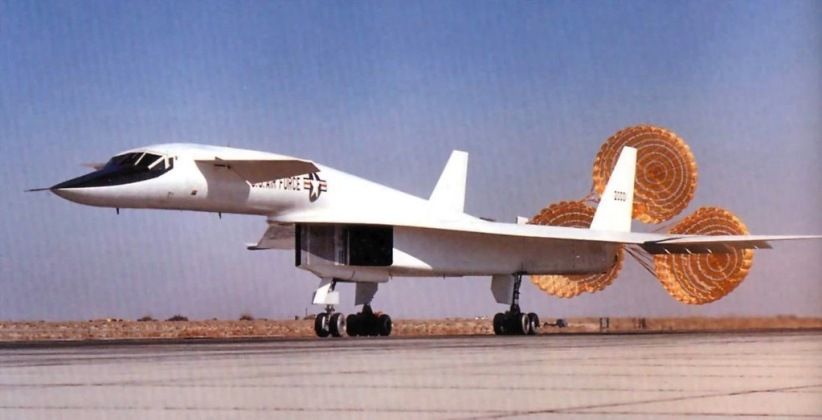
Among the strategies used by the U.S. to penetration the network was to field a large fleet of supersonic bombers optimised for operations at very low altitudes - namely the B-1B Lancer. Flying low would make the aircraft harder to track and neutralise at longer ranges using long range air defences, and even early Soviet interceptors which lacked look-down shoot-down capabilities were also expected to be less effective. This was very different to the strategy of the early Cold War years, when the U.S. had sought to deploy B-70 bombers which were far more costly than the B-1, extremely fast with Mach 3 speeds, and could launch nuclear attacks from very high altitudes - a method with limited viability as the USSR developed defences optimised for high altitude targeting.
The strengthening of the Soviet air defence network and deployment of light man portable shoulder launched surface to air missiles, which were well optimised to targeting low flying aircraft, reduced the viability of the strategy built around the low flying B-1B bomber. Another possibility was reliance on attack helicopters equipped with advanced electronic warfare countermeasures to neutralise air defence batteries and their associated radars from low altitudes, although this had serious limitations ranging from the vulnerability of the aircraft to the depth of Warsaw Pact territory and sheer number of air defence systems deployed. Use of stealth aircraft was another niche capability which had potential, but the strength of the Soviet radar network and its use of a wide range of systems including several with very long wavelengths meant stealth jets would be far from invulnerable in combat.
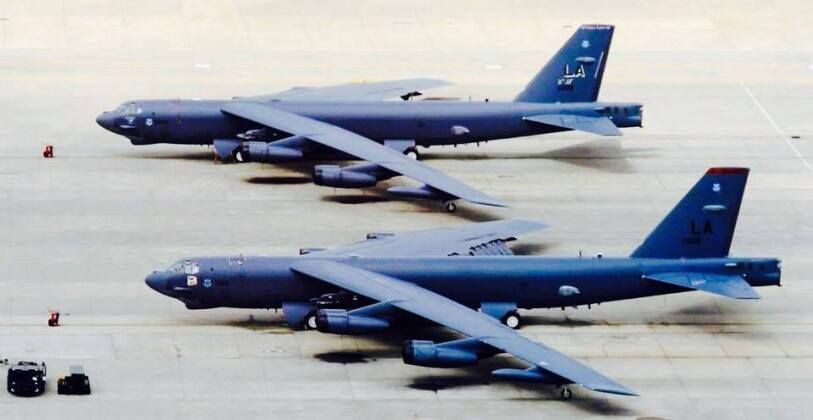
Arguably the bluntest American strategy to neutralise Soviet air defences, and potentially the most effective, was the use of ageing B-52 jets armed with tactical nuclear weapons to blow air defences away with massive and disproportionate attacks. The B-52 had first flown in the 1950s, and was neither supersonic nor stealthy. The jet was prized for its long range, but could not fly particularly high or low meaning its only real defence was its electronic warfare systems. Even against North Vietnamese air defences, which were antiquated relative to those in the Soviet Union and had a relatively low density, the B-52 had taken significant losses in combat. To deal with Soviet air defences, however, the B-52 was bolstered by the AGM-69 Short Range Attack Missile SRAM tactical nuclear platform. The missile entered service in 1972, at a time when the B-52 was increasingly considered obsolete, with over 1500 missiles built over a four year production run. Each cost over half a million dollars, making it one of the most expensive missiles of its time. The missile had a 200km range, allowing it to outrange any Soviet anti aircraft system other than the most advanced S-200 variants, and carried either a 17 kiloton or a 210 kiloton nuclear warhead. To put this in perspective, the nuclear warhead used against the city of Nagasaki delivered 25 kilotons - meaning the missile’s nuclear attacks were large for tactical weapons.
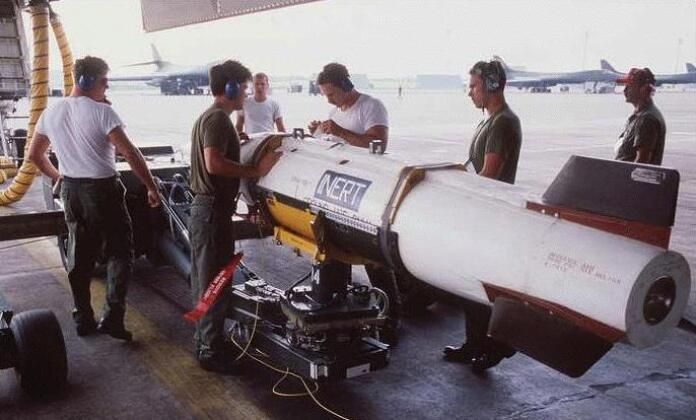
The size of the warheads on the AGM-69 largely compensated for there lack of precision, with each having an accuracy to within 430 meters meaning anything short of a nuclear warhead would struggle to hit a non-strategic target. Nuclear explosions were found in testing to be able to destroy exposed or even lightly fortified targets using their shockwaves alone, and with dozens of B-52s expected to be deployed and each deploying several warheads the firepower targeting Soviet air defence sites would have been truly immense. The missiles were prized for their relative compactness, with each weighting around 35 tons - almost 80% less than the missiles they were replacing the AGM-28 which had been in service since the early 60s to also equip the B-52. Because of its smaller size many more AGM-69 missiles could be carried, which allowed the American bombers to engage many more targets and thus made multiple nuclear attacks on several air defence sites viable. The bombers would essentially nuke their way through Warsaw Pact defences until they could reach their targets, the major cities of the communist world, and from there launch further nuclear attacks on their populations which were the final target.
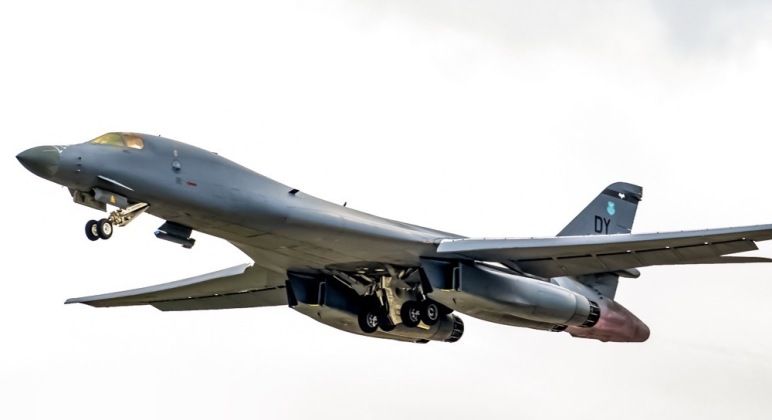
Notable features of the AGM-69 were its high Mach 3.5 speed and its terrain following capabilities, which were intended to make it more difficult to intercept. While the missile was designed to equip America’s B-52G and B-52H bombers, the former which has since been retired from service, the missile would later equip B-1B bombers and even the much lighter F-111 strike fighters. The B-52 could carry up to 20, the B-1B 24 and the F-111 six. The missile ultimately was be retired from service in 1993, due in part to concerns about questionable manufacturing quality which meant that warheads could become unstable. There were also signs of cracks in the missiles’ propellent sections and growing broader questions regarding their rocket motors. Warhead issues could potentially cause Chernobyl-type disasters, while issues with rocket motors could lead to early explosions which would destroy bombers attempting to fire the missiles. By the time of retirement the viability of attacks by non-stealth bombers from anything less than 500km away was also becoming highly risky. In the 1980s Soviet air defence capabilities had improved profoundly, and many of these developments would be continued in post-Soviet Russia despite the overall sharp decline of its defence sector.
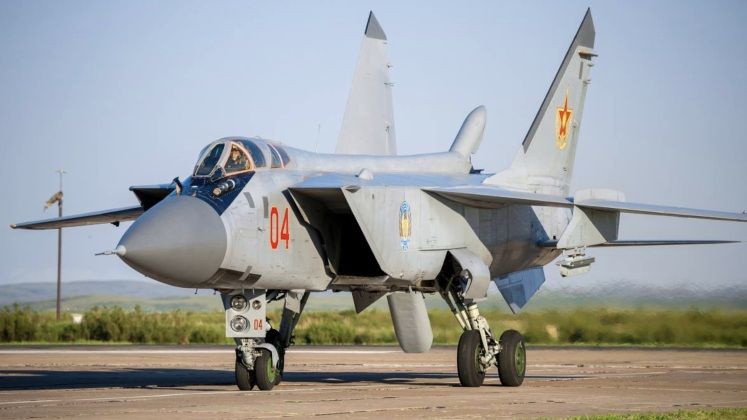
Posing a leading threat to American bombers, Soviet MiG-31 Foxhound heavy interceptors entering service from 1981 had extremely powerful sensors unrivalled for their time and a very high endurance. They were optimised to intercept cruise missiles as well as the bombers themselves at long ranges using R-33 air to air missiles. The Foxhound would later be equipped with R-37 air to air missiles which carried very large warheads and had a 400km range. More recent advances in Russian air defences which continue to pose a challenge to American bombers include deployment of S-400 and S-300V4 long range surface to air missile systems. These are well optimised to neutralising aircraft such as B-52s and B-1Bs at extreme ranges, with both systems having a detection range of around 600km and an engagement range of 400km against them. Russia’s upcoming S-500 system scheduled to enter service in 2021 has a longer 600km engagement range and an even longer detection range, and is more specialised in neutralising high value targets such as strategic bombers. Russian S-400 systems have also demonstrated the ability to intercept missiles at speeds exceeding Mach 8 - much faster than any Western standoff missile in service today. These, among many other developments, mean American bombers are today heavily reliant on deploying subsonic standoff missiles from thousands of kilometres away, with the B-52 having long since replaced the AGM-69 with newer missile designs for this purpose.
