
Defending the Skies for 40 Years; Evolution of Russia’s S-300 Air Defence System - Part One, S-300P
Military Watch Magazine Editorial Staff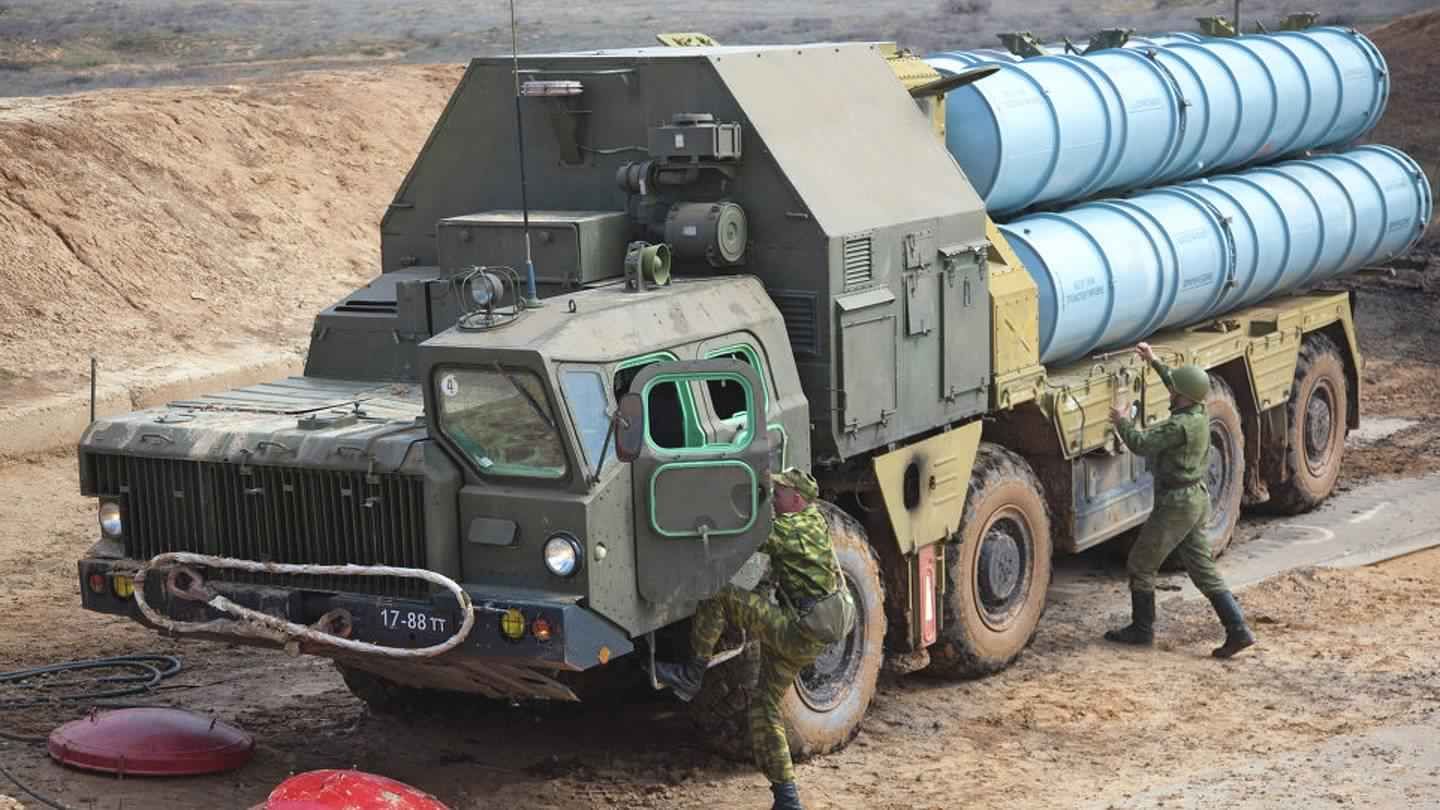
S-300 Missile System
The S-300 long range surface to air missile system first entered service in the Soviet Air Defence Force in 1978, and has since been extensively modernised to continue to provide Russia with cutting edge air defence capabilities. In service with almost 20 countries today, with several more showing interest in or having placed orders for the platform, the S-300 remains in full production in Russia 40 years later. While the original platform, the highly specialised S-300P anti cruise missile system, was hardly remarkable in its capabilities compared to other systems of its time such as the S-200, the design retained considerable room for modernisation which allowed for the development of ten major variants, some as recently as the 2010s, which are today among the world’s very finest surface to air missile platforms. The evolution of the system and the versatility of the original design in its ability to incorporate upgrades and modifications is truly unparalleled relative to other long range air defence systems, both Russian built and otherwise. An analysis of the history of the S-300 and how the S-300P, first inducted four decades ago, led to the commissioning of the world leading platforms in production today provides invaluable insight into the transformation of Russia’s air defence capabilities and those of a number of its allies.
As of 2018 there are three families of the S-300, which between them consist of 10 major variants of the system. The families include the S-300P, the first of which entered service in 1978, and the S-300V and S-300F, the first both of which entering service in 1984. The original S-300P, while hardly revolutionary in its range, speed or payload, was remarkable for both its revolutionary design, with its external appearance differing substantially from other systems of its time, and due to its hot launch vertical launch method allowing it to engage enemy airborne targets even from wooded or dense urban areas while providing the launchers themselves with effective cover. This design has been adopted by several world leading manufactures for modern missile systems in Russia and a number of other countries such as the Patriot, KN-06, and HQ-9. The S-300 was also remarkable for its ability to engage multiple targets simultaneously using a single fire control system, a key capability of modern air defence systems unique for its time, as well as its use of a passive electronically scanned array radar system. The S-300P was nevertheless limited in a number of capabilities, including a relatively short range of under 70km, under a third that of the longest ranged variants of the S-200, and its poor mobility - taking over an our to deploy. Soviet designers would go to great lengths both to overcome the promising system’s shortcomings as well as to improve on its strengths.
The S-300P was capable of engaging both enemy aircraft and cruise missiles, the latter being a capability increasingly relied on by the Western Bloc to launch precision strikes. The new air defence system replaced the S-25 surface to air missile, which had entered service in 1955 and undergone a number of upgrades to remain viable for long range air defence. The S-25 had been exported only to North Korea during its decades in production, and with approximately 11,000 missiles produced it fulfilled a key strategic area defence role - protecting fixed targets such as industrial facilities, command posts, airfields and nuclear sites. Much like the S-25 before it, the S-300P was first deployed in a concentrated defensive ring around Moscow.
The successor to the S-300P, the S-300PM/PS, entered service in 1985. The platform made use of a more advanced transporter erector launcher vehicle for its missiles and mobile radar and command post vehicles for its missiles - significantly improving on the mobility of the older variant and thus considerably enhancing its survivability. The new weapons system made use of 5V55R missiles, which improved its maximum engagement range allowing it to strike hostile aircraft up to 90km away. The new missiles also had a terminal semi active radar homing guidance mode, significantly improving its precision. While the S-300 would usually see a new variant enter service in each family approximately every decade, the S-300PM/PS represented a minor upgrade over the S-300P which would preclude the induction of the more sophisticated S-300PMU seven years later.
Continued in Part Two
