
Assessing the World’s Most Capable Trainer Jets by Combat Capability: From Taiwan’s Brave Eagle to the Russian Yak-130
Military Watch Magazine Editorial Staff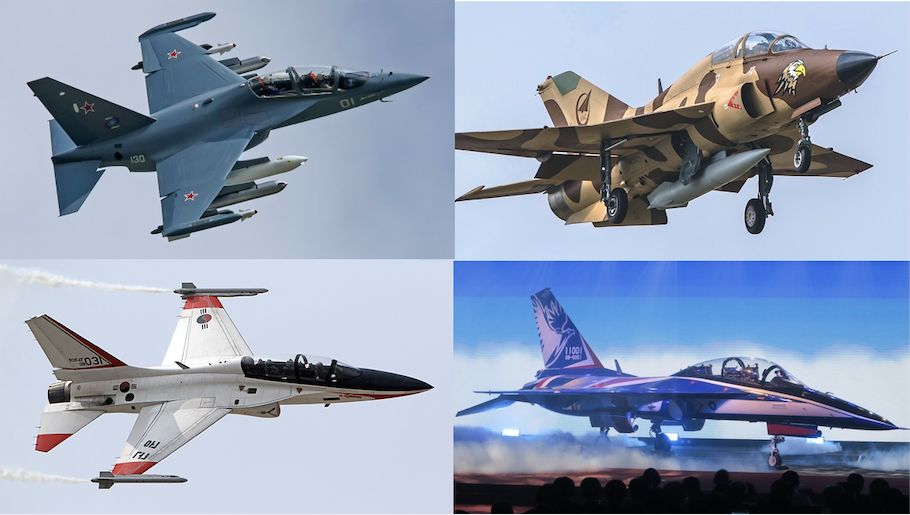
(from top left) Yak-130, JL-9, Brave Eagle, T-50
All major air forces in the world operate at least one class of training jet - aircraft which are easy to maintain, cheap to operate and can provide new pilots with flight experience without the costs of operating heavier higher end platforms. Usually integrating two seats, one for an instructor and one for new pilots, trainees usually progress to flying in jet aircraft after prior experience with lighter propeller driven aircraft where they get their first flight hours. As new generations of jet fighters continue to become heavier and more costly, some of the heavier and more sophisticated training jets have increasingly been relied on for combat roles as lightweight fighters or attack jets. While dual role trainer and light ground attack jets have been in service for some years, a growing number of trainers have integrated higher end combat capabilities allowing the to serve as lightweight fighters in their own right, deploy precision guided munitions and even deploy standoff munitions for air to air engagements. An assessment of the five trainers with the most advanced combat capabilities is given below
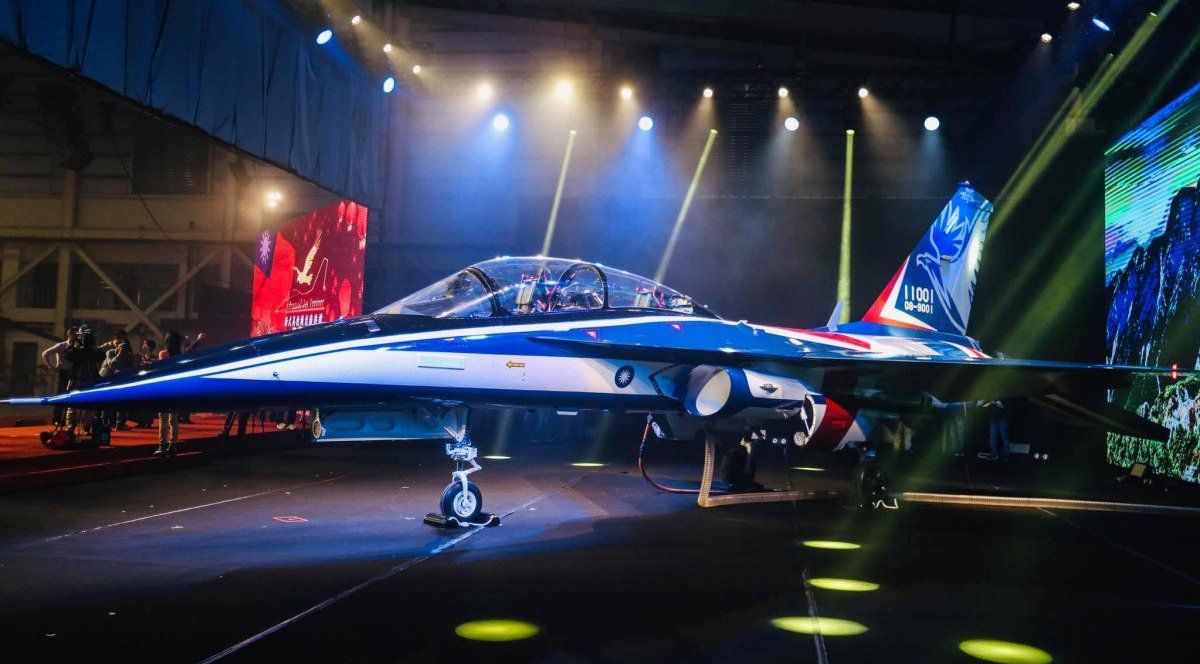
Brave Eagle - Taiwan
Currently in a prototype stage, the Brave Eagle’s combat capabilities including its air to air capabilities are extremely advanced - leading some analysts to speculate that it is actually a high performance fighter built under the guise of a trainer. The fighter appears to be a ‘4+ generation’ iteration of the fourth generation F-CK Ching Kuo twin engine light platform, and the new ‘trainer’ variant is actually heavier, integrates a larger radar and has more powerful engines and a larger fuel capacity. The aircraft will deploy the Ching Kuo’s Sky Sword II hypersonic air to air missiles, and will even integrate an advanced AESA radar giving it superior air to air capabilities to anything in Taiwanese service - other than possibly the F-16V but including the older F-16A and Mirage 2000 jets. The platform is in a league of its own among ‘trainers’ with an unrivalled combat performance exceeding that of most fighters in service in the world today.
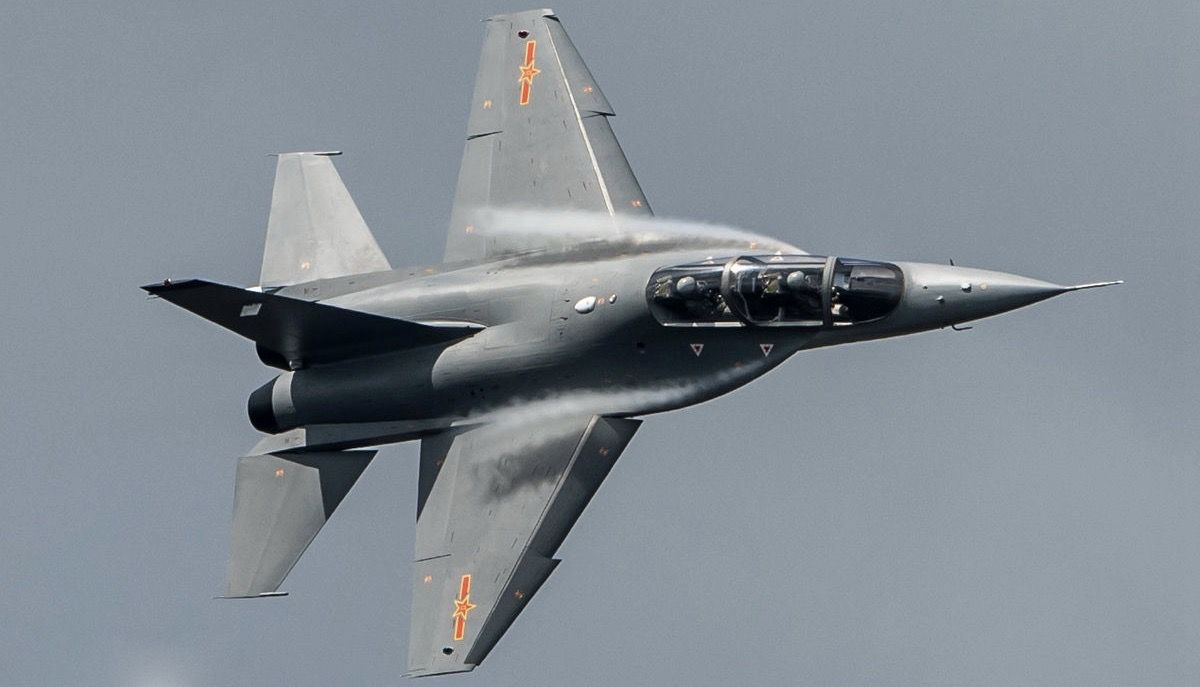
JL-10 - China
The JL-10 is the most sophisticated of several Chinese trainer designs, and has increasingly blurred the light between a fighter and a trainer with the induction of the new and more weaponised L-15 variant. The twin engine jets have a formidable flight performance with a 16km service ceiling, a 200m/s climb rate and a Mach 1.4 speed - and can accommodate a relatively large radar by the standards of trainer jets which is widely speculated to be upgraded to an AESA radar on future variants. The current radar can reportedly detect targets over 100km away - making it comparable to many fourth generation fighters - and deploy a range of munitions such as the PL-5E for short ranged air engagements and the LT-2 laser guided bombers. It remains unconfirmed, but has been reported, that the aircraft will carry PL-10 and even PL-12 air to air missiles for long range engagements - an upgrade which when paired with the fighter’s AESA radar will place them on par with, if not in an advantaged position over, many fourth generation fighter designs from higher weight ranges including the JF-17, F-16 and Gripen among others.
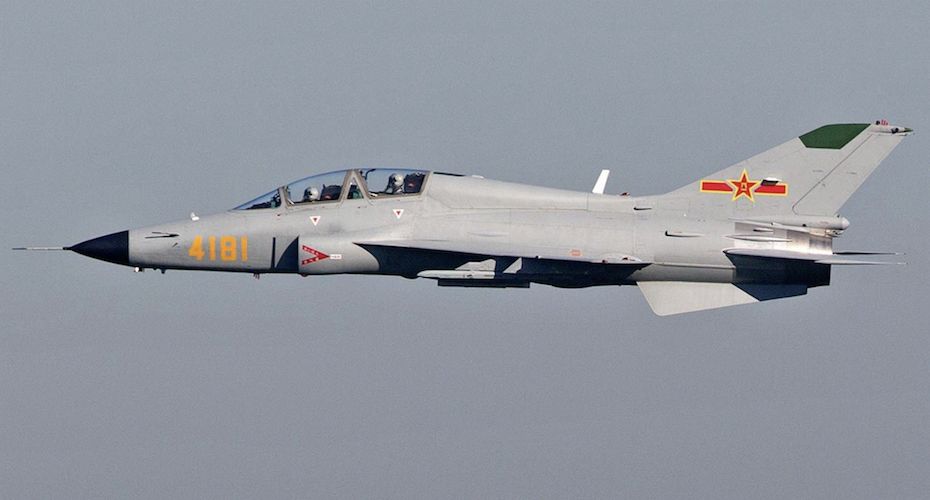
JL-9 - China
Another of China’s advanced trainer designs, and one of two based on the J-7 fighter, the JL-9 has a formidable flight performance with a 150m/s climb rate, Mach 1.5 speed and 16km flight ceiling. While the JL-10 is built around twin Al-222K-25 engines, the JL-9 uses a single more powerful WP-13F afterburning turbojet - which the PLA reportedly prizes for its reliability and low maintenance requirements. The aircraft can carry both PL-8 and PL-9 air to air missiles, and has access to a range of targeting pods and an advanced helmet mounted display. Little else is known about the aircraft, but the PLA has shown considerable faith in the design and has developed it into a training jet for aircraft carrier pilots, the JL-9G, which is capable of taking off from ski jump ramps on warships such as the Liaoning and Shandong. This indicates a high degree of confidence in the jet’s reliability.
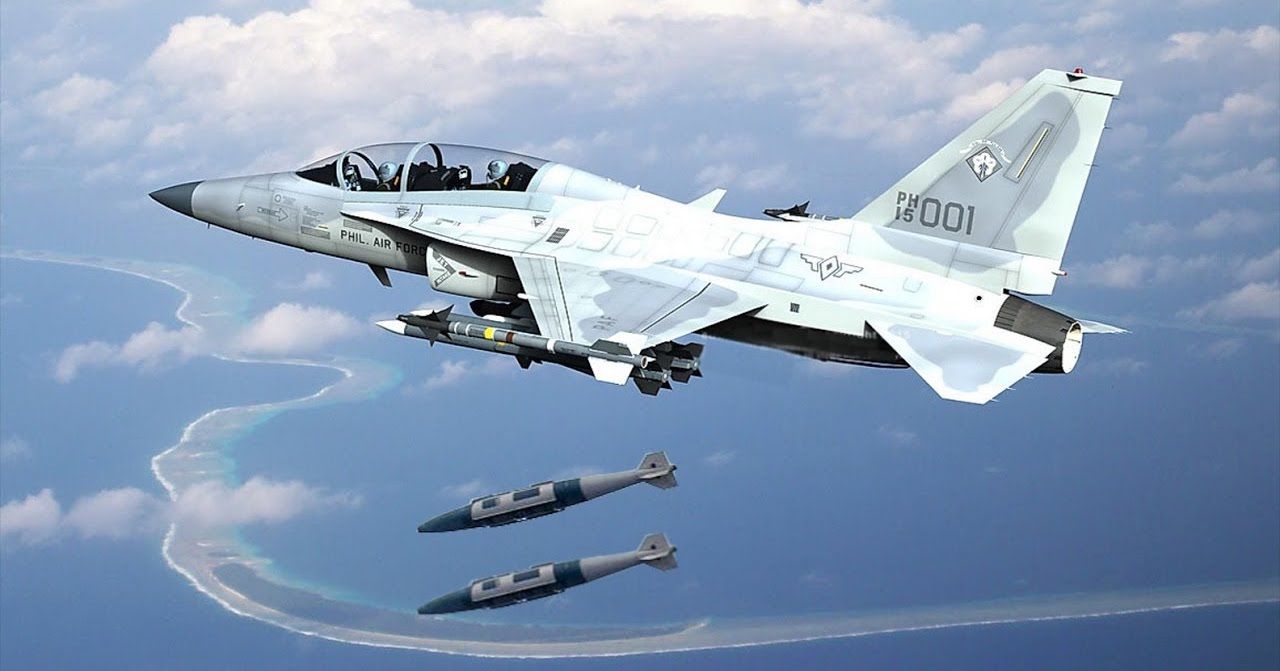
T-50 - South Korea
A combat proven platform which has engaged Islamic State militants in both the Philippines and Iraq with considerable success, the Korean Aerospace Industries T-50 and its more militarised derivative the F-50 deploy a wide range of munitions for an air to ground strike role, with a secondary defensive air to air capability using American AIM-9 Sidewinder missiles. The aircraft was jointly developed with Lockheed Martin, and was initially intended to be developed into fighter before attentions were refocused towards the far more ambitious KF-X stealth fighter program. Plans to upgrade the platform also included integration of AIM-120 long ranged air to air missiles and a more powerful sensor suite. The trainer’s avionics suite is more advanced than those of many fourth generation fighters and allow it to deploy a range of munitions with grater precision - most notably the AGM-65 Maverick close support air to ground missile and the Hydra 70 rocket launcher. The platform can integrate Sniper and Litening targeting pods among others, and can also deploy the ALQ-200K for electronic warfare. The aircraft reportedly may be modified to deploy British AIM-132 short ranged air to air missiles in future.
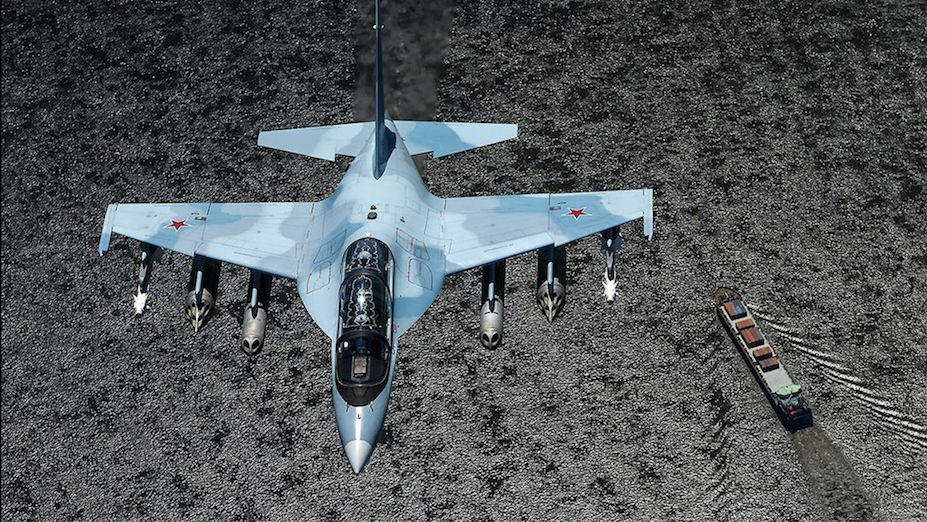
Yak-130 - Russia
Designed to simulate next generation combat using '4+’ and 5th generation combat aircraft such as the Su-30SM, the Yak-130 also retains considerable combat capabilities. Although its flight performance leaves something to be desired relative to competing East Asian designs, with a very low climb rate, mediocre manoeuvrability, a low operational altitude and a subsonic speed, the aircraft’s avionics, sensors and access to a range of advanced munitions partly compensate for this. The aircraft can carry a formidable 3000kg payload, which includes a range of guided munitions and pods for electronic warfare. The Yak-130's poor flight performance, and to a lesser extent its lack of advanced air to air munitions, means it cannot perform well in air to air combat. Its viability as an attack jet, however, has led the Russian military to consider developing a more heavily armed variant specifically for such missions.
