
Yak-130 - The Elite Trainer Russia Developed Prepare Pilots for Next Generation Combat
Military Watch Magazine Editorial Staff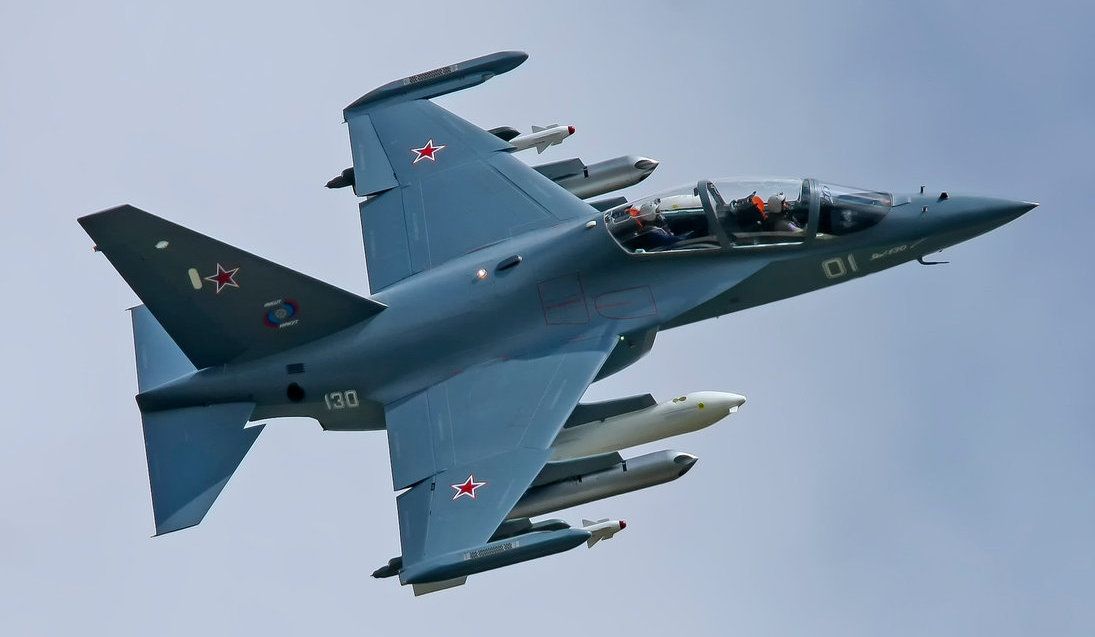
Yak-130 Trainer and Light Attack Jet
Entering service in the Russian Air Force in 2010, the Yak-130 twin seat trainer jet was designed to simulate next generation combat using '4+’ and 5th generation combat aircraft, as well as retaining combat capabilities allowing it to serve as a light attack and reconnaissance jet. Entering service in 2010, the Yak-130 was ideal for training pilots to operate advanced Su-30 combat platforms for which the air force had previously lacked a suitable trainer. With the Su-35 '4++ generation’ air superiority fighter and Su-34 next generation strike fighter entering service four years later, followed by the MiG-35 and Su-57 in 2018, the Yak-130 was a much needed asset to prepare Russian pilots to operate next generation aircraft - while costing considerably less to operate which made it an ideal way to provide pilots with flight experience. The jets are capable enough that their designer has claimed they can accommodate 80% of a total training program - which if true would considerably reduce the burden on Russia’s fighter fleet.
While the Yakovlev design bureau had completed the Yak-130 design by 1993, a project which begun in the waning days of the Soviet Union, the poor state of the Russian economy stalled the platform’s entry into service by well over a decade. With the Russian economy in a better position to consider induction of a new trainer in the 2000s, the Yak-130 went head to head with the MiG-AT, a design proposed by the Mikoyan Design Bureau, and was chosen over its competitor in April 2002. Funds for the final development stages were nevertheless limited, and it would be a further eight years before its entry into service. The fighter was designed with a full glass cockpit, a four channel digital fly by wire system, a heads up display and a helmet mounted sighting system. In combat the aircraft can carry a payload of 3000kg, including guided munitions, and can also deploy specialised pods for electronic warfare. How capable the fighter is in air to air combat remains to be seen, but according to chief designer Konstantin Popovich the jet can deploy "all airborne weapons with a weight of up to 500 kg that are in service in the Russian Air Force.” Specialised combat variants of the jet, the Yak-131 and Yak-133, have been proposed - though whether they will enter service remains to be seen.
Russia is expected to induct at least 200 of its advanced new trainer jets, while demand for the jets from foreign clients which operate Russian fighters has been high. Algeria, Syria, Bangladesh, Belarus and Myanmar all operate Russian fourth or '4+’ generation fighters and are potential operators of fifth generation jets in future, and a number of these states have placed orders for the Yak-130 and rely heavily on the fighters in combat roles. Syria is set to receive 36 aircraft once its current conflict concludes, which will be key to efforts to rebuilt its air force with modern Russian fighters and will make the country the aircraft’s largest foreign operator. Libya too had placed a preliminary order, with the Yak-130 expected to become the country’s primary trainer, but this order was cancelled following the overthrow of the country’s government in 2011. While somewhat unremarkable in its combat capabilities relative to the South Korean T-50 and Chinese JL-9 and JL-10 trainers, all of which are better suited to operating as combat aircraft, the Yak-130 is arguably better suited to a trainer role, and particularly to simulating combat, in an advanced next generation Russian fighter jet. The Sudanese Air Force, operating an air fleet almost entirely comprised of Russian and Soviet fighters, has nevertheless opted for the JL-9 over the Yak-130 due to its far better combat capabilities - and other clients for Russian jets may well follow suite in future and look to less costly and more combat capable East Asian alternatives. Whether the Yak-130 will succeed on export markets therefore remains to be seen.
