
American Shootdown of Mock Intercontinental Range Missile Could Worry China and North Korea
Military Watch Magazine Editorial Staff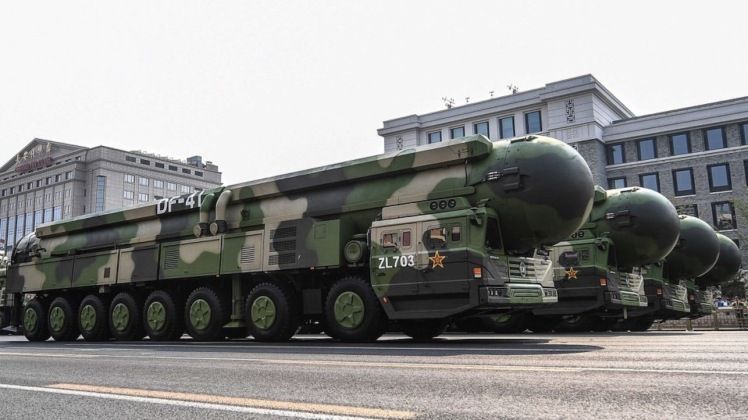
Chinese DF-41 ICBMs
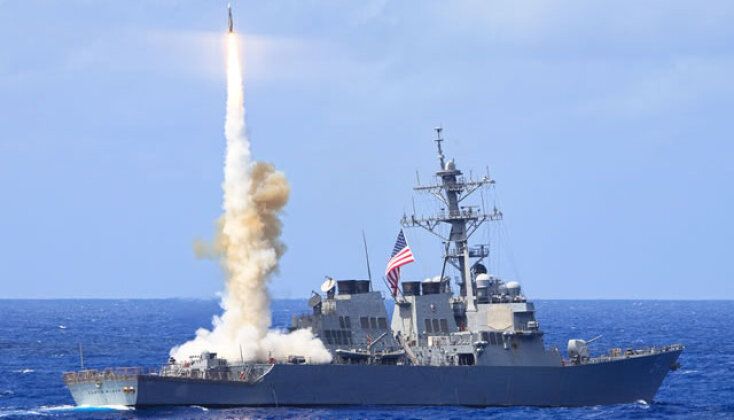
On November 17th a U.S. Navy Arleigh Burke Class destroyer, the USS John Finn, successfully fired an SM-3 anti-ballistic missile to shoot a mock target simulating the flight path of an intercontinental ranged ballistic missile (ICBM). The mock ballistic missile was fired from a U.S. military test site on the Kwajalein Atoll in the Marshall Islands, and was intercepted northeast of Hawaii. The performances of American ground based anti missile systems such as the Patriot, THAAD, and GMD systems have been cause for considerable controversy due to their highly questionable test and combat records, with a number of analysts highlighting that those tests which have succeeded were under unrealistic conditions with too information on the target provided and the targets lacking the manoeuvrability or countermeasures a real missile would have. Anti missile systems deployed by warships, however, are thought to be at least somewhat more reliable based on their testing records, and with further development have the potential to seriously undermine the strategic deterrents of potential adversaries.
Most major potential U.S. adversaries deploy ballistic missiles as strategic deterrents. These include not only China, Russia and North Korea, which deploy intercontinental range missiles, but also Iran which deploys Korean sourced intermediate range missiles capable of striking much of Europe, and Syria which was supplied with North Korean medium range missiles capable of striking parts of Europe and previously tasked with deploying the country’s chemical weapons. The improvement of the American anti-ballistic missile capability comes amid rising tensions with China, and an expected rise in tensions with North Korea, both of which rely heavily on ICBMs to deter potential Western attacks. While Russia currently leads the world in ICBM technologies, deploying systems such as the Avangard hypersonic glide vehicle which are effectively impossible to intercept, the less advanced Chinese and Korean deterrents could be seriously undermined given the sheer numbers of U.S. and allied destroyers armed with SM-3 missiles which there are. For North Korea in particular, which is thought to field less than 40 ICBMs, none of which are as advanced in terms of countermeasures or manoeuvrability as their Chinese or Russian counterparts, the possibility that the U.S. could fill the Pacific with SM-3 armed warships is potentially a considerable threat. Korean efforts to develop more advanced ICBMs, and to develop missiles capable of launching from closer to the U.S. mainland from submarines, could help circumvent this.
