
American Ohio Class Nuclear Submarine With Over 100 Cruise Missiles Enters Persian Gulf in Warning to Iran
Military Watch Magazine Editorial Staff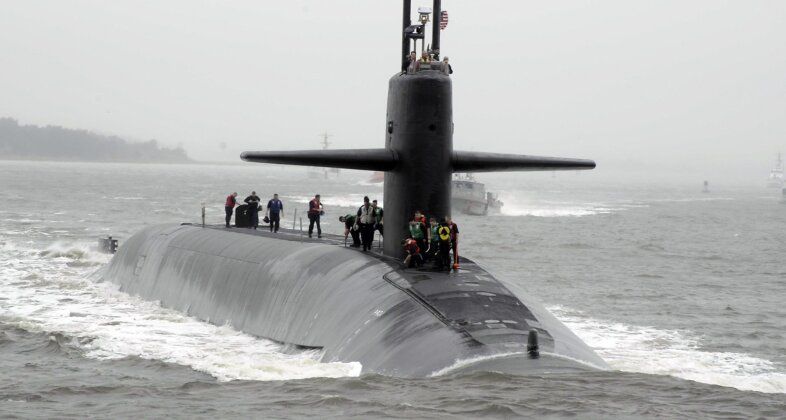
U.S. Navy Ohio Class Nuclear Submarine
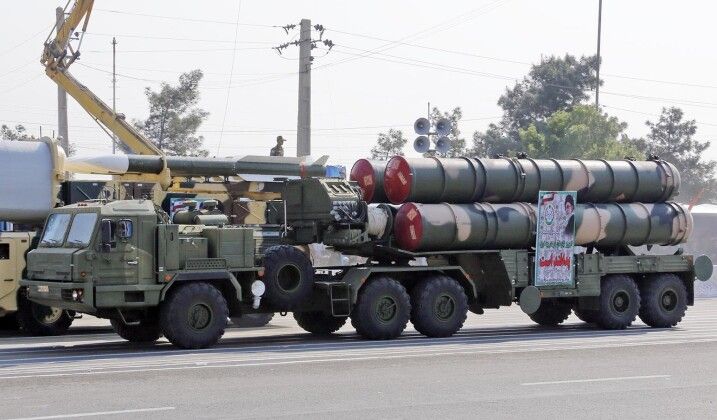
The U.S. Navy has announced that one of its four Ohio Class guided missile submarines, the USS Georgia, entered the Persian Gulf through the Strait of Hormuz bringing it close to Iranian waters and placing all of Iranian territory well within its missile range. The warship passed through the strait on December 21st alongside two Ticonderoga Class cruisers, the USS Port Royal and USS Philippine Sea, with their deployment to the area coming less than two weeks before the one year anniversary of the American assassination of Iran’s most senior military officer Qasem Soleimani, who was killed in a CIA drone strike on January 3rd 2020. The Ohio Class submarines have few rivals in the world in terms of firepower, with each deploying up to 154 Tomahawk long range cruise missiles. This makes them potentially ideal for saturation attacks against enemy air defences, despite the Tomahawk itself being a non-stealthy and relatively slow missile meaning it is far from the most difficult to shoot down. To place the USS Georgia’s firepower in perspective, Iran’s most capable air defence system the Russian-supplied S-300PMU-2 is only capable of intercepting up to 32 missiles at a time.
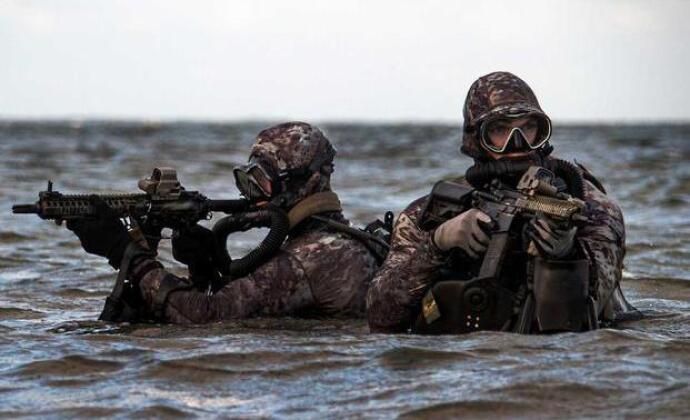
Despite their heavy maximum payloads, Ohio Class submarines usually carry only around two thirds of this number of missiles at around 100 Tomahawks. This allows the ships to use the remainder of their internal capacity to carry other assets such as smaller unmanned ships or special forces units - the latter which use mini-submarines launched from the Ohio Class ships themselves to land ashore for covert operations. The nuclear submarine can thus pose a threat to Iranian security in multiple ways, and while its Tomahawk missiles are unable to penetrate fortified targets such as nuclear facilities and underground command centres they can launch dozens of simultaneous strikes on targets across the country from sewage treatment plants and power stations to airport runways and barracks. The ships combine much greater firepower than any of the U.S. Navy’s surface combat vessels with much higher survivability, which is particularly valued in the Persian Gulf and around the Strait of Hormuz due to the threat posed by Iranian anti-surface missile capabilities. The Ohio Class ships are still faced with some risk, however, if attempting to operate too near Iranian costs due primarily to the presence of a sizeable fleet of short ranged light torpedo submarines which Iran has acquired from North Korea over several decades. These are extremely quiet and well suited to an anti submarine warfare role.
Speaking regarding the purpose of the deployment of the USS Georgia to the Persian Gulf, spokeswoman for the U.S. Navy’s 5th Fleet Commander Rebecca Rebarich stated: "The U.S. Navy, alongside our partners, maintain a constant state of vigilance to ensure the critical waterways remain safe for the free flow of commerce… Georgia’s presence in the U.S. 5th Fleet area of operations (AOO) demonstrates the U.S. Navy’s ability to sail and operate wherever international law allows.” Although the operation was described as routine, this was the first time the Navy has publicly announced the deployment of an Ohio Class guided missile submarine to the Persian Gulf since 2012. Operations by America’s nuclear submarine fleet are generally highly secretive, with the ships’ quietness allowing them to deploy across the world mostly undetected. Although the service is considering drastic cuts to its fleets of heavy cruisers and supercarriers, it plans to expand its fleet of offensively oriented nuclear submarines considerably over the coming decades to provide a more survivable and arguably much more cost effective means of projecting power.
