
What Russia Will Do With the U.S. Cruise Missiles Recovered Intact from the West's April Attack on Syria
Military Watch Magazine Editorial Staff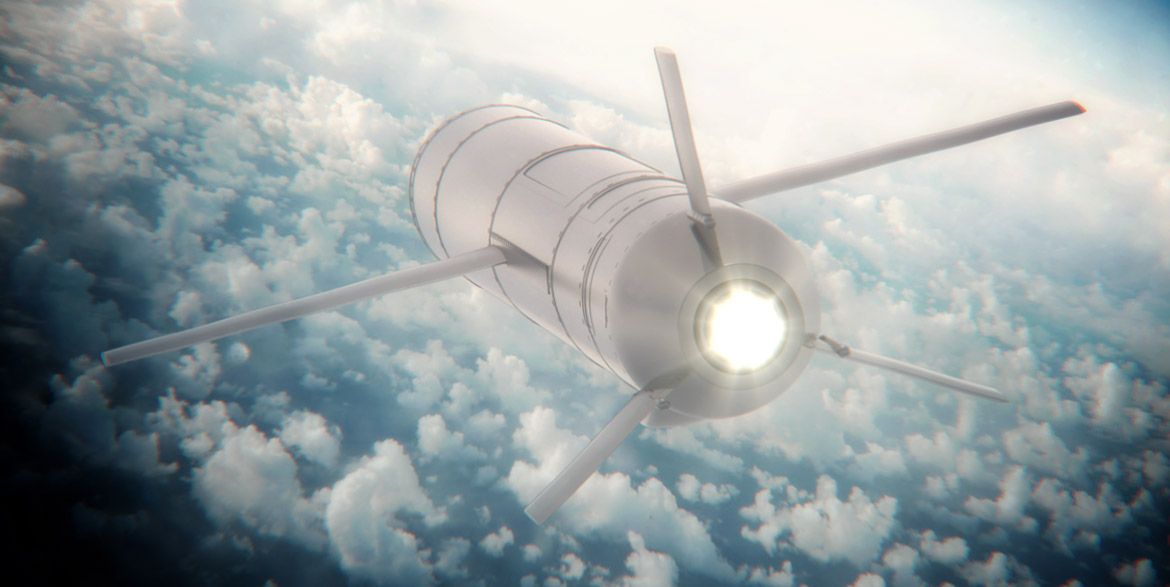
Tomahawk Cruise Missile Artwork
Following a large scale joint cruise missile strike by the United States, France and Britain in mid April against Syrian government and military facilities, a number of missiles reportedly failed to explode and landed harmlessly in the Syrian desert. The Syrian military reported recovering these missiles days later, which were sent to Russia for study and evaluation. The missiles included Tomahawk cruise missiles, the mainstay of the U.S. Navy’s strike capabilities, and according to some reports the new JASSM air launched missiles with advanced stealth capabilities were also acquired. The opportunity to study these missiles relatively intact has been hailed as a valuable opportunity for Russia’s own defence industries - both to more effectively develop countermeasures and potentially even to reverse engineer American missile technologies for the development of its own cruise missiles.
A month after the strike, Russian sources have reported that the country is set to develop new electronic warfare platforms based on the information gained from analysing the recently acquired American cruise missiles. Russia has become a leading developer of electronic warfare weapons systems, and new platforms will allow Russian forces to more effectively intercept threats from Western missile attacks in future. Vladimir Mikheev, advisor to the first Deputy General Director of Russia's Concern Radio Electronic Technologies, a holding company within the Russian state corporation Rostec specialising in electronic warfare systems, stated regarding the development: "On the basis of this experience (the Western Missile strike), technical tasks for new work are being prepared now. They will take into consideration all the information obtained to help us build prototypes of new electronic warfare systems… Having this missile in hand, we can clearly understand what channels of communication, information and control, navigation and range finding it has… And knowing all these parameters, we will be able to more effectively counter these cruise missiles at all stages of their combat deployment.” Mikheev noted that developing new electronic warfare systems was expected to take 2-3 years.
Retired Colonel Mikhail Khodarenok described the acquisition of U.S. made cruise missiles through Syria as "a textbook (example) on materials science, a textbook (example) on technologies falling from the skies." He noted that the missiles would be a considerable asset to Russia's development of defensive electronic warfare capacities, stating: " this is a real gift for those structures of the Russian defence industry engaged in organising jamming; it will become clear how to disable the Tomahawk's communications system during combat operations." While the Tomahawk's producer Raytheon is almost certain to modify future platforms on the basis of this information, modifying the thousands of existing platforms will be extremely costly and take several years - the alternative being leaving the U.S. Navy's prime cruise missile vulnerable to electronic interference. It is likely for this reason that Russia has not confirmed whether it has acquired the new and more sophisticated JASSM missile used in Syria, with Russian state media having only indicated the possibility, leaving a degree of ambiguity will make it far more difficult for the U.S. military to respond.
Electronic warfare has increasingly emerged as a key means of disrupting the operations of an adversary non kinetically, and Russia has deployed extensive electronic warfare assets to Syria as tension with the Western bloc have continued to rise. Reports from U.S. sources indicate that this systems have been tested by the Russian military against American drones over Syria, disrupting their operations over the country. Russia has hardly been the only state to deploy electronic warfare means in Syria, with the Israeli Air Force relying heavily on its state of the art electronic warfare pods to improve the survivability of otherwise dated and highly vulnerable U.S. made fighters such as the F-16 when operating over against Syrian air defences. A number of Russian defence partners, including China, Iran and North Korea, have all invested heavily in their own electronic warfare capabilities similarly aimed at countering Western attacks in the event of a potential conflict. Iran has previously used electronic warfare to highjack U.S. drones operating over its territory, including the advanced RQ-170 stealth drone which it proceeded to reverse engineer. China for its part has made large scale deployments of new electronic warfare systems to its bases in the South China Sea, and the images of prototypes of the country’s first carrier based electronic warfare aircraft were recently revealed. Considering the common threat perceived by a number of states from the Western bloc, Russia is likely either to share information obtained from the U.S. missiles with its defence partners or possibly even to attempt to sell specialised electronic warfare equipment to these countries.
