
America’s F-35 Stealth Fighter Delayed From Full Scale Production Again
Military Watch Magazine Editorial Staff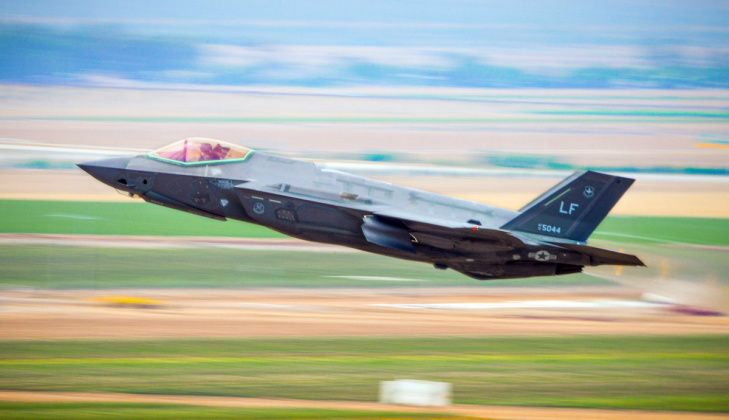
F-35 Stealth Fighter
The U.S. has delayed plans to put its F-35 fifth generation fighter jet into full scale production, due to ongoing issues with the aircraft and with its test simulator, meaning its entry into service will be further slowed after several years of delays. Jessica Maxwell, a spokesperson for the office of Under Secretary of Defense for Acquisition and Sustainment Ellen Lord, stated that the final decision on certifying the fighter for full scale production has now been scheduled for 2021. Despite significant setbacks the F-35’s producer, Lockheed Martin, has succeeded in increasing the rate of production in recent years and in lowering the price per aircraft to below $80 million per unit for the F-35A variant. The F-35A originally cost almost $250 million when first produced, with the benefits of producing on a larger scale and more efficiently having driven down the cost considerably. F-35s are currently on order for the U.S. Military and over a dozen other countries, including NATO member states such as Denmark and Britain which are partners in the program, as well as export clients such as Japan and Israel which did no contribute to developing the aircraft.
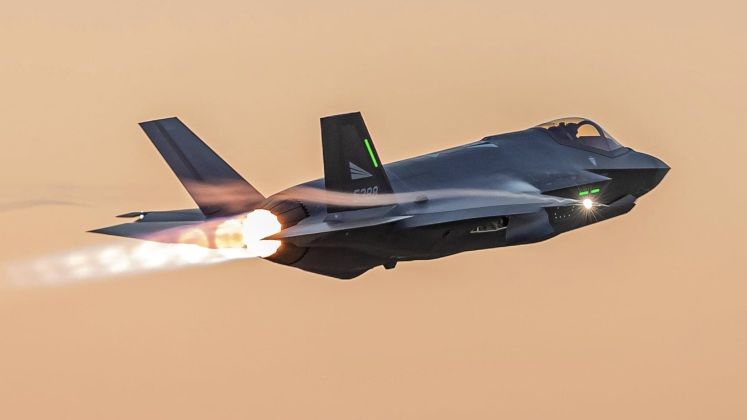
At full rate production Lockheed Martin is expected to produce 168 F-35s per year, with the production run expected to last for over two decades. This very high production rate is facilitated by a number of factors, including the fact that the F-35 program has three distinct variants built for the U.S. Air Force, Marines and Navy - the F-35 A, B and C respectively - meaning the U.S. Military as a whole can afford to invest very heavily in a single program. The huge demand for the aircraft overseas is another major supporting factor, with Japan and Britain alone each planning to acquire over 100 jets, and a number of parties including Taiwan, Greece, Qatar and the United Arab Emirates all showing a strong interest in placing substantial orders of their own. The F-35 is by far the largest weapons program in world history, with an estimated cost of over $1.6 trillion, although its progress continues to be hindered to by performance issues as well as concerns regarding its affordability due to its very high operational costs, maintenance requirements and fuel consumption.
