
World’s Most Heavily Armed Submarines Fortified with New Anti-Drone Protection at Russia’s Key Pacific Base
Military Watch Magazine Editorial Staff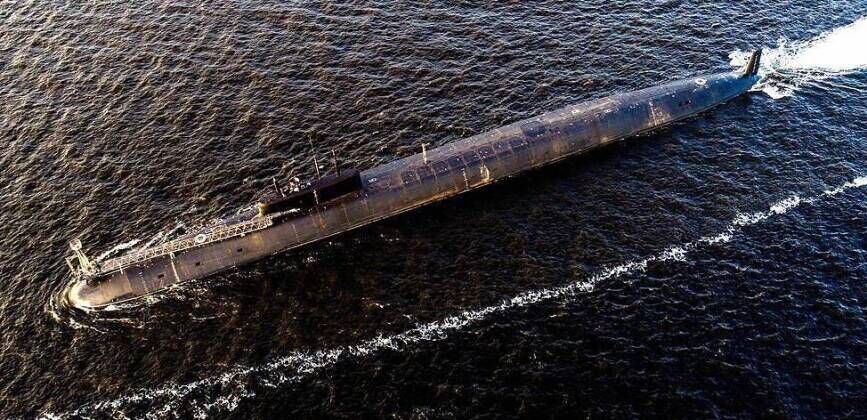
Russian Navy Borei Class Submarine
The Russian Navy has begun installing extensive anti-drone netting over nuclear-powered ballistic missile submarines at the Rybachiy naval base on the Kamchatka Peninsula, according to newly released commercial satellite imagery. The images, obtained from Vantor, shows multiple Russian submarines at Rybachiy covered by large overhead nets, with protection extending across several submarine berths. The development represents a striking expansion of the defensive measures Russia has introduced in response to the rapid growth of Ukrainian unmanned warfare and demonstrates that concerns over drone attacks now extend to some of the most strategically important assets in the Russian Armed Forces.
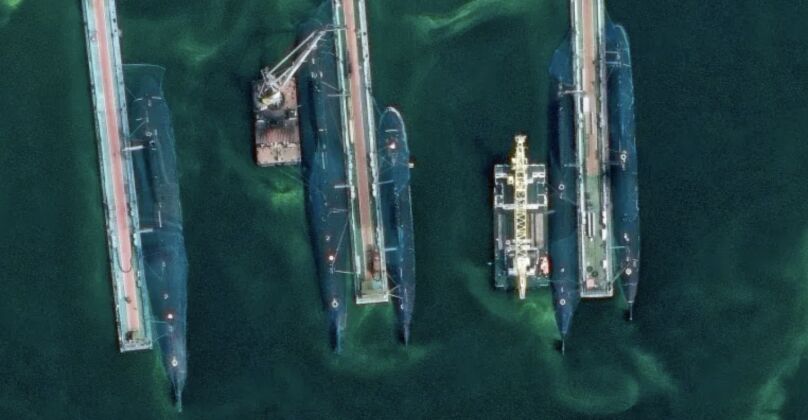
The fact that such measures are being installed over ballistic missile submarines is highly significant, as these ships were designed primarily to survive by remaining undetected and operating at sea, rather than by absorbing attacks while sitting in port. Once a submarine is alongside a pier, however, its enormous size and predictable location can make it substantially more vulnerable to increasingly sophisticated unmanned systems. Rybachiy is particularly significant because it serves as the principal Pacific Fleet base for Russia’s Borei class nuclear-powered ballistic missile submarines, which are the most heavily armed warships in the world.
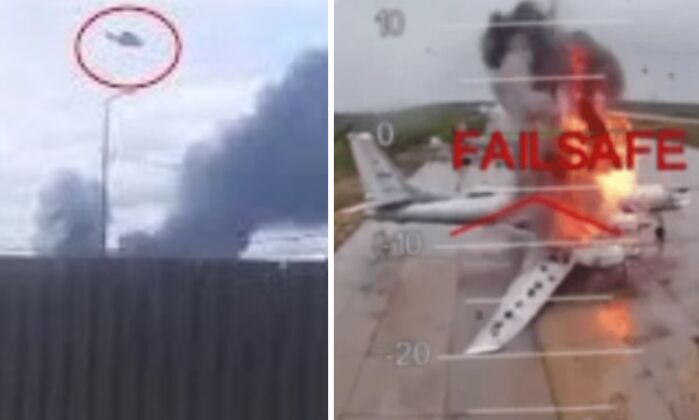
Ukrainian forces have demonstrated an ability to conduct long-range attacks deep inside Russian territory and have increasingly employed unmanned surface vessels and aerial drones against Russian naval infrastructure. The June 2025 Operation Spider’s Web saw Ukrainian forces target Russian strategic bombers thousands of kilometres behind the frontlines by launching drones from deep inside Russia, further demonstrating the potential vulnerability of high-value military systems far from Ukrainian controlled territory. While thus may have influenced the decision to fortify the Rybachiy facility, the fact that U.S., Japanese or other hostile forces in the Pacific could potentially also launch drone attacks in wartime provides a further incentive to do so.
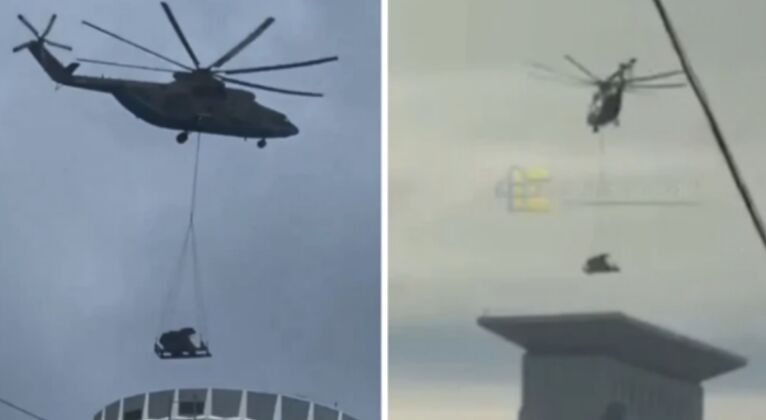
Footage from across Russia has shown continued operations fortify high value targets against drone strikes, including the deployment of Mi-26 helicopters in Moscow to position Pantsir-SMD-E stationary air defence systems onto the rooftops of high rise buildings. The growing reach of drone attacks has increasingly threatened targets deeper into central Russia, including its industrial heartlands in the Urals region. Drone and missile attacks launched from Ukraine against strategic targets in Russia have received very considerable support from across the Western world, including funding, training, supplies, and intelligence. A Financial Times report in late July revealed that the United States and France were playing a central role in facilitating Ukraine’s long-range drone strikes against Russian infrastructure, housing and military facilities, including by providing intelligence used to identify targets and avoid Russian air defences.
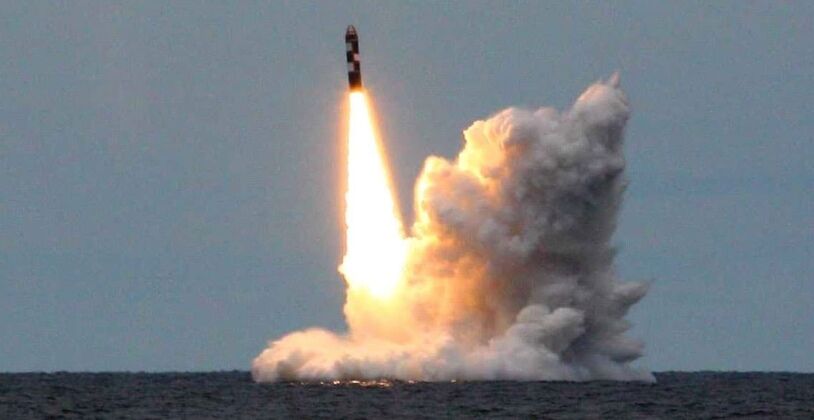
Borei class submarine incorporate cutting edge quieting technologies, and each integrate 16 RSM-56 Bulava submarine-launched intercontinental range ballistic missiles. Each missile integrates multiple independently targetable nuclear warheads, with the design having been developed specifically to overcome modern missile defence systems through high manoeuvrability, decoys and advanced penetration aids. Russian and Western officials have widely alluded to the importance of the Russian nuclear deterrent in deterring attacks by NATO member states, with the head of the NATO Military Committee Admiral Rob Bauer having stated in November 2024 that he was “absolutely sure if the Russians did not have nuclear weapons, we would have been in Ukraine, kicking them out.”
