
Russia Confirms World’s Most Heavily Armed Submarines to Remain in Service Until 2060s
Military Watch Magazine Editorial Staff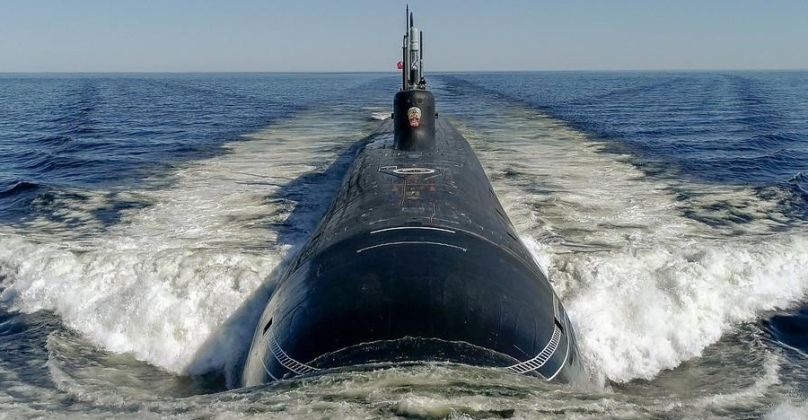
Russian Navy Borei-A Class Ballistic Missile Submarine
Commander-in-Chief of the Russian Navy Admiral Alexander Moiseyev has confirmed that the service’s Borei class nuclear-powered ballistic missile submarines will remain the backbone of the country's sea-based nuclear deterrent for the next 40 years. Speaking on the Russian Ministry of Defence television programme Military Acceptance (Voennaya Priyemka), the admiral confirmed that the Navy is continuing its transition away from the Soviet-built Delta IV class submarines. The statement was made despite Pesidential Aide and Russian Naval Board Chairman Nikolai Patrushev having in December confirmed that work was underway to develop a next generation successor to the Borei class, which would include autonomous underwater vehicles and unspecified high-end underwater weapons “with no global analogues.”
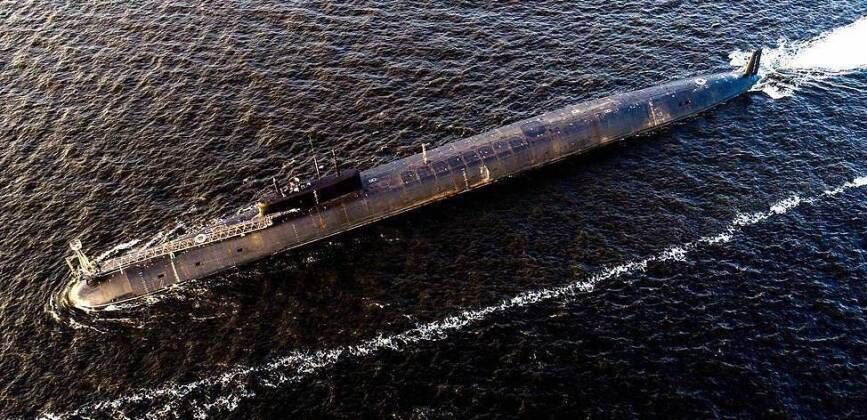
Commenting on the Borei class submarine program, Admiral Moiseyev observed: "We are implementing all programs for the transition to the new generation of Borei-class submarines equipped with the Bulava sea-based ballistic missile. They will serve our state for the next 30 to 40 years, replacing the previous 667BDRM (Delta IV) generation.” The Borei class represents the most significant modernisation of Russia's sea-based nuclear forces since the disintegration of the Soviet Union. The first vessel, Yury Dolgorukiy, entered service in 2013 after a development program that stretched for more than a decade, reflecting the financial and industrial difficulties faced by Russia's defence sector during the 1990s and early 2000s.
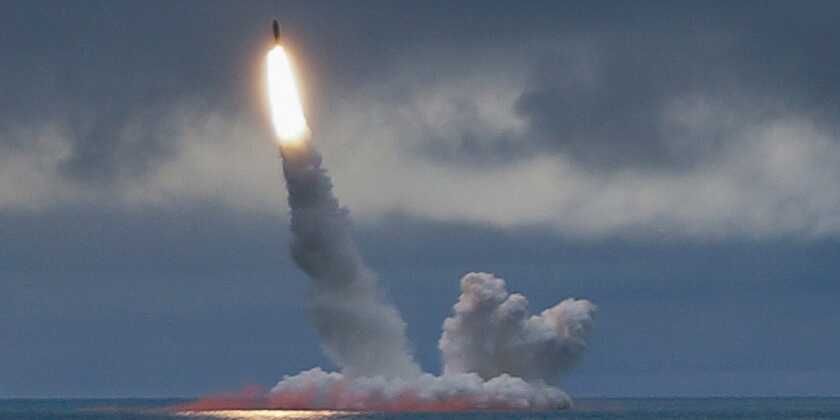
One of the class' most important improvements is its significantly lower acoustic signature than Soviet era submarines, with Russian naval officials have consistently described the Borei as substantially quieter than the Delta IV class, making it considerably more difficult for hostile attack submarines to detect and track. Unlike their predecessors, the Borei submarines were designed from the outset around the RSM-56 Bulava submarine-launched ballistic missile, which is considerably larger than missile types which the Delta IV class could accommodate. Each submarine carries 16 of the missiles, which not only have longer ranges, but also can each integrate multiple independently targetable nuclear warheads. The Bulava also incorporates modern penetration aids and is designed to perform complex terminal manoeuvres intended to complicate interception by ballistic missile defence systems.
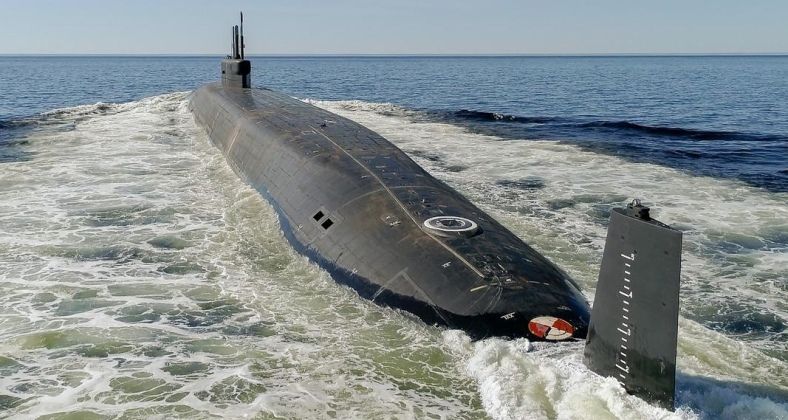
In July 2025 the Russian Navy has inducted a new Borei-A class nuclear powered ballistic missile submarine into service, the Knyaz Pozharsk, which was the eighth ship of the class, and the fifth of the improved Borei-A Class. A month later Russian President Vladimir Putin claimed that the Borei class submarine fleets would provide a distinct advantage over the Western world in the event of a nuclear war, highlighting the ships’ unique capabilities. “Our strategic nuclear submarines dive beneath the Arctic ice, vanishing from radar. This is our military advantage,” he stated. The Russian Navy’s nuclear submarines are all deployed under the Arctic and Pacific fleets, with the large majority being fielded by the former. The latitude of their operations allows them to launch strikes on targets in Europe and North American with relatively little warning time.
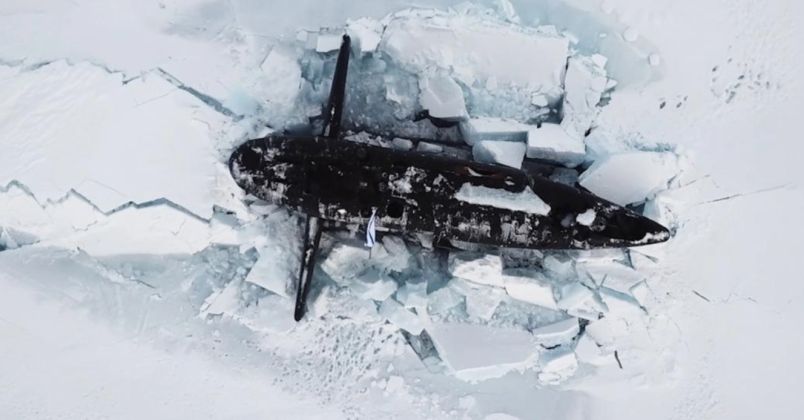
The Borei class program benefited significantly from components originally manufactured for cancelled Soviet submarine projects. Several early boats incorporated sections intended for incomplete Project 971 Akula and Project 949A Antey submarines that were left unfinished following the disintegration of the Soviet Union. This unusual approach helped reduce costs during the program’s early years while allowing the Sevmash shipyard to utilise partially completed hull sections that had remained in storage for years. The Borei-A subclass introduced further refinements beyond the original design, including a redesigned bow, improved sonar systems, enhanced crew accommodation, reduced radiated noise and more advanced combat management systems. External hull modifications also improve hydrodynamic efficiency, while internal changes further reduce vibration transmitted from propulsion machinery.
