
U.S. and French Intelligence Playing Central Role in Ukraine’s Drone Deep Strikes on Russia
Military Watch Magazine Editorial Staff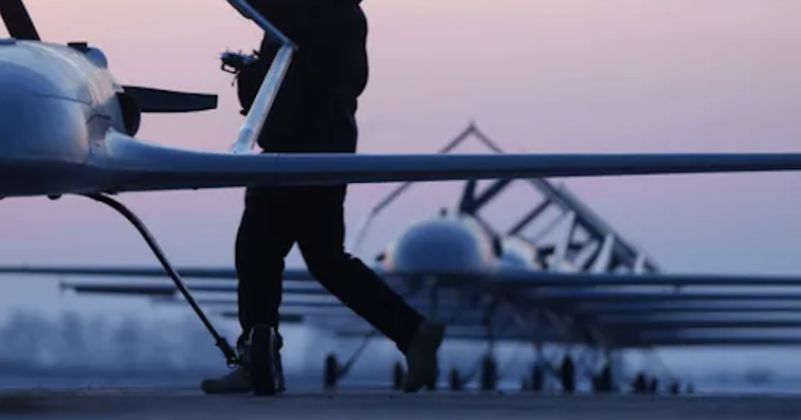
Ukrainian AN-196 Attack Drones
The United States and France are playing a central role in facilitating Ukraine’s long-range drone strikes against Russian infrastructure, housing and military facilities, with the two NATO members providing intelligence used to identify targets and avoid Russian air defences. A report by the Financial Times has shed new light on the extent of Western intelligence support for Ukraine’s expanding deep-strike operations, which have increasingly targeted critical infrastructure hundreds of kilometres inside Russian territory. This intelligence has enabled Ukrainian planners to identify the locations of Russian air defence systems and construct flight paths allowing drones to bypass them.
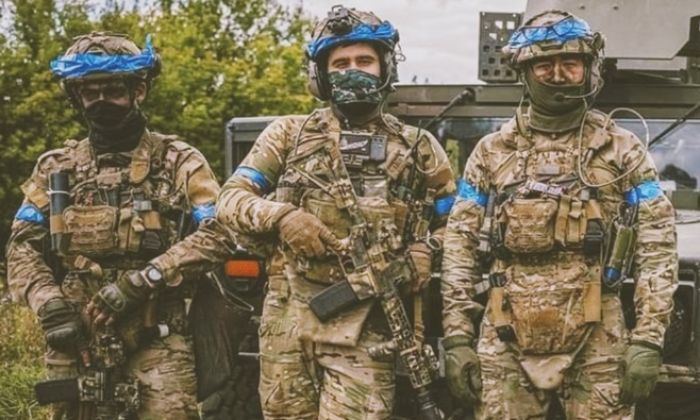
Ukrainian forces have reportedly been able to use intelligence provided by the U.S. and France to exploit gaps in Russia’s integrated air defence network to significantly improve the likelihood of successfully reaching their intended targets. The intelligence reportedly also contributed to improvements in targeting precision. Ukrainian officials cited by the Financial Times stated that American and French intelligence agencies helped determine which military facilities would provide the greatest operational value if struck, allowing limited numbers of long-range drones to be directed against higher-priority objectives.
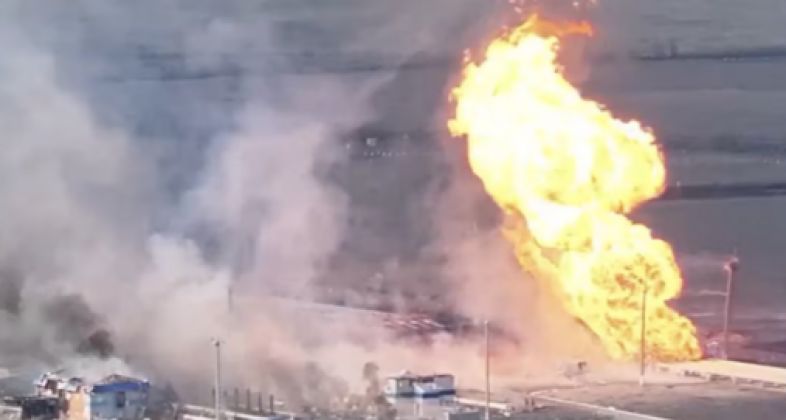
The report on the U.S. and French role in Ukraine’s drone campaign is far from unprecedented. In March 2025 the Russian Foreign Ministry claimed that the United Kingdom and France played a central role in a recent Ukrainian attack on Russian energy infrastructure, after the Sudzha pipeline infrastructure in Russia’s Kursk Region was “de facto destroyed” in a Ukrainian attack using U.S.-supplied HIMARS rocket artillery systems. “[We] have reasons to believe that targeting and navigation were facilitated through French satellites and British specialists input [target] coordinates and launched [the missiles],” the Foreign Ministry observed, adding: “The command came from London.”
In early 2023 the Russian government reported that NATO’s entire network of satellites was working to support Ukraine’s war effort. "We see how NATO’s entire military infrastructure is working against Russia, and we see how NATO’s entire intelligence infrastructure, including reconnaissance aviation, and satellite groupings are working in the interests of Ukraine in a 24/7 mode," an official statement from the Kremlin alleged on February 1. The war had by then seen space capabilities play an unprecedentedly central role, with the collective satellite capabilities of NATO’s member states providing the Ukrainian Armed Forces and supporting paramilitary groups with a considerable advantage due to the greater limitations faced by Russia’s own smaller network. This has included rapid provision of targeting data for missile and artillery strikes, which took a heavy toll on Russian forces.
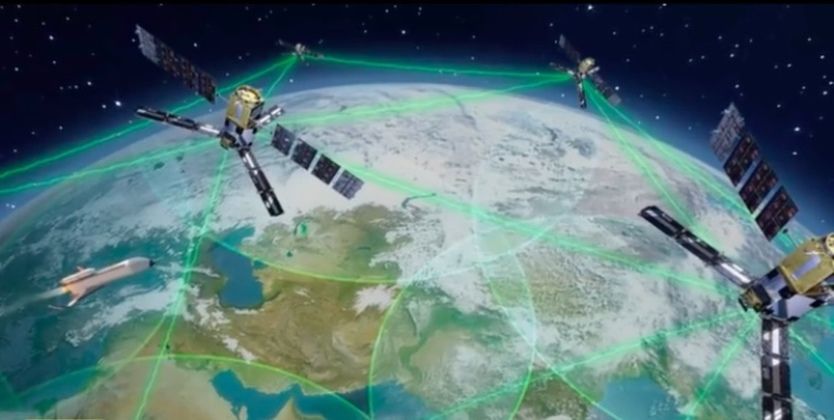
Insight into the role of Western personnel and intelligence support in the theatre has been provided by a wide range of sources since the outbreak of full scale hostilities in February 2022. The New York Times in June 2022 referred to the U.S. as setting up within Ukraine’s borders “a stealthy network of commandos and spies rushing to provide weapons, intelligence and training... C.I.A. personnel have continued to operate in the country secretly, mostly in the capital, Kiev, directing much of the massive amounts of intelligence the United States is sharing with Ukrainian forces.” The “signs of their stealthy logistics, training and intelligence support are tangible on the battlefield,” the Times observed. “Commandos from other NATO countries, including Britain, France, Canada and Lithuania, also have been working inside Ukraine,” it noted, emphasising the sheer “scale of the secretive effort to assist Ukraine that is underway.” It particularly emphasised the access provided to tremendous quantities of intelligence, with Ukrainian officers provided with tablet computers running battlefield mapping applications to target and attack Russian units and providing access to satellite imagery from the U.S. Military’s array of surveillance assets.
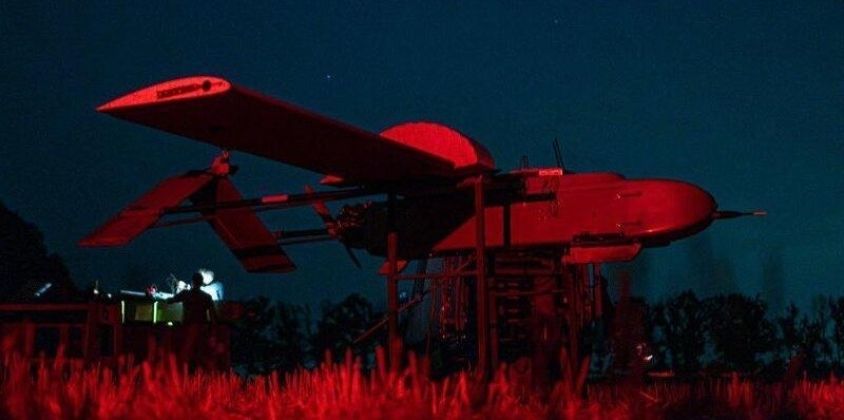
Ukraine has steadily expanded its long-range unmanned strike capability. Initially relying primarily on modified Soviet reconnaissance drones and domestically produced systems, the country has increasingly fielded purpose-built long-range attack drones capable of reaching targets deep inside Russian territory. In March 2026 Secretary of the Russian Security Council Sergei Shoigu confirmed that Ukrainian long-range drones now pose a direct threat to regions deep inside Russia, including the strategically critical Ural industrial area. Western intelligence sharing has become a force multiplier for Ukrainian long-range strike operations. Accurate information regarding radar coverage, air defence deployments and high-value military targets allows relatively inexpensive unmanned systems to threaten strategic assets that would otherwise remain well protected. Such intelligence can often prove as valuable as improvements in drone technology itself.
