World’s Largest Aircraft Carrier Making Rapid Progress in Construction in China: 2027 Launch Likely
Military Watch Magazine Editorial Staff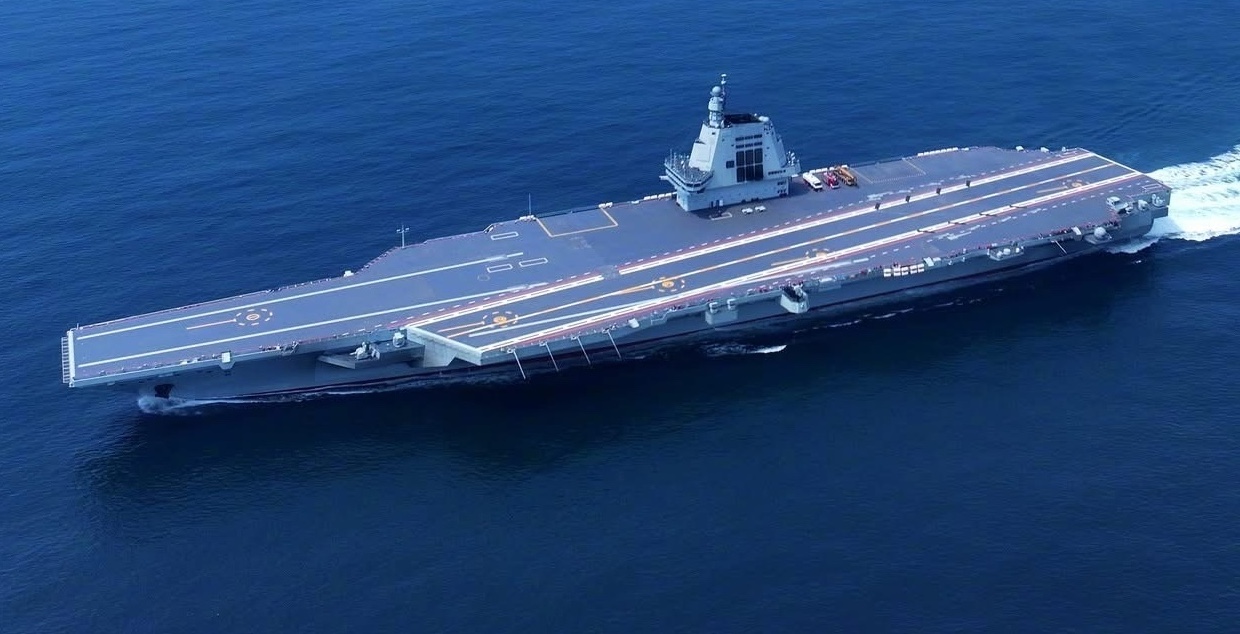
First Chinese Supercarrier Fujian
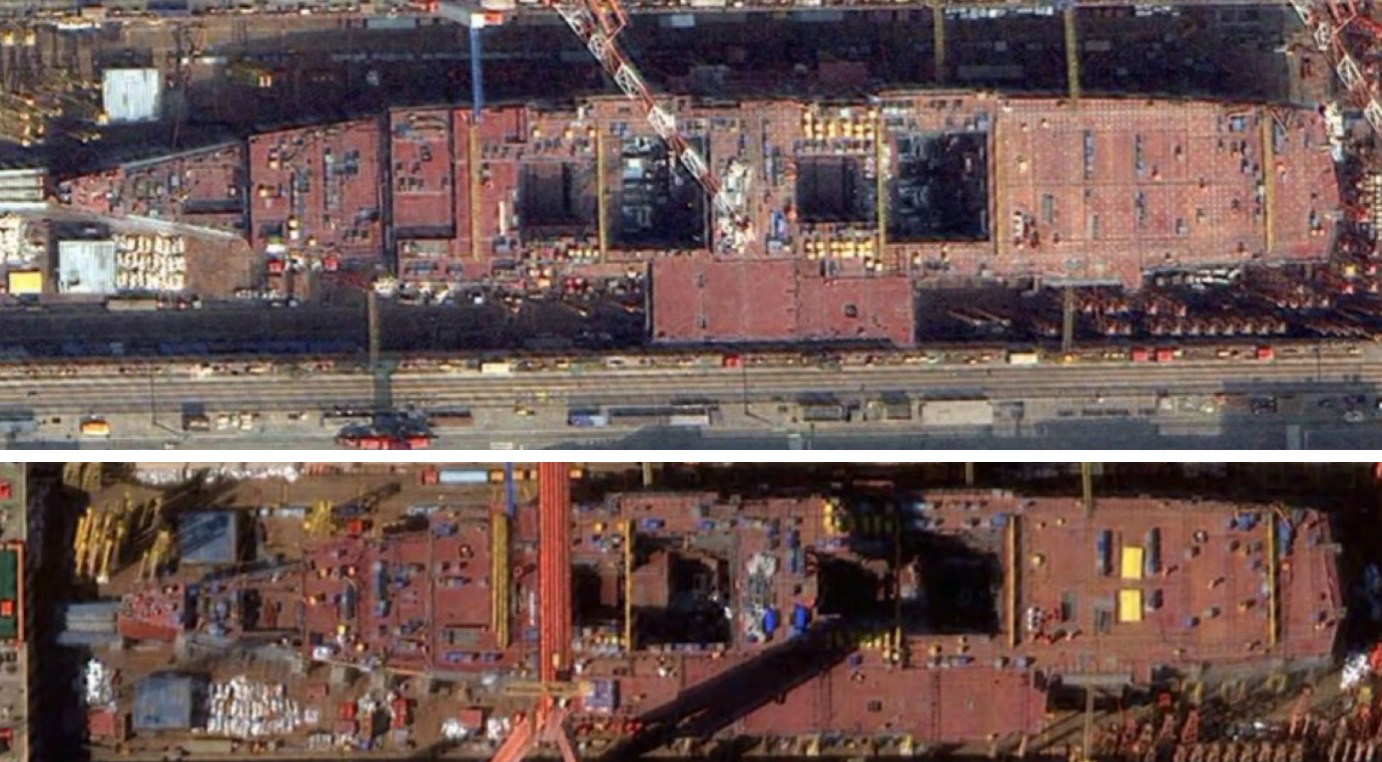
China’s first nuclear powered supercarrier is rapidly taking shape at Dalian Shipyard in northeastern China, with satellite imagery indicating that the vessel could be launched as early as 2027 Construction has advanced rapidly since prefabricated hull sections began appearing in early 2025, with the vessel approaching the dimensions of the U.S. Navy’s largest aircraft carriers at approximately 322 metres in length and 46 metres across at its widest point in October 2026. These dimensions already significantly exceed those of China’s third carrier, the Fujian, at a comparable stage of construction. The final dimensions are expected to increase as the bow and flight deck are completed, with the vessel expected to exceed the approximately 333-metre length of the U.S. Navy’s Nimitz class carriers and the 337 metre length of the American Gerald Ford class. Separate analysis by Janes has estimated a completed hull length of approximately 336–339 metres, although the final dimensions remain uncertain.
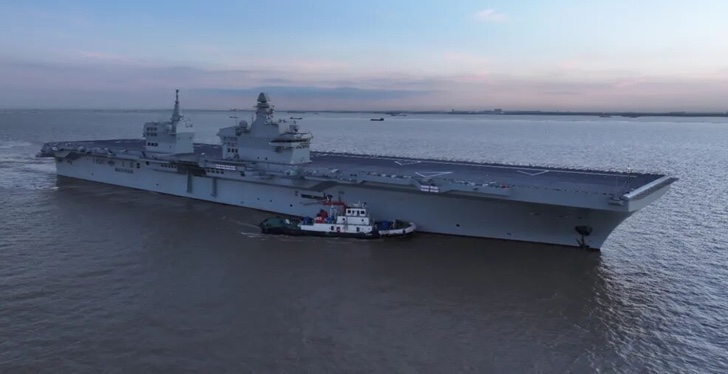
The scale of China’s longer-term carrier fleet ambitions is reflected in a 2025 U.S. Department of Defense assessment, which said Beijing aims to add six aircraft carriers capable of accommodating manned fixed wing aircraft by 2035, potentially bringing the fleet from a current strength of three, to a total of nine. These ships will be supported by a growing fleet of helicopter and drone carriers, with the Type 076 class having begun in late October to launched unmanned fighters from its electromagnetic catapult system. This is expected to provide China with the world’s largest carrier fleet, which will be particular advantageous when considering the age and low availability rates of the rival American fleet. Achieving such an expansion will require a significant increase in construction capacity and supporting naval infrastructure, particularly if several of the new vessels are nuclear-powered. It would also require the Navy to train and retain sufficient carrier aircrew, ship crews and maintenance personnel to operate multiple formations simultaneously.
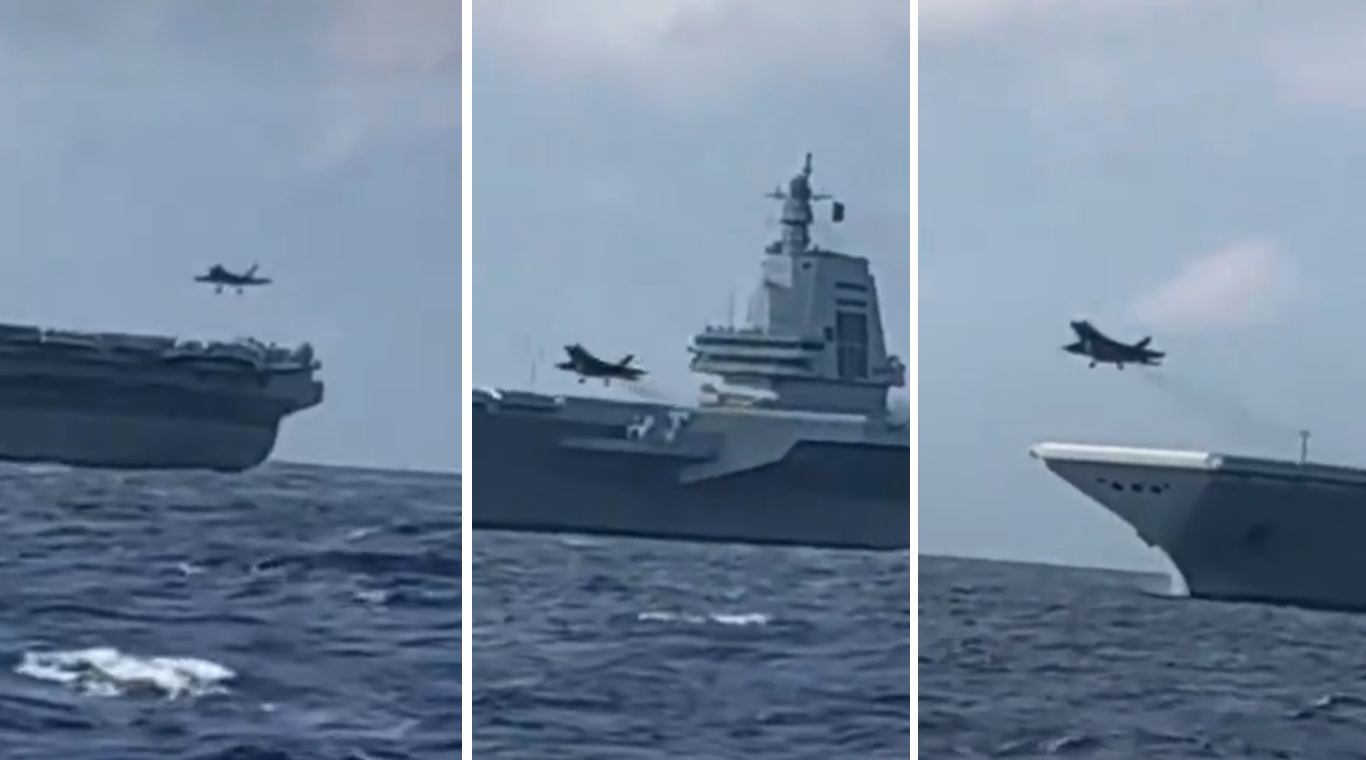
The Chinese People’s Liberation Army Navy commissioned its first supercarrier, the Fujian, into active service on November 5, 2025, with the ship currently being the only supercarrier in service outside the U.S. Navy. At 85,000 tons, it is smaller than the 100,000 ton Gerald Ford class ships, and can launch just three aircraft simultaneously rather than four. Its air wing was significantly more advanced, however, and includes fifth generation fighters which Gerald Ford class ships’ air wings had yet to integrate. The Fujian is expected to provide critical early experience in supercarrier operations. It is expected that Chinese shipyards will construct both conventional and nuclear powered supercarriers in parallel, although future conventionally powered ships are also expected to be significantly larger than the Fujian. Other than the U.S. Navy
The new supercarrier is expected to be the largest in the world at close to 110,000 tons. A larger carrier provides additional internal volume for aviation fuel, weapons, maintenance facilities, crew accommodation, machinery and aircraft. A larger flight-deck area can allow a carrier to operate more aircraft while simultaneously launching and recovering them. In November new images from the Dalian Shipyard showed the installation of structures within the developing hull that appear broadly consistent with reactor containment arrangements. China is not only building much larger carriers, but is also expected to be years ahead of the United States in integrating sixth generation fighters into the air wings of such ships, as the country’s defence sector has achieved a significant lead in developing such aircraft.