
Major Technical and Sustainment Issues Are Crippling the U.S. Navy’s New Generation of Warships
Military Watch Magazine Editorial Staff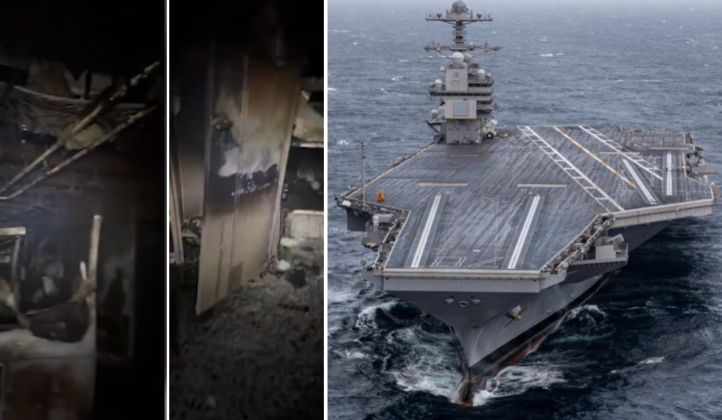
USS Gerald Ford and Fire Damage Onboard
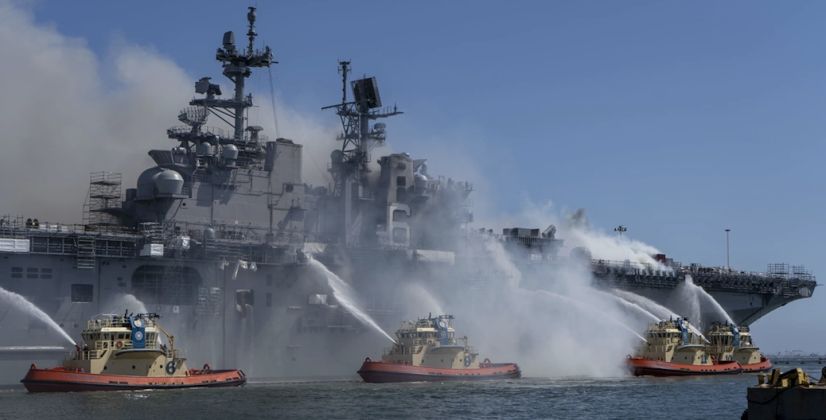
A series of serious incidents aboard several of the U.S. Navy’s most technologically advanced warships has highlighted the growing challenges the service is facing operating its increasingly high maintenance fleet. Rather than isolated incidents, analysts have increasing wanted that fires, electrical failures, and propulsion problems point to broader issues involving maintenance, crew training, and the integration of sophisticated new technologies onto active vessels. Providing an overseas perspective on the issue, a report in the Chinese magazine Naval & Merchant Ships, which has generally reported positively on U.S. equipment, has referred to these incidents as the result of “systemic pressure and shortcomings.” It cited as recent examples issues with the supercarrier USS Gerald Ford, the Zumwalt class destroyers, the Nimitz class carrier the USS Dwight D. Eisenhower, and the Arleigh Burke class destroyer the USS Higgins.
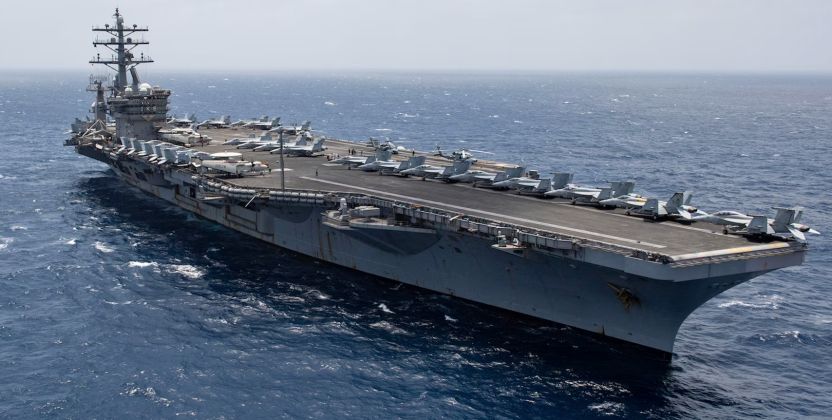
Issues seen across much of the U.S. fleet were assessed to have stemmed from excessive deployments, an overreliance on complex technology and inadequate shipyard support. “The shared underlying problem reflected by this is the systemic pressure and shortcomings in the areas of equipment management, maintenance support and damage control,” an assessment in the magazine observed. “These issues – manifesting as non-combat losses – are continuously eroding the fleet’s combat capabilities,” it added, stressing that risks were rising.
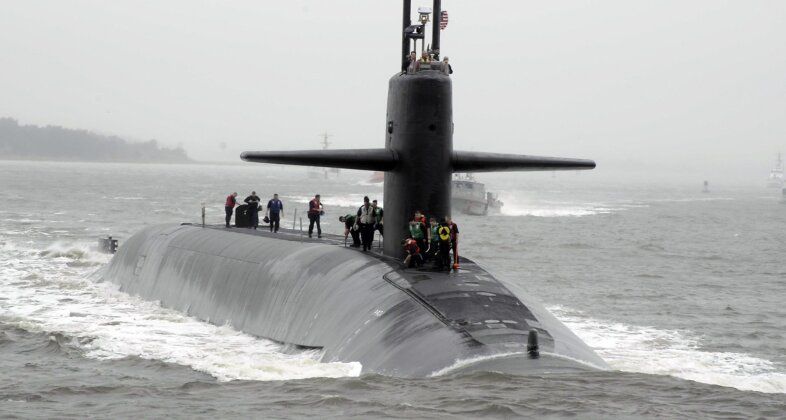
The Chinese assessment was published days after 64 sailors fell ill after being exposed to diesel exhaust fumes when a generator malfunctioned on the USS Nebraska, an Ohio class nuclear-powered ballistic missile submarine. The report claimed that a fire in the laundry room of the USS Gerald Ford in March suggested there was a “maintenance deficit” caused by prolonged global deployments, and that crew fatigue was also a factor. This situation could result in the accumulation of “hidden risks” in everything from combat hardware to the well-being of the crew, and that problems could get “out of control at any moment.”
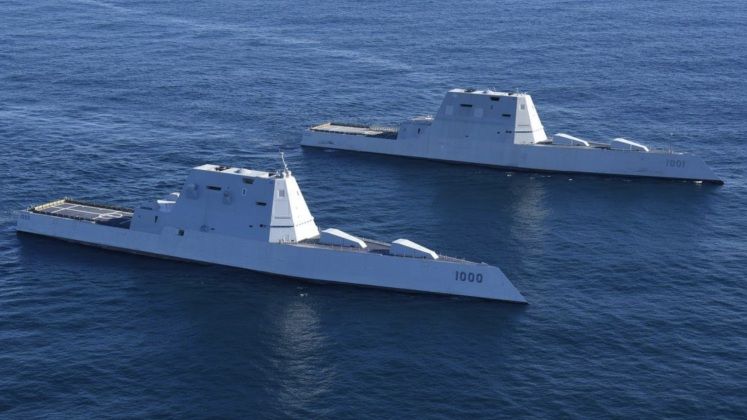
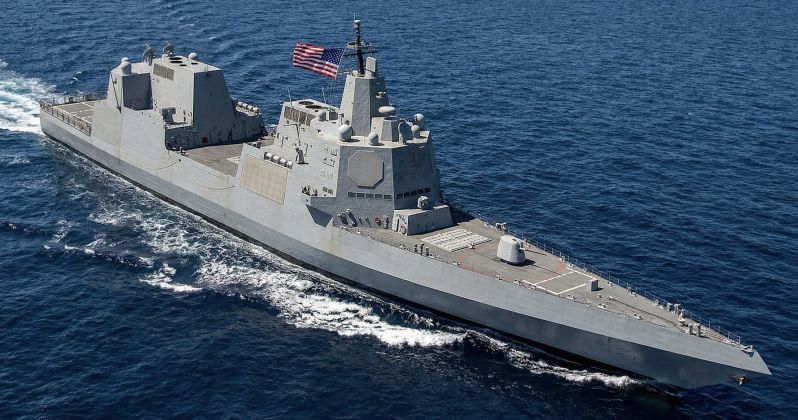
The report also discusses the USS Zumwalt and its sister ships, which were developed under a program that conceptualised revolutionary stealth destroyers with precision guided artillery capabilities, but have experienced repeated technical setbacks ever since they were launched. Their Integrated Power System, designed to distribute electricity throughout the ship while supporting future directed-energy weapons, has proven far more difficult to operate and maintain than originally anticipated. Mechanical failures, propulsion breakdowns, and software-related problems have repeatedly affected the ships, reducing operational availability. Cost overruns have meanwhile made the Zumwalt class destroyers by far the most expensive combat ships in the world at close to $8 billion each.
According to the Chinese assessmen, one of the underlying problems is that modern warships in the U.S. Navy increasingly resemble floating power stations and computer networks as much as traditional naval vessels. Vast quantities of electrical power are generated and distributed through interconnected systems supporting sensors, communications, propulsion, radar, electronic warfare equipment, and weapons. This level of integration offers major combat advantages but also creates additional points of failure, with faults in one subsystem potentially affecting many others. Fires originating from electrical equipment are therefore more difficult to isolate than on older classes of ships.
The article argues that increased automation has not necessarily reduced operational risks. Although modern ships require fewer sailors than previous generations because many functions are automated, smaller crews may also have fewer personnel immediately available to respond to fires, flooding, or mechanical failures. Damage control has traditionally been one of the U.S. Navy’s greatest strengths, but reduced manning places greater pressure on each sailor during emergencies, particularly aboard ships with highly complex internal systems. Maintenance also receives considerable attention. The article notes that the sophistication of new warships has significantly increased maintenance requirements, while the U.S. Navy continues to struggle with shipyard capacity, skilled labour shortages, and repair backlogs. Even relatively minor technical problems can therefore leave vessels unavailable for extended periods while awaiting repairs or replacement parts. These maintenance challenges have become increasingly significant as the Navy seeks to maintain high operational tempos across the Pacific, Middle East, and Europe simultaneously.
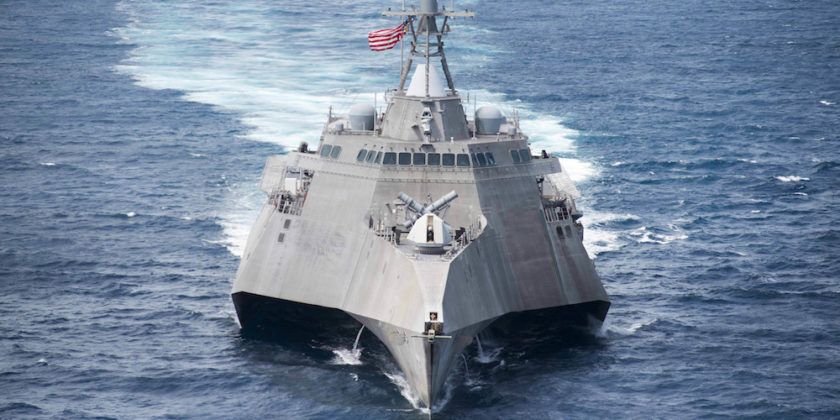
The assessment places the U.S. Navy’s operational problems within the broader context of persistent difficulties affecting American naval procurement, with cost overruns, delays, and reductions in planned capabilities having been seen widely across multiple types of ships such as Zumwalt class destroyers, the Littoral Combat Ships, and more recently Constellation class frigates. Analysts cited in the article argue that the Navy has often attempted to introduce too many unproven technologies simultaneously, increasing technical risk and making problems more difficult to resolve once ships enter service. The article concludes that these incidents do not suggest the U.S. Navy lacks technological superiority over its adversaries, but rather illustrate the growing challenge of balancing cutting-edge capabilities with operational reliability. As warships become increasingly dependent on advanced electrical architecture, software integration, and automation, ensuring reliability, maintainability, and effective damage control will become just as important as introducing new weapons or sensors, it observed. The recent fires and electrical failures therefore serve as reminders that technological sophistication alone does not guarantee operational readiness, particularly when maintenance, industrial capacity, and crew training struggle to keep pace with rapidly increasing system complexity.
