
World’s Fastest Combat Ship: Russia’s Most Heavily Armed Nuclear Missile Cruiser Can Outrun the Entire U.S. Navy
Military Watch Magazine Editorial Staff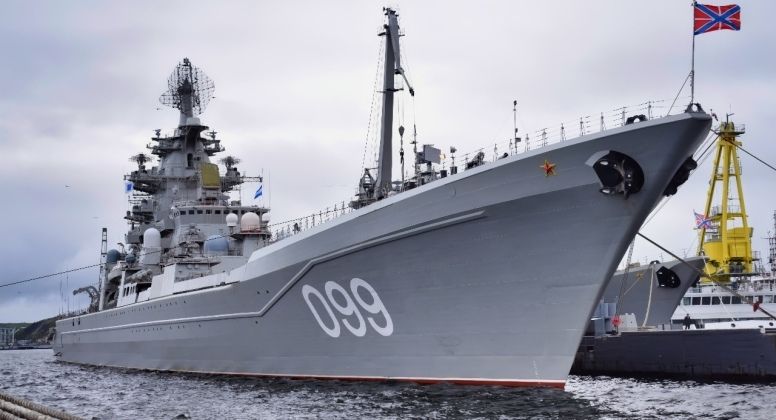
Russian Navy Kirov Class Cruiser
The Russian Navy is preparing to return its most formidable surface combat ship to operational service, as following the most extensive modernisation ever undertaken on a Russian combat vessel, the nuclear-powered missile cruiser Admiral Nakhimov undertakes its final sea trials. The Kirov class cruiser has spent well over a decade undergoing reconstruction at the Sevmash Shipyard, emerging with entirely new combat systems, sensors and missile armament intended to keep it operational for decades to come. Its return to active service is expected to significantly strengthen the Navy’s Northern Fleet, with assessments of its capabilities having widely focused on its unrivalled firepower, range, and ability to endure damage. An often overlooked feature of the warship, however, remains its speed, with Kirov class cruisers today being the fastest large combat ships in the world.
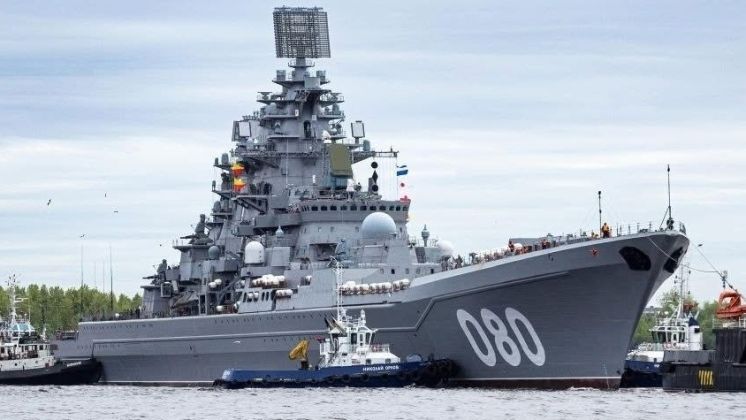
The Kirov class is by far the heaviest surface combatant in service worldwide, with a displacement of 28,000 tons, compared to just 10,000 for NATO’s most powerful surface combat ships the Arleigh Burke class destroyers. This makes the cruisers’ speeds all the more outstanding, with the vessels having top speeds of approximately 32 knots, allowing them to comfortably outrun every commissioned cruiser, destroyer, frigate, amphibious assault ship and aircraft carrier operated by the U.S. Navy and other NATO services. This is facilitated by the cruisers’ unique propulsion systems, as each is powered by two KN-3 pressurised water nuclear reactors feeding steam turbines producing approximately 140,000 shaft horsepower. The Kirov class is the only nuclear powered class of surface combat ship in the world, although the U.S. Navy is planning to also integrate nuclear reactors onto its BBG(X) capital ships should this uncertain program progress beyond its design stages.
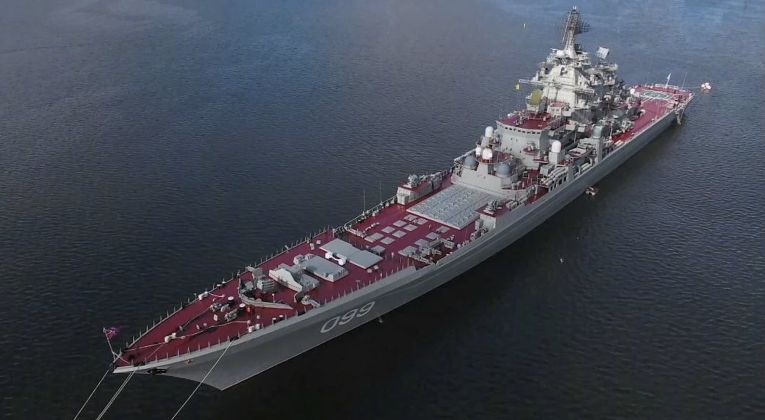
Unlike conventionally powered warships, which gradually sacrifice endurance as fuel reserves diminish, the Kirov can sustain high-speed operations over near unlimited distances without dependence on fleet replenishment ships. This exceptional mobility provides significant operational advantages. The ability to transit rapidly between theatres allows naval commanders to reinforce threatened regions more quickly, respond to emerging crises, or intercept hostile naval formations before they reach key objectives. In northern waters such as the Arctic and North Atlantic, where Russia's naval operations are concentrated and distances are measured in thousands of kilometres, sustained high speed considerably increases strategic flexibility. The warships’ formidable air defence and anti-submarine warfare capabilities makes the ability to quickly reposition them to protect key strategic locations or escort other vessels particularly valuable.
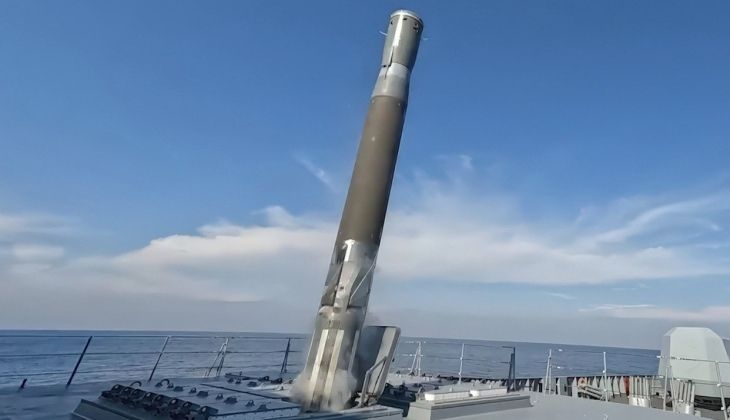
Speed is an important contributor to combat survivability, allowing cruisers to rapidly change position which complicates enemy targeting, reduces the time spent within hostile engagement zones, and can alter firing geometry after launching long-range missiles. This can pair well with the Admiral Nakhimov’s new electronic warfare capabilities and its integration of by far the world’s largest long range surface-to-air missile arsenal. Speed is particularly invaluable for the Admiral Nakhimov due to its basing location in Severomorsk, as it allows the ship to quickly sail through the Greenland-Iceland-United Kingdom Gap - a key maritime choke point separating the North Atlantic from the Arctic in wartime. The warship was designed to engage NATO carrier strike groups in the Atlantic, which its arsenal of Zircon hypersonic cruise missiles and multi-layered air defences make it well optimised for. Speed is an important factor that could allow the Admiral Nakhimov to decide the time and place of engagements, and pairs well with the advantages provided by the ship’s much longer engagement range due to integration of Zircon cruise missiles.
