
Why American B-52H Nuclear Bombers Flying Long Range Missions Over the Gulf Seriously Threaten Iran
Military Watch Magazine Editorial Staff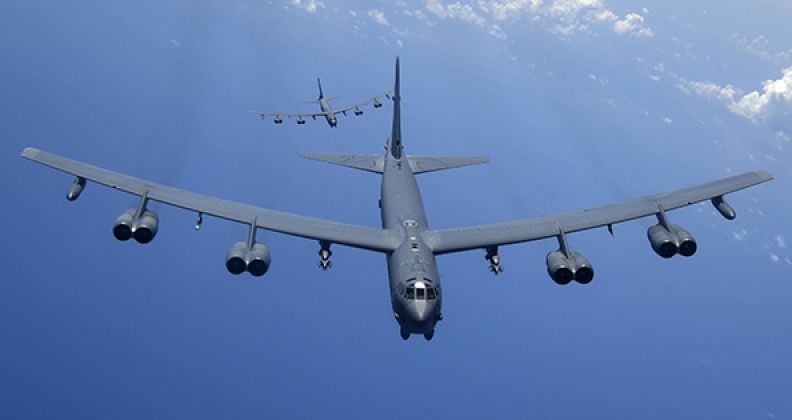
B-52H Nuclear Capable Bombers
B-52H heavy bombers from the U.S. Air Force's 2nd Bomb Wing flew an intercontinental range non-stop mission on December 9th from bases in Louisiana on the U.S. mainland over the Persian Gulf region. The mission reportedly took 38 hours and capitalised on the aircraft’s intercontinental range, and was aimed primarily at the Islamic Republic of Iran with which tensions have been particularly since the beginning of 2020. According to U.S. Central Command’s (CENTCOM) commander General Frank McKenzie, the most senior commander of U.S. forces in the Middle East, the mission was “to underscore the U.S. military’s commitment to its regional partners, while also validating the ability to rapidly deploy combat power anywhere in the world.” He added: “The ability to fly strategic bombers halfway across the world in a non-stop mission, and to rapidly integrate them with multiple regional partners demonstrates our close working relationships and our shared commitment to regional security and stability.” The B-52H is one of two nuclear capable bombers in American service, and is fielded alongside a small number of B-2 Spirit stealth bombers as well as non-nuclear B-1B Lancer bombers. The Vietnam War era aircraft is one of the oldest combat jets which is still in service, and has been extensively modernise since to rely today on nuclear tipped cruise missiles rather than gravity bombs. The aircraft is expected to outlast both the B-1B and the B-2 in service despite its age due to its much lower maintenance requirements and operational costs, which make it a highly prized asset.
The B-52’s ability to fly round trips against Iranian targets from as far as the U.S. mainland has potentially very serious implications for the balance of power in the event of a war. The Iranian military strongly prizes the ability to neutralise Western and allied airfields across the Middle East using its large arsenal of ballistic and cruse missiles. These missile primarily rely on North Korean technologies, and allow it to strike targets as far as Western Europe with a high degree of precision. Their storage in hidden and well fortified underground facilities, many of which are massive, and their deployment from mobile transporter erector launchers, makes the Iranian missile arsenal particularly difficult to neutralise from the air. While Iran’s strategic and tactical missile arsenals are formidable, the country lacks the intercontinental range strike capability possessed by other potential American targets such as North Korea or China, meaning it is unable to engage targets on the American mainland. By deploying nuclear capable bombers from bases on the mainland, the U.S. Air Force thus effectively emphasised its ability to strike from well beyond Iran’s reach.
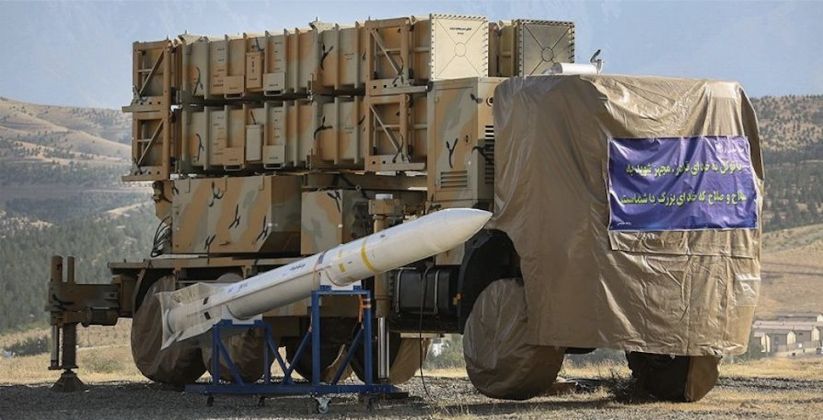
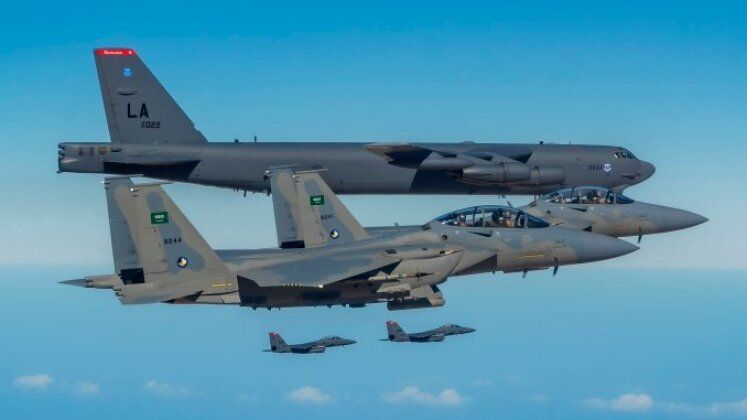
B-52H bombers flying the deterrence mission targeting Iran were notably escorted by F-15SA heavyweight twin engine fighter jets from the Royal Saudi Air Force. Saudi Arabia is set to eclipse Japan as the largest foreign operator of the F-15 with deliveries from Boeing ongoing, and the variant it deploys is currently the most capable in service in the world. The fighters are capable of deploying twelve air to air missiles each or a wide range of standoff air to group weapons, and integrate advanced AESA radars providing a high degree of situational awareness. Saudi Arabia is likely to be involved in any potential military clash between the United States and Iran, with involvement of other parties including Britain, France, the United Arab Emirates and Israel also highly possible. Iran for its part has demonstrated a willingness and ability to shoot down Western aircraft violating its airspace, downing an American MQ-4 surveillance drone which cost over $200 million in 2019 using an indigenous 3rd of Khordad medium range air defence system. With a long-standing UN arms embargo on Iran having been lifted in October 2020, the country is expected two place significant orders for new aerial warfare systems including modern fighter jets and possibly state of the art new air defence systems. The Chinese J-10C fighter jet, which also integrates an AESA radar and benefits from advanced stealth features and long ranged PL-15 anti aircraft missiles, is considered a leading candidate to modernise the Iranian fleet.
