
Who is Behind Iran’s Ballistic Missile Program? Washington Blames China, But Evidence Points to North Korea
Military Watch Magazine Editorial Staff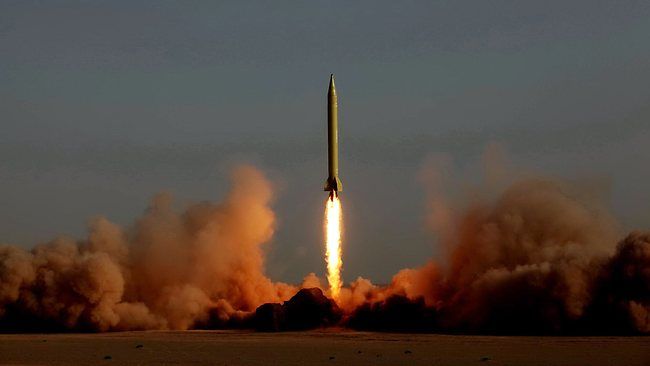
Iranian Shahab-3 Ballistic Missile (Korean Rodong-1)
The White House National Security Council’s senior director for weapons of mass destruction Tim Morrison is the latest to place blame for Iran’s successful pursuit of advanced ballistic missiles on the People’s Republic of China, asking allies to rebuke Beijing for its support for the U.S. adversary. On May 8th he stated to this effect: “We call on all governments that maintain ties with Beijing to make this a priority… For U.S. allies, especially those in the Gulf that face the threat of Iranian missiles every day, this should be a priority in the relations with China.” Director Morrison referred to China's role in hosting “a key broker for Iran's ballistic missile program,” businessman Li Fangwei, who has allegedly played a central role in supplying key components for Iranian ballistic missiles. “The equipment and components that Lee has provided to Iran have contributed to Iran's development of more advanced missiles with improved accuracy, range, and lethality,” Morrison said. “Iran now fields an array of short- and medium-range ballistic missile systems capable of threatening deployed U.S. forces, allies, and partners, and Lee remains a fugitive from justice.” China has refused to extradite Lee to the United States, as while the non-U.S. citizen was found in contempt of American domestic law there were no grounds in international law for his arrest.
While Iran’s pursuit of ballistic missiles is not prohibited under international law, the country’s growing arsenal has seriously undermined Western interests - providing the country’s armed forces with an asymmetric advantage against the overwhelming conventional superiority of the Western Bloc and their regional allies. With a small fraction of the defence budget of major Western allies such as Saudi Arabia, the United Arab Emirates and Israel, Iran lacks access to high end offensive weapons systems such the Saudi F-15SA strike fighters, Israeli F-35A stealth jets and nuclear tipped Jericho II missiles or the United Arab Emirates’ Scalp cruise missiles - all of which are capable of striking targets across Iran. Pursuit of a relatively low cost ballistic missile program by the Islamic Republic has created a form of mutual vulnerability in the Middle East, which is strongly contrary to the interests of Western powers and their allies which seek absolute primacy in the region. Western powers, the United States and France in particular, have thus strongly opposed and attempted to undermine Iran’s pursuit of ballistic missiles.
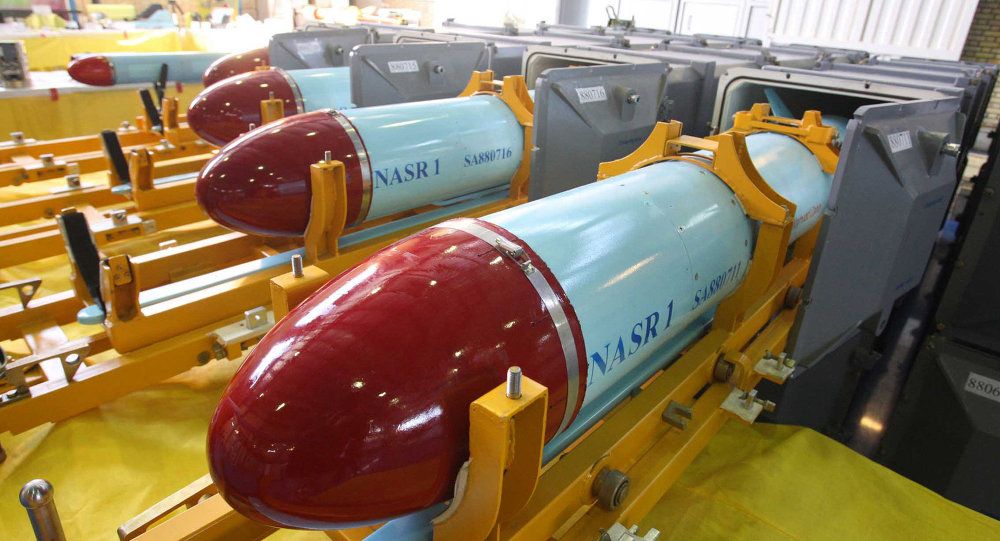
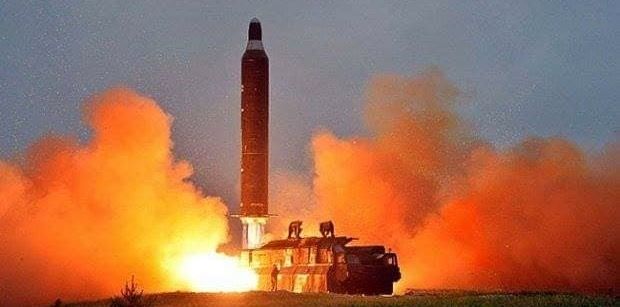
While China has provided extensive assistance to Iran’s armed forces, there is little evidence pointing to its involvement in the country’s ballistic missile program. Indeed, the majority of Iranian missile designs are closely derived from North Korean platforms - and have been since the program’s inception in the 1980s when the Korean Hwasong-5 and Hwasong-6 were licence produced in Iran as the Shahab-1 and Shahab-2. Most recently, the Iranian Khorramshahr ballistic missile has provided the country with its most capable ranged strike capability - allowing it to reach targets across the Middle East and much of Europe with multiple warheads. This missile is in fact a North Korean Musudan (Hwasong-10), which entered Korean service in 2016 and was first sighted in Iran the following year. While China’s role in Iran’s ballistic missile program remains limited, Iran’s development of advanced cruise missiles has relied heavily on the transfers of Chinese technologies. While these missiles are primarily designated a tactical rather than a strategic role, they pose an equally great and possibly greater threat to Western and allied interests. Most Iranian anti ship missile systems in service today are domestic derivatives of Chinese designs, and the PLA has reportedly played a significant role in helping Iran establish production facilities for these systems. Perhaps the most prominent example is Iran’s Nasr anti ship cruise missile, widely deployed for operations against the U.S. Navy in the event of a potential war, which is a direct derivative of the Chinese C-704. Iranian Oghab and Nazeit missiles are other examples. Without such support from its two leading East Asian partners, Iran’s armed forces would be overwhelming outmatched in the event of a regional war and be left unable to deter potential Western military action against it. With a fully Western dominated Middle East and potential Western attack on Iran all strongly against the interests of both Beijing and Pyongyang, provision of such assistance is likely to continue despite U.S. and European pressure.
