
America’s Warning Shot to North Korea and Iran; Footage of GBU-57 Massive Ordnance Penetrator Test Released Amid Growing Tensions
Military Watch Magazine Editorial Staff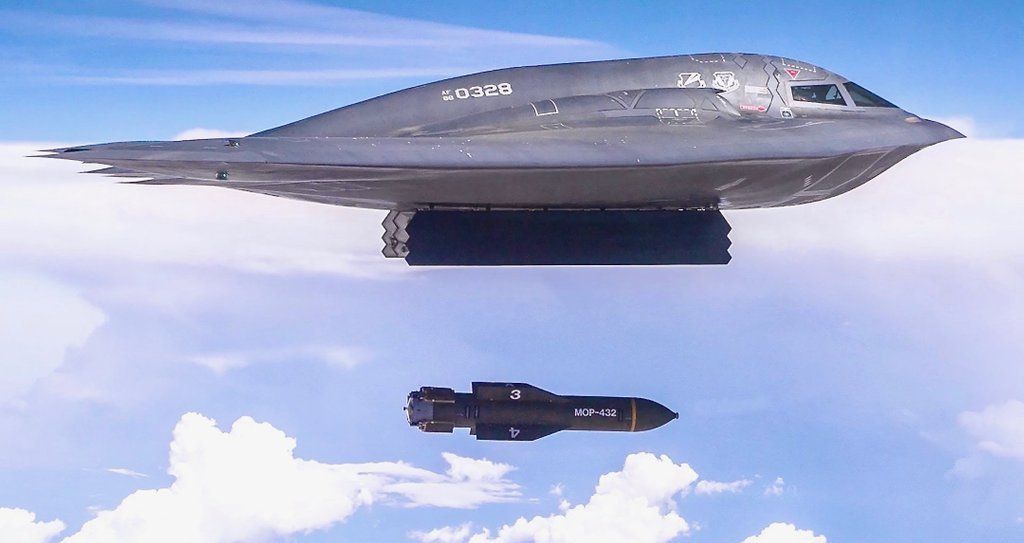
B-2 Spirit Launches GBU-57 Massive Ordinance Penetrator Bomb
At a time of rising tensions with its adversaries, namely with North Korea and Iran, the United States Air Force’s posting of a high resolution test of the GBU-57 Massive Ordnance Penetrator (MOP) 15,000kg bunker buster bomb has been widely interpreted as a show of force to these two Asian powers - and a highly potent one at that. The GBU-57 saw its first test in March 2007, and despite considerable difficulties which previously stalled development the program was accelerated from 2009 after the Pentagon requested additional funding from Congress for this purpose. The bomb entered service in the early 2010s, with some reports indicating they were ready for deployment from December 2010. The GBU-57 retains unique capabilities unrivalled by any other munition in the U.S. or other arsenals, and is designed specifically in response to the heavy fortification of tunnel networks, command centres, nuclear facilities and weapons facilities by North Korea. While the United States initially planned for the employment of nuclear weapons against North Korean targets in the early 2000s, with nuclear bunker busters designed to penetrate Soviet command centres being the only weapons in the American arsenal capable of sufficiently deep penetration, the deployment of the GBU-57 has provided a means to strike such facilities without using nuclear force. North Korea has provided extensive assistance to Iran in fortifying its own high value targets against a potential Western attack, the Fodrow fuel enrichment plant being a key example. Thus deployment of a pair of GBU-57 bombs remains almost certain in the event of an attack on either of these two states, and the publication of high resolution footage of its testing is very likely a warning to both Pyongyang and Tehran that even their most secure facilities and their leadership are potentially vulnerable to attack.
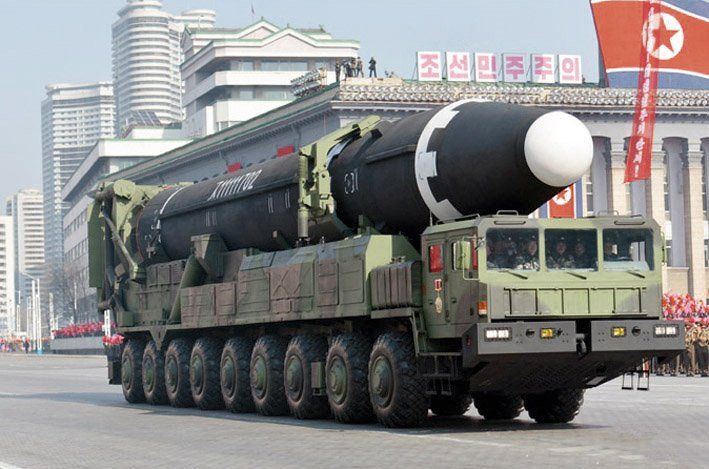
North Korea has responded to the longstanding threat of American attack by developing a highly mobile arsenal of intercontinental and intermediate range ballistic missiles capable of striking the United States mainland and its military facilities across the Asia-Pacific with thermonuclear warheads - ensuring that in the event of an American attack both parties will be highly vulnerable. Iran for its part lacks a comparable deterrent, relying only on conventionally armed intermediate range missiles such as the Khorramshahr acquired from North Korea which are incapable of striking the United States. This among other factors makes it a far softer target for an American attack. The GBU-57 has been integrated onto the U.S. Air Force’s B-52H Stratofortress heavy bombers four of which were deployed to the Middle East in mid May 2018. The B-52H’s relatively low survivability in conventional bombing missions however means it is more likely to participate in a war as a standoff missile platform to erode Iran’s air defence capabilities and carry out precision strikes on surface targets - leaving the B-2 Spirit stealth bomber to deliver the GBU-57. The Spirit is capable of carrying two of these weapons internally, and has previously flown sorties against Iraqi targets from bases in the U.S. mainland meaning the aircraft could launch attacks on Iran without the prior warning of a deployment to the Middle East. For deeper fortifications, the deployment of multiple GBU-57s may be necessary with their GPS precision guidance allowing American bombers to ‘layer in’ multiple warheads on a precise location - with each ‘digging’ deeper than its predecessor for deeper penetration. The B-2 is currently the stealthiest aircraft in the world, which unlike the F-22 and F-35 stealth fighters cannot be detected by basic low frequency radars. With Iran’s air defence sites unfortified, unlike their Korean counterparts, they are likely to be softened up using assets such as the B-52H to pave the way for B-2 strikes on the country’s most vital targets by American stealth bombers. With no U.S. allies fielding the GBU-57 or aircraft capable of deploying the bombs, it represents one of many reasons why American participation in a potential war against Iran remains vital to its success.
