
What Happened to the Europe’s Heaviest Fighter Jets? The Fate of Belarus’ Elite Su-27 Flankers
Military Watch Magazine Editorial Staff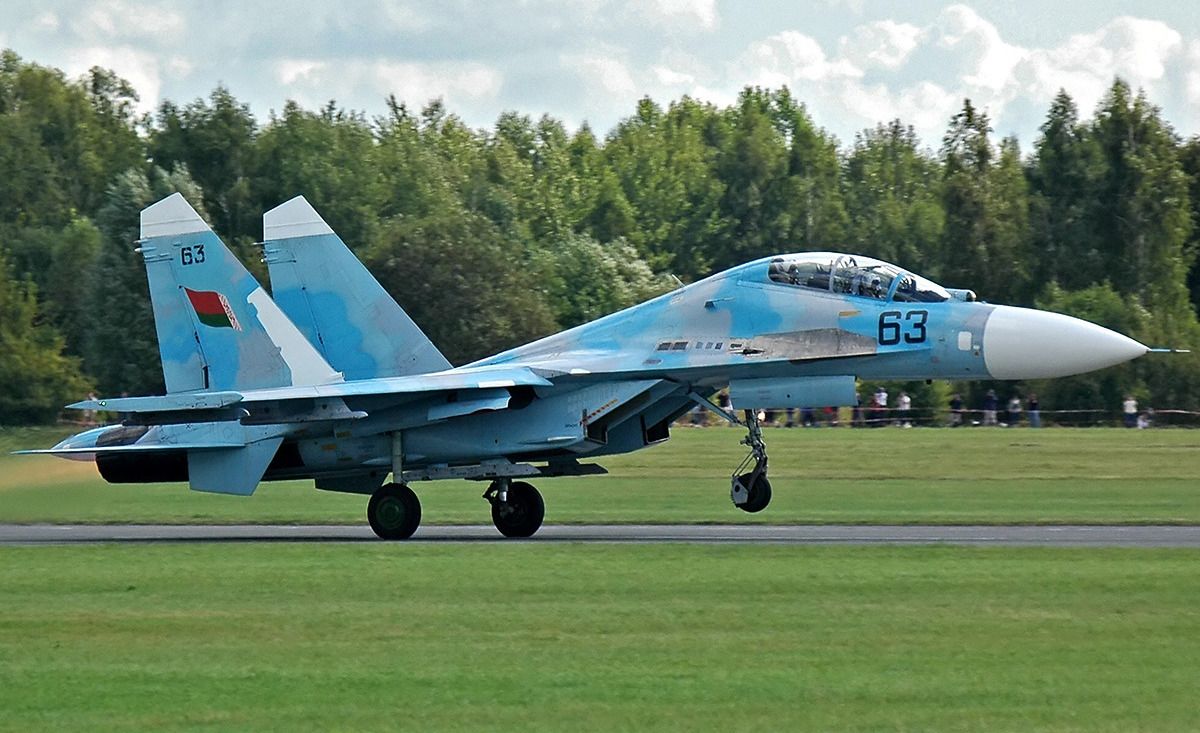
Belarusian Air Force Su-27 Flanker
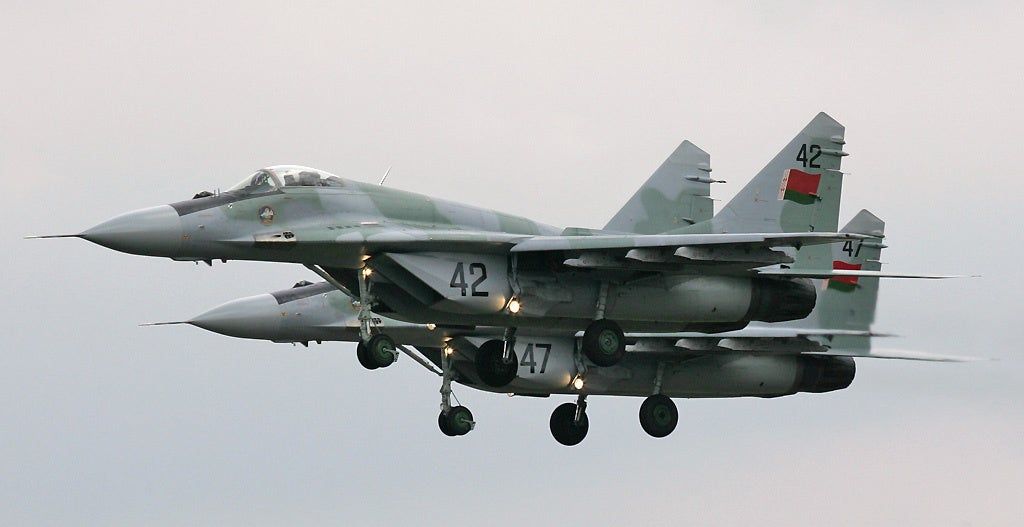
Following the collapse of the Soviet Union, Belarus inherited a sizeable inventory of Soviet era weaponry from T-72 and T-80 main battle tanks to several squadrons of advanced fourth generation combat jets. Among the modern combat jet classes inherited were large numbers of MiG-29 medium fighters, Su-24M strike fighters, Su-25 attack jets and Su-27 Flanker heavyweight air superiority fighters. At least one squadron of MiG-25PD interceptors, a very costly and extremely fast and heavy third generation design upgraded to a fourth generation standard, were also in service. Belarus’ small economy, with a population of under 10 million and a per-capita GDP lower than that of Russia, meant that it was in a poor position to afford the operational costs of these aircraft. The result was the retirement of the MiG-25, the platform with the highest operational costs, sales of MiG-29 and Su-24 platforms to Sudan, and a placing of a portion of the remaining MiG-29 fleet in storage. All third generation MiG-23 and MiG-21 fighters were also immediately retired, leaving Belarus with three main classes of combat jet - the Su-25, MiG-29 and Su-27.
The Su-27 was an outstanding asset for such a small state to field, and had only begun to enter service from 1985 as the Soviet Union’s most elite air superiority fighter. It was widely considered the most capable fighter fielded by any air force in the world for air to air combat when the Cold War ended, and benefitted from a very large and powerful radar, a highly manoeuvrable airframe and access to advanced R-27 air to air missiles. The Flankers in Belarusian service were inherited from the USSR’s 61st Fighter Aviation Regiment, which had been forward deployed in the country to counter NATO F-15 deployments. While two Su-27s were sold to the United States, 22 remained in frontline service as the heaviest fighter jets in Europe - a title for which they tied with neighbouring Ukraine’s own much larger Su-27 fleet. Despite their advanced capabilities, and Belarus’ ability to upgrade the aircraft domestically, the country could ill afford to operate fighters from such an elite weight range which had such high operational costs. The Su-27s were thus retired from frontline service and placed in storage in December 2012.
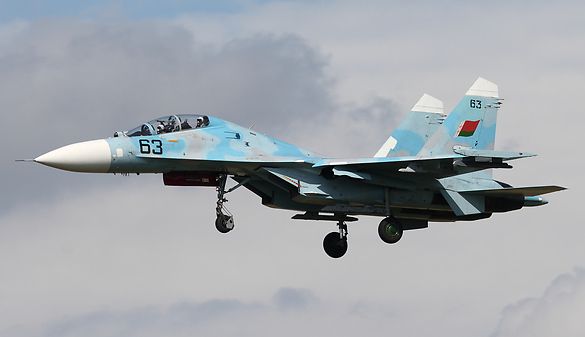
Regarding the reason for the retirement of the Su-27, Chief of the Air Force and Air Defense of the Armed Forces of Belarus Major General Oleg Dvigalev started: “Su-27 is a very expensive aircraft to operate, it burns a lot of fuel. It is inadvisable in conditions of the small territory of Belarus. Even for the sake of checking control targets we had to raise Su-27 from, lets say, the airbase in Baranovichi and keep it in the air for virtually 1.5 hours after the mission was over for the sake of consuming the rest of the fuel. An aircraft had to consume 2-3 tonnes of aviation kerosene for nothing. It was wasteful. Therefore, we no longer use the aircraft.” Another factor was the growing need for upgrades to keep the Flankers viable, with Russia’s own Su-27 fleet being equipped with state of the art sensors and electronic warfare systems and new classes of active radar guided missile. Whether Belarus could afford similar upgrades remained questionable. The retirement of the Su-27 left Belarus’ Air Force without any outstanding modern capability, fielding just two squadrons of fighters both being medium weight MiG-29 jets which had undergone some domestic modernisation. While much less capable than the Su-27 in an air to air role, the MiG-29 was designed to cover a much smaller area and had a considerably lower operational cost. The retirement of the Su-27 was thus expected to facilitate more flying hours for Belarusian pilots.
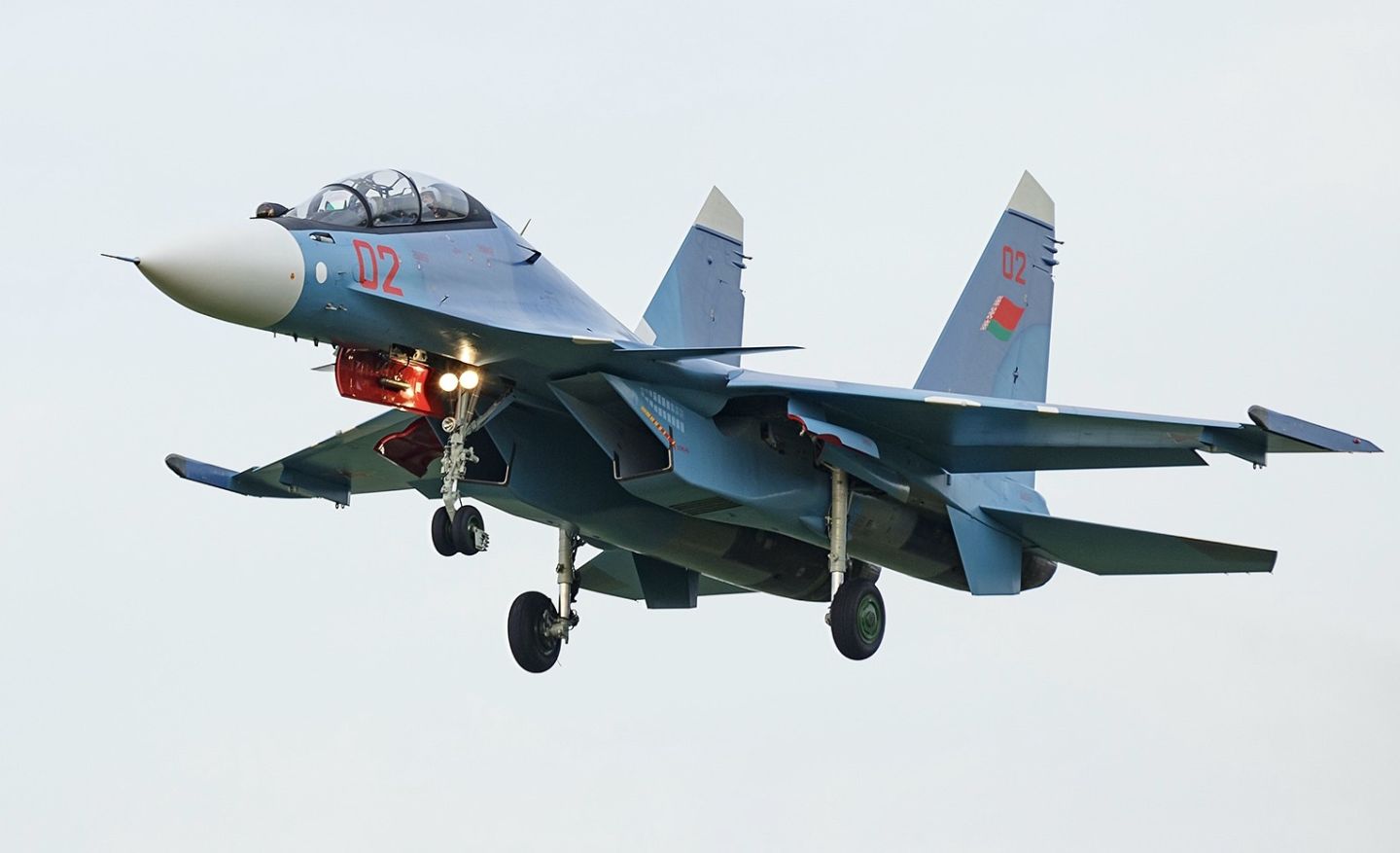
Despite retiring the Su-27s, Belarus has still provided upgrades for both Vietnam’s Su-27 jets and for Angolan Su-30 jets - the latter being a more modern twin seat derivative of the original Flanker design with ‘4+ generation’ combat capabilities. Amid growing deployments of NATO forces near its borders, which Minsk has repeatedly cited as an imminent threat, Belarus has more recently sought to again incorporate elite heavyweights aircraft into its inventory - acquiring 12 Su-30SM fighters from Russia the first of which were delivered in 2019. The Su-30SM is the most modern and overall the most capable variant of the Flanker design, with the exception of the more costly Su-35 and Chinese variants such as the J-16. The platform’s maintenance costs are also thought to be considerably lower than those of the original Su-27 despite a slightly heavier weight, and integration of new avionics, sensors and weaponry arguably allow the Su-30SM to provide a much greater combat capability at much lower cost. Given the similarities between the Su-30 and the Su-27, it is possible that the older Flankers now held in reserve could be more easily called up in the case of a war as pilots trained on the Su-30 would be excepted to have a much easier time converting to the new Su-27 than those trained on the MiG-29. It remains to be seen how long Belarus will hold the Su-27 in reserve, but the country is currently the only one in the world to have retired the aircraft which, particularly in upgraded variants such as the Su-27SM2, is still considered one of the world’s foremost air superiority fighters.
